Contents of the case
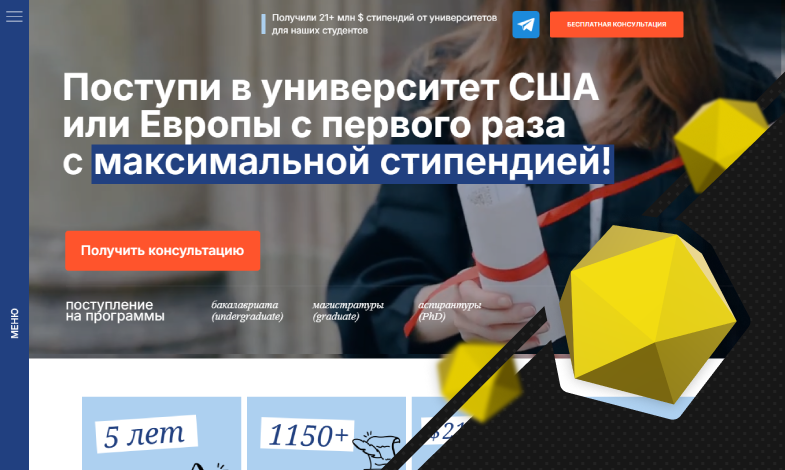
Media
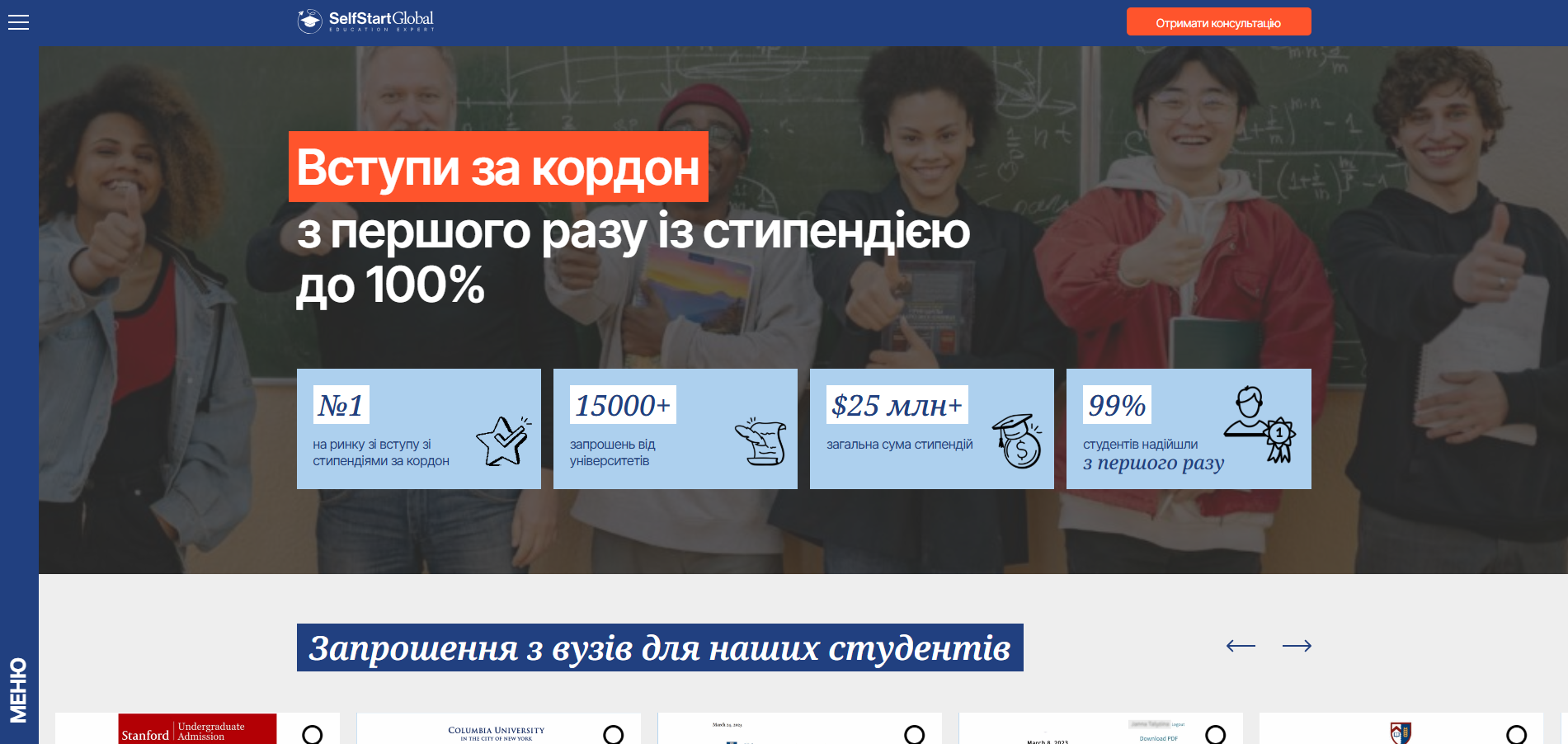
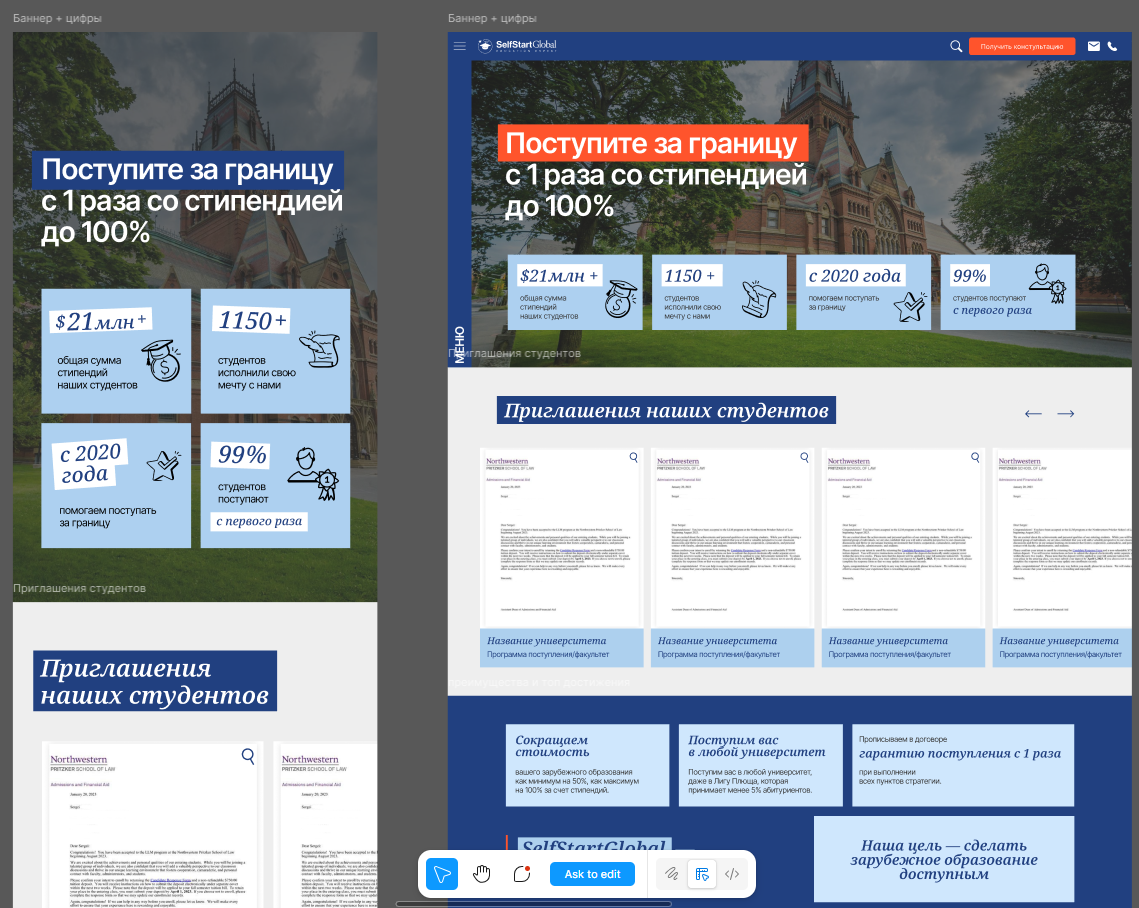
Initial data
Whole works
- /01 Partial preservation of the original design of the old website
- /02 Creating a template for each page type
- /03 Expanding the structure of pages with blocks necessary for interlinking
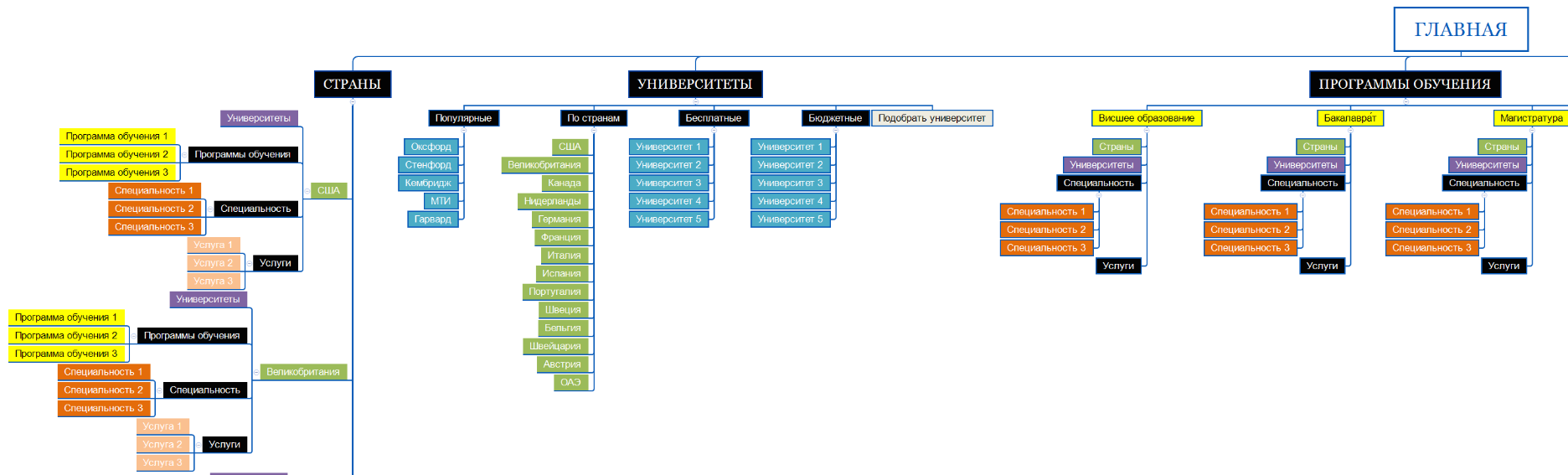
- /04 Development of the website structure taking into account 8 separate entities and tables of connections between them
- /05 Formation of large-scale technical specifications: internal functioning of pages in CMS, technical optimization, website indexing
- /06 Creation of three language versions of the website – UA, EN, ru
Issues and general strategy
The client has been operating in the market for over 5 years and has a stylish but insufficiently optimized website that does not use SEO potential to attract organic traffic. The biggest competitors in the niche have large websites with thousands of pages and a complex internal linking system that allows them to effectively attract traffic through informational content.
The main challenge was to create and implement an SEO strategy for a website with a large number of interrelated elements: service-country-level-specialty-university-case, etc. This complicated both the description for the programmer and the implementation of the functionality in the website’s admin panel. It was necessary to ensure the correct generation and display of this complex information.
The strategy was to create not just a service website, but a large-scale portal that would combine the informational part (blog and pages by niche keywords) with the commercial part (services, reviews, cases). According to our research, almost 60% of traffic in the niche is generated precisely by niche information keywords, so they had to be taken into account in order to achieve top positions for commercial queries.
Niche analysis showed that there are two types of sites: large ones with a broad and detailed structure, which account for most of the traffic, and old, small sites that have high authority and occupy the top positions due to their age. Our task was to create a website similar to the leaders in this niche—large portals—which would allow us to pass the first stage of promotion. Over time, by constantly filling the website with new content, optimizing it technically, and working with links, we plan to gradually displace the current leaders.
SEO during the development stage
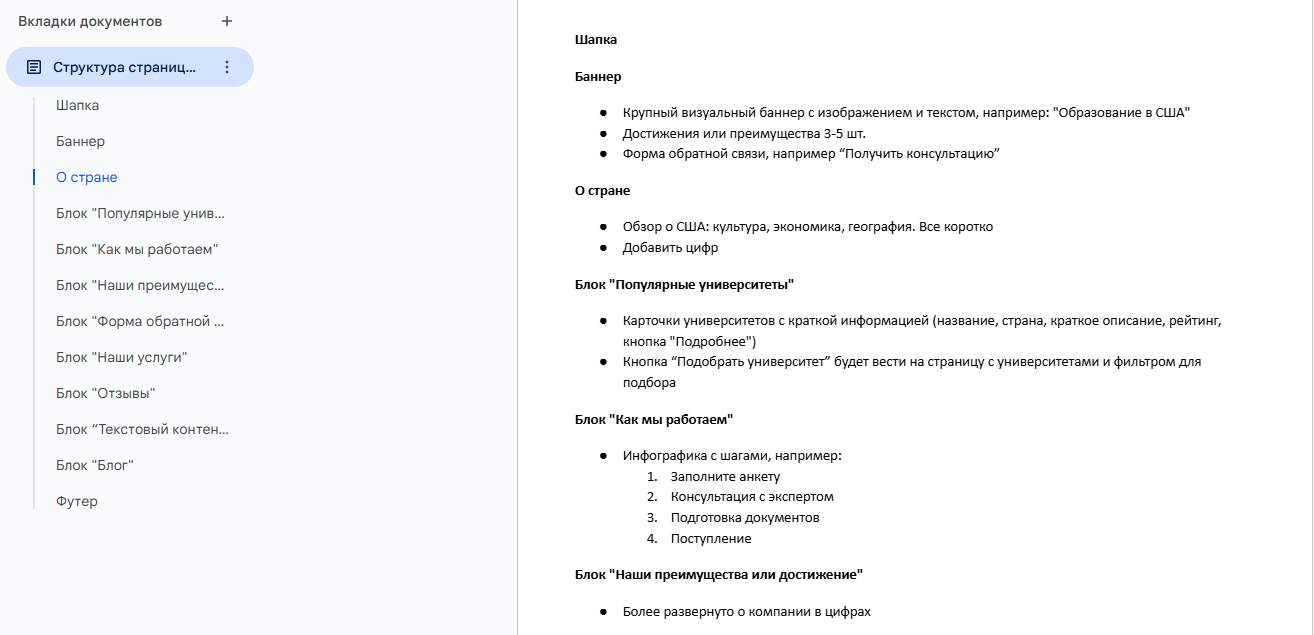
The work began with an analysis of competitors to understand the main trends in the niche. A detailed briefing was also conducted with the client to determine what functionality should be included on the pages and how it should work. Next, all recommendations were collected regarding the necessary blocks on all pages for promotion, their potential appearance, functionality, principle of operation, and formation. Based on this, preliminary mockups and black-and-white prototypes were created for all types of templates, which were then handed over to designers for further work.
The next step was to form a list of entities that would be common to the entire site. We needed to determine which blocks on the pages should be pulled up through links and how exactly they should work. Based on this, three groups of elements were identified:
- Static blocks (forms, advantages, etc.);
- Blocks with entities for cross-linking and interrelationships (block of reviews, universities, countries, specialties, services, etc.);
- Unique blocks — these blocks are repeated in only one template.
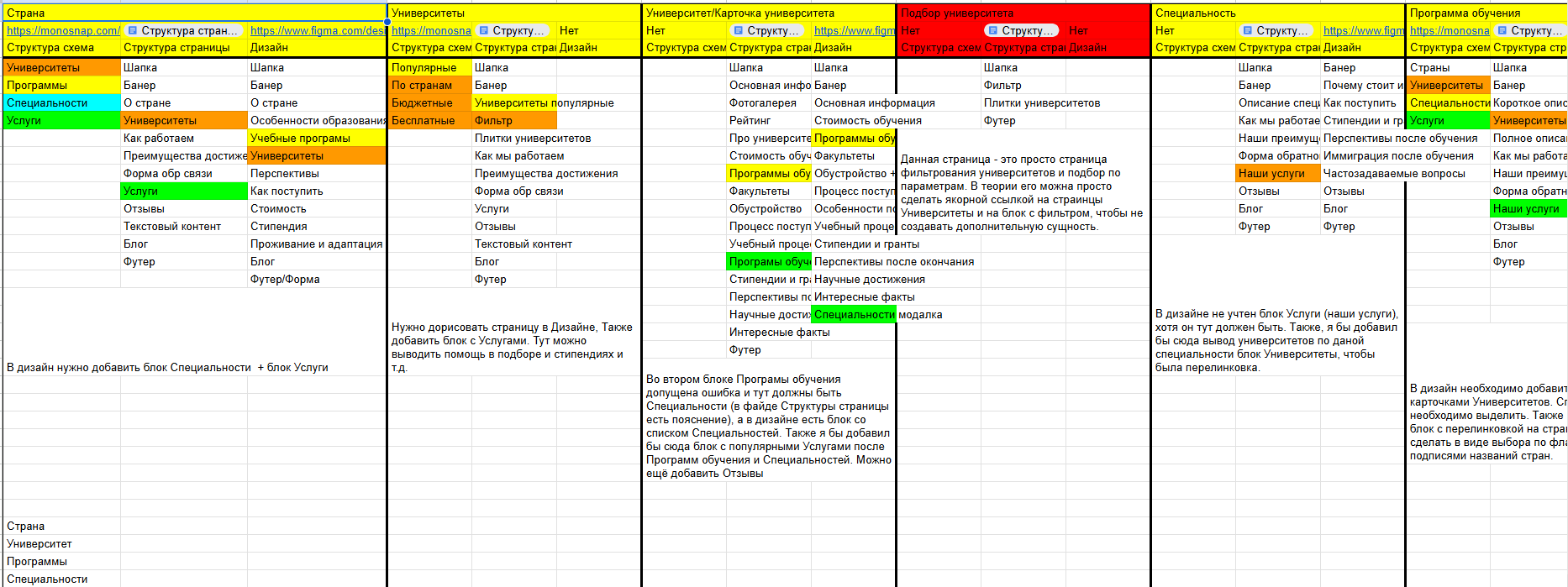
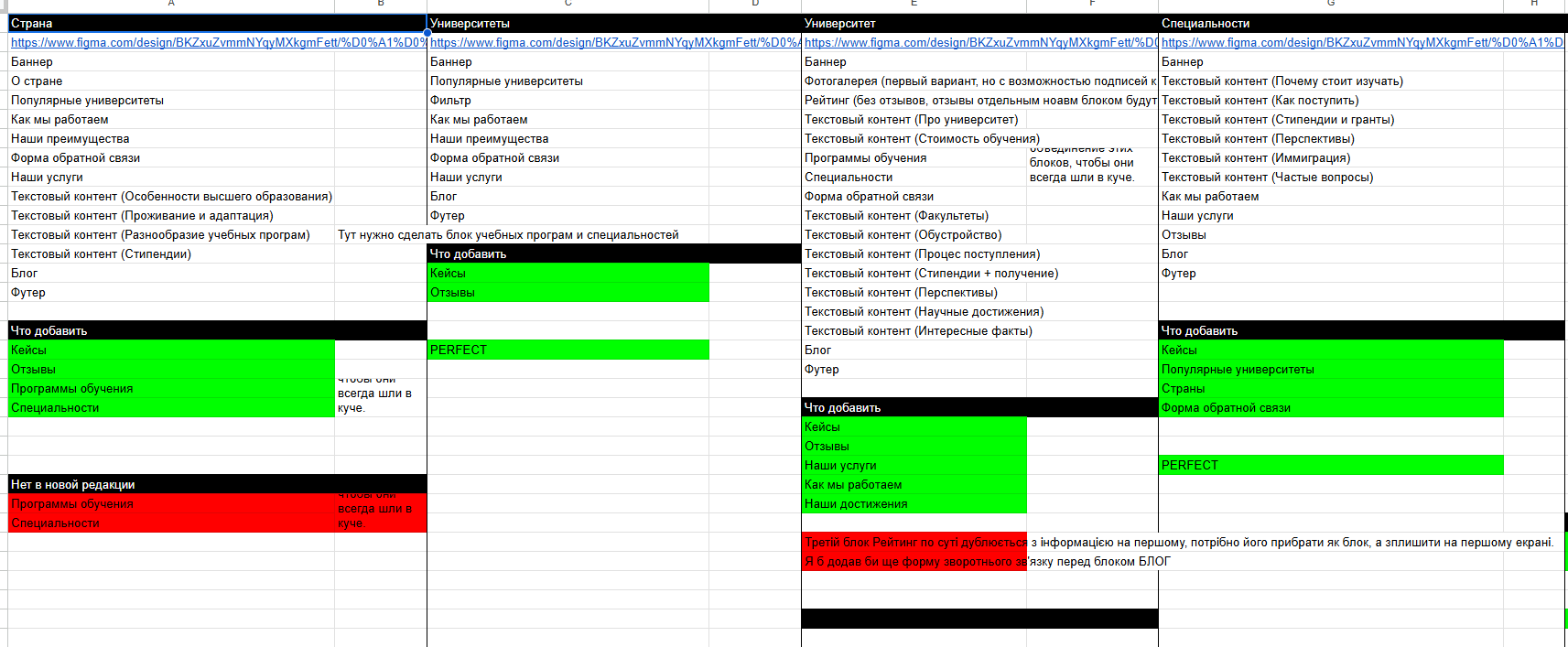
After that, the structure of each template was supplemented with cross-linking blocks necessary for convenient user navigation.
The next step was to develop technical specifications for the programmer for basic technical optimization. These technical specifications listed 90% of the main technical errors that are often found on websites and that need to be taken into account to avoid them on the new website: redirects, the formation and functioning of pagination pages, interlinking, etc. Tasks for improving the indexing of the site were also added to these technical specifications: correct formation of the site map, internal cross-linking, configuration of robots.txt, etc.
Next, technical specifications were formed for the programmer on specific settings of entities and relationships between them, setting up the SEO filter according to basic parameters, as well as generating meta tags for all pages of the site.
A separate area of work was the formation of technical specifications for the functioning of the entire site. These technical specifications became the basis for combining the front-end and back-end. They described all page templates with their functionality. All the necessary fields in the admin panel were also described for the convenience of administration and functioning of the site.
Design
The concept and color scheme were taken from the design of the old site, but the actual structure of the pages, blocks, and elements was significantly expanded, as the site was increased from 5 to 14 page templates. First, a desktop version was drawn up with adaptability in mind — all functionality and links between entities were discussed. Then, a mobile version was created, focusing on maximum convenience for users who place orders via mobile phones. After both versions were edited and agreed upon, an intermediate tablet version was created.
Layout
Based on the finished design, all template pages of the site were laid out with full animation and minimal transition functionality to display the primary functionality. Three full-size screens were created, and the entire design was adapted to non-standard screen sizes.
Programming and Back-end
Based on the finished layout, the technical specifications for the website’s functionality, and optimization tasks, the website was implemented using WordPress CMS.
The main and non-standard solutions during development were:
- Creation of 8 separate entities, for which individual designs were developed and the logic of placing entity blocks on the website pages and linking between them was configured. We also developed a feature for internal communication between entities in the admin panel for ease of filling out, which automatically updates and pulls the latest data to the website pages.
- Linking the main services to information pages to attract warm traffic from the niche.
At the moment, the site is in the process of being filled with content and translations are being added to the already filled pages of the Ukrainian version.
Results
Currently, the design of all typical pages has been completely redrawn for the website, and adaptive layout has been created for desktops, tablets, and mobile phones, with a focus on the latter. A backend based on CMS WoerdPress was developed for the new structure and complex links, as it is the simplest and cheapest option for implementing everything that has been thought out. Each entity is created through a separate record type, which is very convenient for linking them together and working with them. Currently, the website is in the final stages of content filling and functionality testing. The new website will be launched by the end of 2025.
Currently, the website is undergoing active backend and frontend development, with UI/UX improvements and refinements being made during the testing phase. In addition, the process of filling the website with content created for new page templates is actively underway. At the same time, new texts are being written and existing materials are being translated to fill all language versions of the website.
After the basic content has been added to the website, a technical audit will be conducted, and the basic requirements for indexing will be configured not only for classic search engines but also for all promising AI services and LLM systems, which is particularly important today.
After that, the site will be transferred to the working domain via redirects from the old pages, and the SEO optimization process will begin, aimed at achieving maximum results in search engines.