Contents of the case
Media
Initial data
Whole works
- /01 Get priority high-frequency search queries into Google's Top 5
- /02 Increase organic traffic
- /03 Expand the site structure and semantic core
- /04 Optimize the technical condition of the website, taking into account the specific features of the Shopify platform
- /05 Build a high-quality and authoritative backlink profile
- /06 Increase conversion rates by improving UX and page content
Issues and general strategy
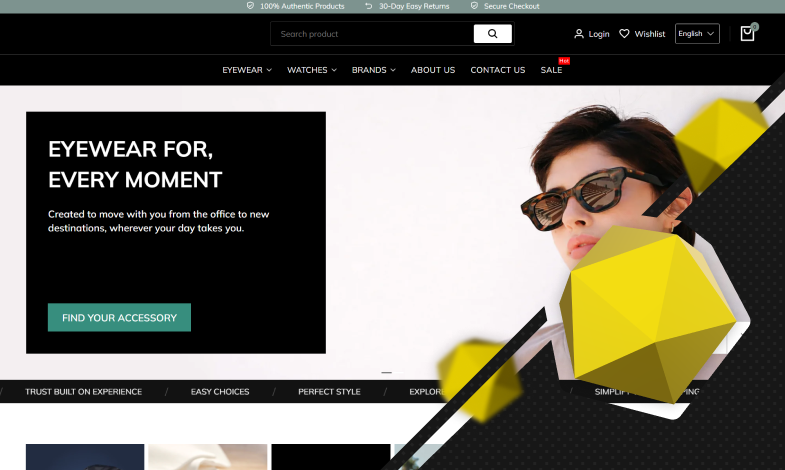
Before we began working together, the client had a Shopify site with moderate organic traffic, which came primarily from brand-related and highly specific search queries. Although the site had been online for several years, there had been no significant progress in Google’s organic search results: the pages were poorly optimized, the structure was minimalistic and did not meet semantic requirements, and the backlink profile remained insufficient to compete in the U.S. market.
The client’s request was comprehensive: to make the store visible to a broad audience in the U.S. and transform the organic channel into a stable and predictable source of sales. The key challenge lay in the platform’s specifics—Shopify has significant limitations regarding the editing of technical parameters and structure, so a number of standard SEO tasks had to be solved using non-standard methods.
The strategy we proposed was built around three key areas. The first was in-depth semantic work to expand the site’s structure: identifying unoccupied niches in search results and creating separate landing pages for them. The second was high-quality content optimization focused on matching the user’s search intent. The third was the systematic building of an authoritative backlink profile, synchronized with the growth rates of competitors in the niche. All three areas were implemented in parallel, creating a synergistic effect.
What has been done
Semantics
The first step was to build a comprehensive semantic core. Before we began work on the site, there was virtually no clear distribution of keyword queries across pages—some terms important to the niche were either missing or were being cannibalized across multiple URLs.
We collected over 4,500 unique keyword queries, clustered them by intent and commercial potential, and then distributed them among existing and new pages on the site. We also set aside a group of informational queries specifically for promotion via the blog.
Technical Optimization
Shopify is a powerful but closed platform. Many technical adjustments available on other CMS platforms with a single click required non-standard solutions here, such as customizing the template or using built-in tools in new ways.
Among the technical tasks completed:
- eliminating duplicate pages (via URL parameters and pagination);
- setting up canonical links;
- optimizing page load speed (image compression, removing unnecessary scripts);
- properly configuring the robots.txt and sitemap.xml files;
- checking and fixing redirect chains;
- adapting the mobile version to improve Core Web Vitals metrics.
Content
Before work began, most of the site’s pages contained minimal or no text content at all. Metadata was either boilerplate or automatically generated without considering target queries.
We conducted a content audit and developed a text structure for each page type: homepage, categories, product pages, and blog posts. We separately determined the optimal length, keyword density, and presentation format—taking into account the content of top competitors in the niche. All texts were written from scratch by a team of SEO copywriters and edited to meet Google’s current E-E-A-T requirements.
Metadata (title, description) was manually crafted for all priority pages using unique value propositions and natural keyword placement.
Structure Expansion
The issue of a narrow structure was one of the key challenges. At the start of our collaboration, the site had a limited number of landing pages, making it impossible to cover a wide range of commercial search queries.
Based on clustered semantics, we developed a new hierarchical catalog structure: we added new subcategories and collections, and expanded the list of filter attributes that generate individual landing pages with unique content. Some informational queries were moved to the blog with a system of internal links to commercial pages.
Micro-markup
To expand snippets in search results and increase click-through rate (CTR) without changing rankings, structured data was implemented:
- Product – for product pages;
- AggregateRating – to display rating stars in search results;
- BreadcrumbList – to improve URL readability in SERPs;
- FAQPage – for informational blocks on category pages.
The implementation of microdata positively impacted the CTR of priority pages—especially for product queries with medium and low search volume, where traffic has the highest conversion value.
Backlink Profile
Initially, the site’s backlink profile was weak: a small number of referring domains, a significant portion of which were low-quality or irrelevant sources. Competitors in the niche had significantly higher Domain Rating (DR) and a larger volume of thematic backlinks.
We conducted a detailed competitor analysis and developed a link-building plan aimed at safely and gradually increasing the domain’s authority. The following methods were used:
- publications on relevant English-language websites and blogs (guest posts);
- listings on niche aggregators and directories;
- niche HARO links (journalist inquiries);
- digital PR — acquiring natural links through useful content.
Particular attention was paid to the balance of anchor and non-anchor links to avoid the risk of penalties. The new backlink profile was built up gradually, with constant monitoring of the profile and the rejection of toxic links via Google Disavow.
Results
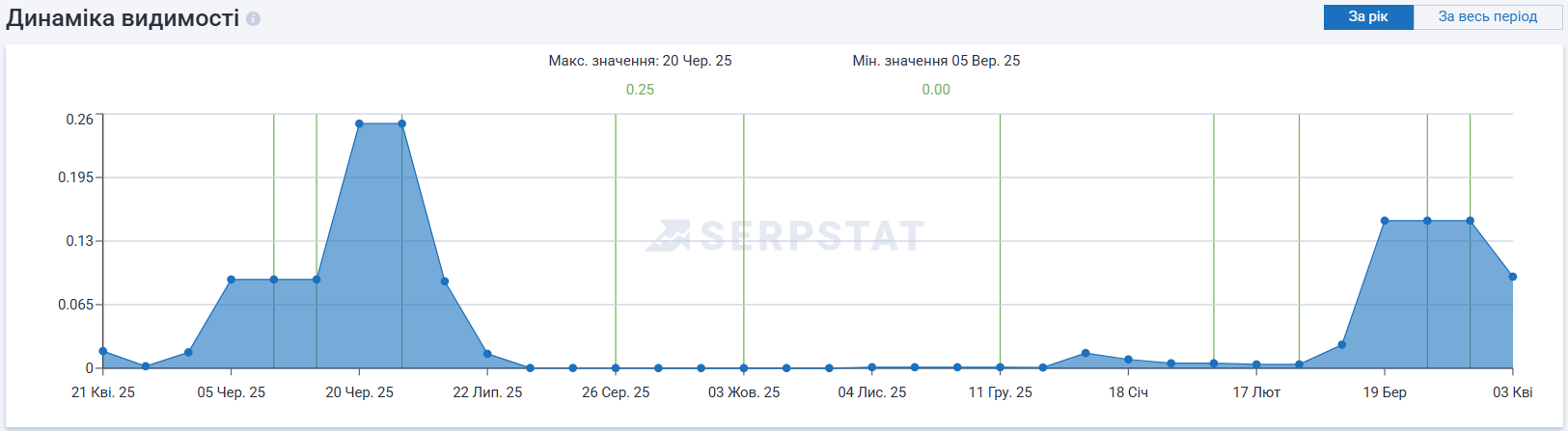
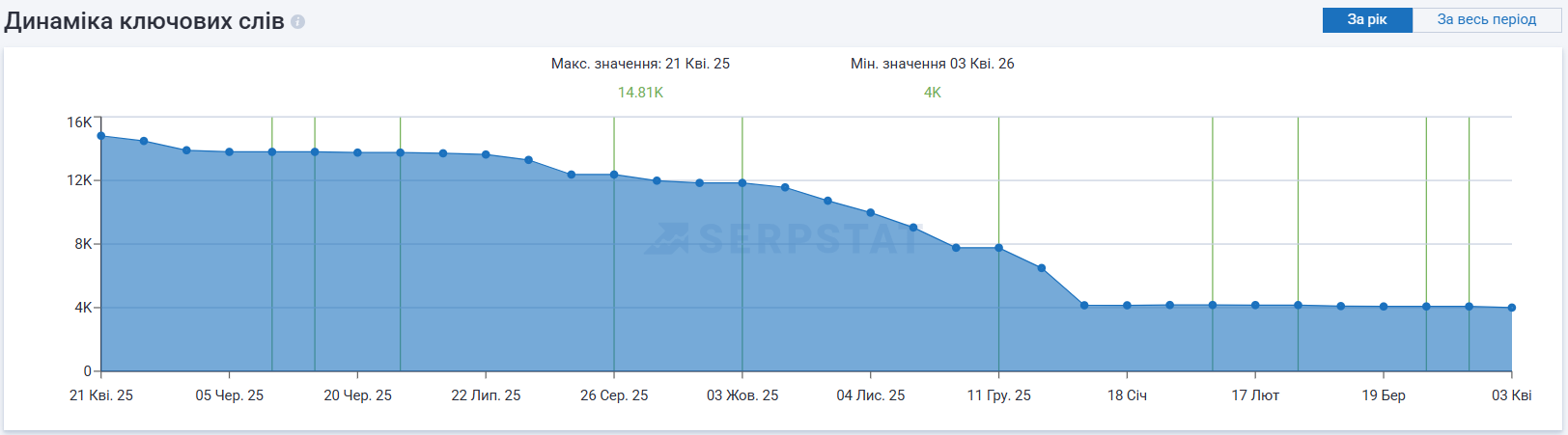
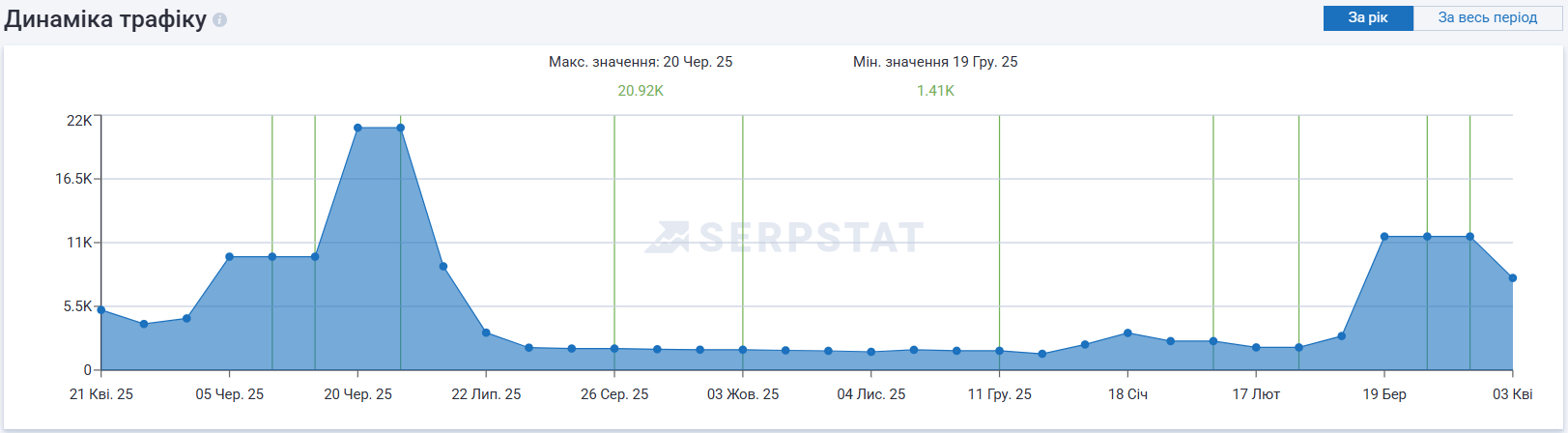
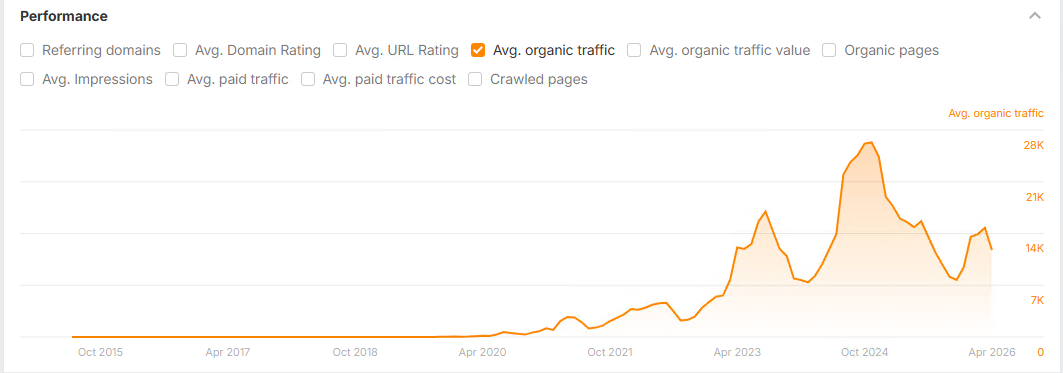
Over 18 months of active collaboration, we were able to significantly transform the organic channel: from a relatively weak and unstable source of traffic, it evolved into an effective channel for attracting new customers. The website’s organic visibility improved across all key metrics, and priority commercial queries reached the top 3 in Google USA search results.
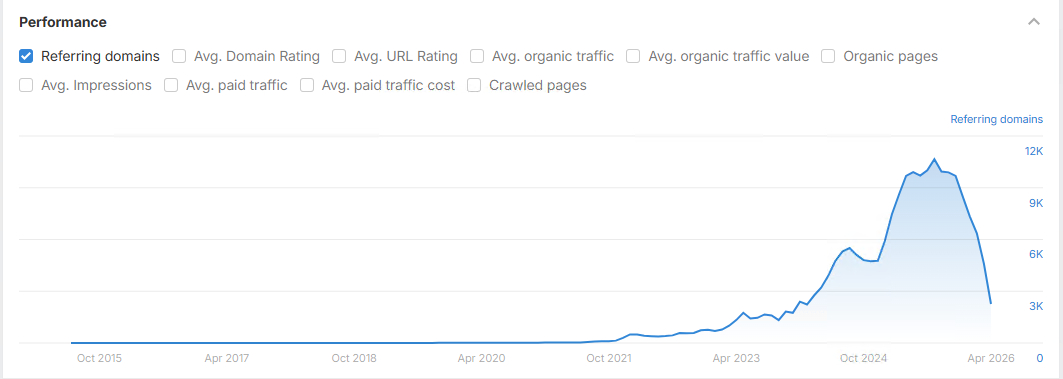
The dynamics of referring domains confirmed the effectiveness of the link-building strategy: the number of high-quality referring domains increased more than fivefold, which became one of the key factors in boosting the site’s authority and improving rankings for high-volume search queries.
In parallel with the ranking growth, we managed to nearly double the conversion rate—thanks to improvements in the UX component, optimization of product cards, and higher-quality internal linking between categories and products.
| Options | At the start of the work | In 18 months | The difference |
|---|---|---|---|
| Organic traffic | |||
| Organic traffic | 1240 | 8370 | +575% |
| Conversion | |||
| Conversion | 0,85% | 2,21% | +160% |
| Visibility | |||
| Visibility | 0,02 | 0,17 | +750% |
| Top 10 Keywords | |||
| Top 10 Keywords | 380 | 2850 | +650% |