

 05/02/2026
  1084
1084


Інтернет-маркетинг
простою мовою
Content of the article
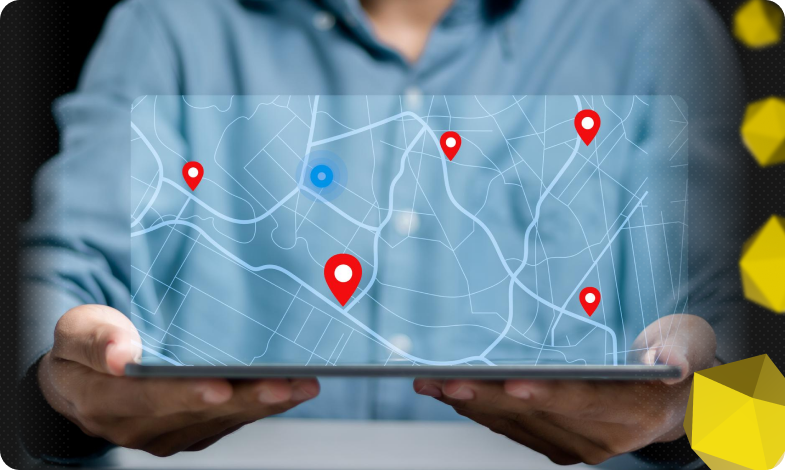
Geotargeting: what it is and how it works in advertising

Today, businesses operate in an environment where digital customer footprints are becoming part of the marketing strategy. People interact with maps, search, local services and social platforms every day, leaving signals about their interests, routes and real needs. This creates new opportunities for brands to build communication not in the abstract, but taking into account a specific place, context, and moment of choice. This approach changes the quality of advertising campaigns: messages become more accurate, costs are more controlled, and the path to conversion is shorter.
In this article, we will look at the mechanics of geo-targeting in advertising, how to use it in different channels, where the line between efficiency and overspending lies, and what practical steps will help businesses get a predictable result at the stage of the first launches.
What is geotargeting?
Geo-targeting is an algorithm that allows you to display content or advertising messages to users based on their geographic location. From the country and region to a specific city, district, or even a point on the map. This logic helps businesses to more accurately correlate the offer with the real conditions of a potential customer – his access to the product, local needs, time and behavioral characteristics.
As a result, companies reduce the share of untargeted impressions, optimize advertising costs, and increase the perception of messages as useful and relevant. For the audience, advertising ceases to look intrusive as it is more relevant to the current context and practical value, and for businesses, it becomes a tool for controlled growth in the efficiency of marketing investments.
When you need geographic targeting
Geographic targeting is appropriate for specific business scenarios. Let’s consider typical cases.

Local and regional companies
Businesses that operate within a single city or region get the most value from filtering their audience by territory. This allows you to avoid wasting your budget on regions where the product is not physically available and to scale faster in areas where demand is stable. As a result, marketing becomes more predictable and costs are controlled.
Offline business (without online sales)
When the main goal is to bring a person to a physical location, the proximity and convenience of the route plays a critical role. Geo-targeting allows you to communicate with the audience that can actually come in today or in the near future, rather than with abstract users from other districts or cities. This is especially important for small and medium-sized businesses, where each visitor directly affects the turnover.
Local or express services
In logistics and services, the key factor is not the customer’s portrait, but the ability to physically fulfill the promise – to deliver the goods, come to the call, and meet the stated time. Setting up displays based on the actual coverage area helps to avoid negative customer experience and reduces the workload of the operations team.
Local services with a high frequency of repeat calls
Medical centers, fitness clubs, salons, and legal consultancies form a customer base near the location. For such businesses, not only the first application is important, but also a long-term presence in the field of view of the local audience. Geographic targeting helps to build a steady stream of requests and gradually increase awareness in a particular area.
Useful tip! Before launching, always clearly formulate a business goal for each geo-zone and test the strategy on a small segment to minimize costs and quickly get practical conclusions.
How geotargeting works
Geo-targeting is based on a combination of different sources of location data and a set of logical rules that determine who to show messages to and when. Each source has its own strengths and weaknesses – they are combined to strike the right balance between accuracy, reach, and privacy.
- IP addresses – allow you to quickly determine the country, region, or approximate city from network data. They are suitable for large-scale targeting of a region or country, but do not provide high accuracy for individual streets or points.
- Data from mobile network stations – allows you to navigate the coverage area of a mobile operator’s tower. More accurate than IP in urban areas, but still has an error in the coverage radius. They are used to target large areas or analyze traffic flows.
- Cookies and browser identifiers – allow you to link user behavior on websites to a conditional location (for example, previous visits to local pages). Cookies are useful for retargeting and segmentation, but lose their effectiveness when cookies are blocked or deleted.
- Location-based queries in search engines are a direct signal of intent and geographic context (for example, «coffee shops nearby» or «marketing agency Kyiv»). Such queries have a high intent and often lead to conversions «here and now.»
- Smartphone data (GPS) and mobile apps – provide the most accurate geolocation, subject to user consent. It is used for push notifications, in-range offers, and real-time campaigns.
- Wi-Fi/Bluetooth beacons – used for precise targeting indoors (shops, malls). It makes it possible to respond to the presence in a certain room or area, but requires infrastructure and technical integration.
- Data from social networks – posts, geotags, check-ins, and profile information – provide additional signals about the places of interest and movement of users. Social media platforms also create their own geo-audiences based on this data.
The key operational logic is to define the display area (from the country to the radius around the point), choose an audience selection rule (for example, «only those who are in the location», «those who have recently been here», «those who are interested in this place») and synchronize creatives, display schedules and bids with these conditions. In a real-world project, the best strategy usually combines several data sources: broad coverage via IP and cookies, accurate «real-world» impressions via GPS or mobile networks, and signals from social media and search to increase relevance.
Don’t forget about privacy requirements: GPS, push notifications, and some types of cookies require explicit user consent, as well as a transparent data processing policy. This is part of the technical and reputational responsibility of working with geodata.
Pros and cons of using geotargeting
Geo-targeting is a tool with high practical value, but like any targeting, it works best when there is clear business logic and control. Therefore, below are the strengths and main risks with tips on how to minimize them.

Advantages:
- Increased relevance and budget savings.
Showing ads only to those who are physically or behaviorally relevant to your offer reduces the number of wasted impressions and reduces the cost of untargeted traffic. In practice, this means a higher conversion rate per invested hryvnia and a clearer assessment of the payback of campaigns.
- Reduced competition.
Restricting impressions to a specific territory allows you to avoid direct competition with national and large players who work for a wider reach and raise bids in the auction. Local zones usually have a lower cost per click and less advertising noise, which makes it easier to attract the attention of the target audience.
- Increase conversion rates.
When a customer’s decision depends on accessibility (distance, delivery time, zoning of services), location targeting significantly increases the likelihood of contact or purchase. The practical effect is better lead quality and lower cost per lead.
Risks and limitations:
- Inconsistency in source accuracy (IP ≠ GPS).
Different location mechanisms have different accuracy: IP geolocation shows an approximate area, GPS gives a point, cookies and behavior are conditional signals. The wrong choice of mechanics leads to misses in the target area or, conversely, the loss of relevant traffic. To reduce the risk, select the source for the task and test on control zones.
- Privacy and user consent.
Accurate geodata (GPS, push) requires explicit consent and a transparent data processing policy, otherwise there is a risk of complaints, subscription blocking, or legal claims. Therefore, it is worth providing a simple consent mechanism, a transparent explanation of the purpose of collection and an easy way to unsubscribe, as well as working with lawyers to comply with regulations.
- Incorrect platform settings and coverage leakage.
Platforms sometimes interpret geo-fencing in different ways (e.g., showing those who are interested in a location, not just those who are there). This can result in impressions outside the target area and unnecessary costs. To avoid this, carefully check the options, for example, «presence» vs. «interest», and do test runs with daytime monitoring.
It is worth remembering that geo-targeting requires a conscious choice of data sources, attention to privacy, and close synchronization with the operational part of the business. Be sure to launch geo-campaigns through pilot tests, clearly measure local metrics, and scale up your coverage only after confirming the hypotheses.
Advanced geo-targeting
Advanced geo-targeting goes beyond simply selecting a city or region. It combines basic location signals with additional layers of data: behavioral segmentation, time of day, context of a particular place, and personalization of creative for micro-location. In practice, they use custom location groups in Google Ads, radius campaigns around specified points, POI lists, and scheduled display scenarios. This allows you to build not just «local advertising» but controlled scenarios of interaction with the audience at a specific moment and in a specific environment.
For example, a developer or real estate agency that creates custom groups of locations around new residential complexes, business centers, and metro stations. Separate creatives are created for each zone with relevant arguments: proximity to infrastructure, transport accessibility, price per square meter in a particular area. As a result, advertising looks personalized and works not for abstract demand, but for the real context of housing choice.
Another scenario is retail or brands that work with event traffic. During major exhibitions, concerts, or sporting events, you can create lists of points of interest around the event location and launch short campaigns with limited display times. For example, an accessory brand can offer a special discount for visitors to an exhibition within a few hours after it ends, when the audience is still around and ready for impulse purchases.
Thus, advanced geotargeting turns into a tool for precise demand management.

This creates the prerequisites for a steady increase in campaign efficiency in the long run.
Mobile geo-targeting
Mobile devices are the main source of data on the actual location of users, which makes mobile geo-targeting one of the most accurate tools for engaging the audience.
A separate area is geo-behavioral targeting, which takes into account not only the current location but also typical routes and places visited. This helps to more accurately predict the interests and needs of the audience.
As a result, this format ensures that ads are shown only to those people who are within a given radius at a given time. This allows you to work with demand «here and now» and stimulate a quick action: a visit, a call, a route, a purchase.
Geographic targeting in social networks
Social networks (Meta, Instagram, TikTok, etc.) offer local targeting tools: countries, regions, cities, postal codes, radii around a specific address. The main steps:

For a stable result, it is worth creating separate ad sets for different micro-locations instead of one general campaign coverage. This allows you to manage your budget more accurately, adapt creatives to the local context, and scale effective segments faster.
Geo-targeting in Google Ads
Google Ads provides businesses with detailed geo-targeting tools. However, the key role is played not only by the choice of location, but also by the correct display logic.
First of all, you need to check the Location options. By default, the system can show ads to users who are only interested in the selected area but are physically located in another region. For local businesses or services with a limited coverage area, it is advisable to use the option to show ads only to those who are actually located or regularly visit the selected location.
For network companies and large-scale campaigns, it is effective to use location groups, for example, lists of stores or service points that allow you to centrally manage the geography of impressions. Additionally, it is worth adapting bids and display schedules to local peak hours when demand for a product or service is at its highest.
Local extensions also help to increase relevance: addresses, maps, contact information, as well as separate landing pages with content tailored to a specific region. This synchronization of ads and websites has a positive impact on CTR, traffic quality, and conversions.
Geotargeting without mistakes and unnecessary expenses
The WEDEX team will help you set up advertising campaigns so that they work in the right regions, increase CTR, and bring quality traffic.
Geo-targeting for SEO
Geo-optimization of a website is not only about keywords with the name of the city. To increase conversions, you should
- create local landing pages with unique content;
- specify business hours and addresses;
- use structured data;
- customize pages for specific languages and regions;
- work with local reviews.
The combination of properly configured advertising and local SEO significantly increases the chance of conversion from a user looking for an instant solution to their issue. Don’t forget about testing local landing pages and tracking user behavior in each geo-zone.
So, we can conclude that geo-targeting is a balance between technical capabilities and understanding of local customer behavior. When you combine precise display mechanics with relevant local experience, the result speaks for itself. Higher engagement rates, less audience confusion, and a noticeable increase in conversions.

commercial offer
Other articles by the author

28/01/2026
When user attention is limited, competition for each click increases, and the cost of customer acquisition rises, the way information is presented often matters more than the product itself.

20/03/2026
Detailed feedback allows you to take targeted action, conserve resources, and increase revenue.

26/03/2026
A gradual approach to integrating artificial intelligence is truly important because it helps avoid a number of risks and mistakes.
Latest articles by #Useful tips
26/03/2026
A gradual approach to integrating artificial intelligence is truly important because it helps avoid a number of risks and mistakes.

26/03/2026
The benefits of integrating AI into PPC processes go beyond simply “faster text generation.” It’s about a fundamental shift in approach.

24/03/2026
Today, artificial intelligence enables businesses to generate visuals quickly, scale creative options, and accelerate the iteration process.