

 31/08/2026
  1501
1501

Інтернет-маркетинг
простою мовою
Content of the article
- /01 What is a strategic session
- /02 When a strategic session is necessary, and when it is harmful
- /03 How to prepare for a strategic session
- /04 How to choose a methodology for a strategy session: a comparison of key tools
- SWOT / PESTEL: comprehensive assessment of context and risks
- Porter’s 5 Forces: analysis of the competitive environment
- Business model canvas (Osterwalder): systematizing and reorganizing the business model
- Jobs-To-Be-Done (JTBD): researching customers true motivations
- OKR (Objectives & Key Results): focusing and cascading goals
- /05 Implementing decisions and measuring ROI

Strategic session: a trend or an effective business tool
High market volatility, rapidly changing consumer trends, and intensifying competition have forced businesses to significantly shorten their planning horizons. However, without a clear strategic direction, day-to-day operations quickly turn into an exhausting game of «firefighting».
In this article, we’ll explore how to distinguish an effective strategic session from a trendy formality, what analytical data is needed for preparation, which frameworks to choose for specific business tasks, and how to build a monitoring system that will turn ideas into measurable financial results.
What is a strategic session
The term «strategic session» is heard at nearly every management forum today. For some companies, it’s the key lever for scaling up and entering new markets; for others, it’s just another trendy ritual that leaves behind nothing but disappointment, stacks of colored sticky notes, and wasted time for top management.
The main reason for skepticism on the part of owners lies in a confusion of concepts.
A strategy session is not a facilitated brainstorming session, nor is it team coaching or motivational training. It is a strictly regulated management technique for making coordinated decisions under conditions of limited resources and uncertainty.
The challenge of translating strategy into concrete action is a global one. According to research firm Gartner, only 31% of strategic development executives believe their organizations successfully achieve their strategic objectives during implementation.
«The essence of strategy is deciding what the company will not do.» — Michael Porter, professor at Harvard Business School, in his article for the Harvard Business Review.
A truly effective strategy session fulfills three basic functions within the management system:
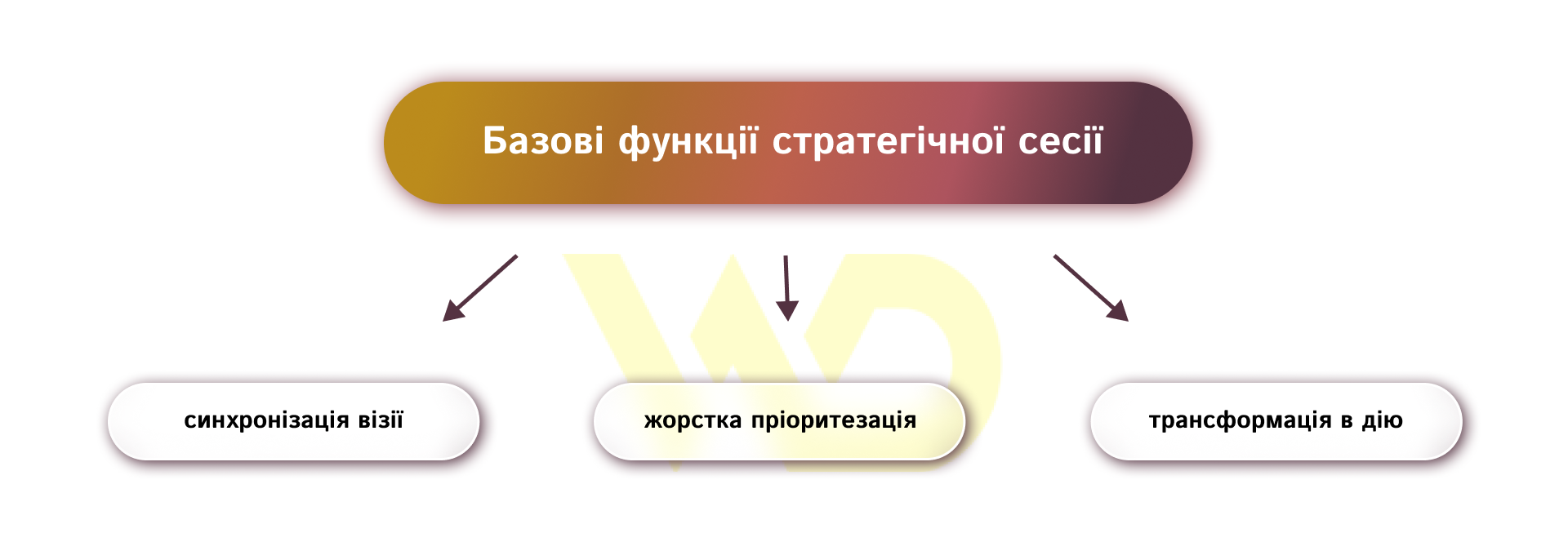
- Aligning the vision: establishing a shared understanding of the current state of the business, external threats, and long-term goals among owners, the CEO, and division heads;
- Strict prioritization: selecting a narrow set of critical projects and consciously rejecting secondary initiatives that dilute the team’s focus;
- Transforming into action: converting abstract aspirations into specific, quantifiable KPI, calendar deadlines, and assigned personal accountability.
When leadership views the session as a finely tuned management mechanism rather than a one-time event, it transforms from an abstract trend into a fundamental tool for ensuring the viability and growth of the business.
When a strategic session is necessary, and when it is harmful
A strategic session is not a universal cure for all organizational problems. Since conducting one requires significant time and financial investments from the company’s key personnel, it is important for a manager to conduct an initial assessment of the feasibility of this step.
Involving top management in the strategic process is justified when the following business triggers are present:
|
A significant change in the market context |
A transformation of the business model |
Systemic cross-departmental disconnect |
Reaching a growth «ceiling» |
|
A decline or shift in demand, the emergence of new strong players, changes in regulatory rules, or technological shifts |
Launch of new product lines, expansion into the B2B segment, or entry into international markets where old approaches no longer work |
The presence of hidden or open conflicts between departments (for example, when marketing generates leads that salespeople consider off-target, and R&D creates features the market doesn’t need) |
A situation where traditional sales promotion methods no longer drive profitability growth, and the company is stagnating |
At the same time, there are certain situations where holding a strategic session is contraindicated and can only harm the company.
Typical problematic scenarios include:
- an acute financial or operational crisis: if the company is experiencing a cash flow gap or logistical chaos, the business needs tough, crisis-response operational decisions, not hours-long strategic discussions about the future;
- lack of basic management accounting: discussing strategy without reliable historical data on the profitability of products, channels, and segments turns into baseless fantasy;
- An autocratic management style: if the owner or CEO has already made a unilateral decision and expects the session to merely provide formal approval from the team, the process loses its purpose and causes deep demotivation among employees.
Only a sober assessment of the organizational structure’s internal readiness can protect the company from wasted financial expenditures and shield the team from managerial burnout.
How to prepare for a strategic session
The effectiveness of a strategic session is determined at least half by the quality of the preliminary analytical phase. A common mistake is holding a meeting «from scratch», where participants rely solely on their own subjective assumptions and personal feelings.
A comprehensive approach to data should serve as the foundation for making informed decisions.
Before the session begins, the analytics team should prepare three levels of information:
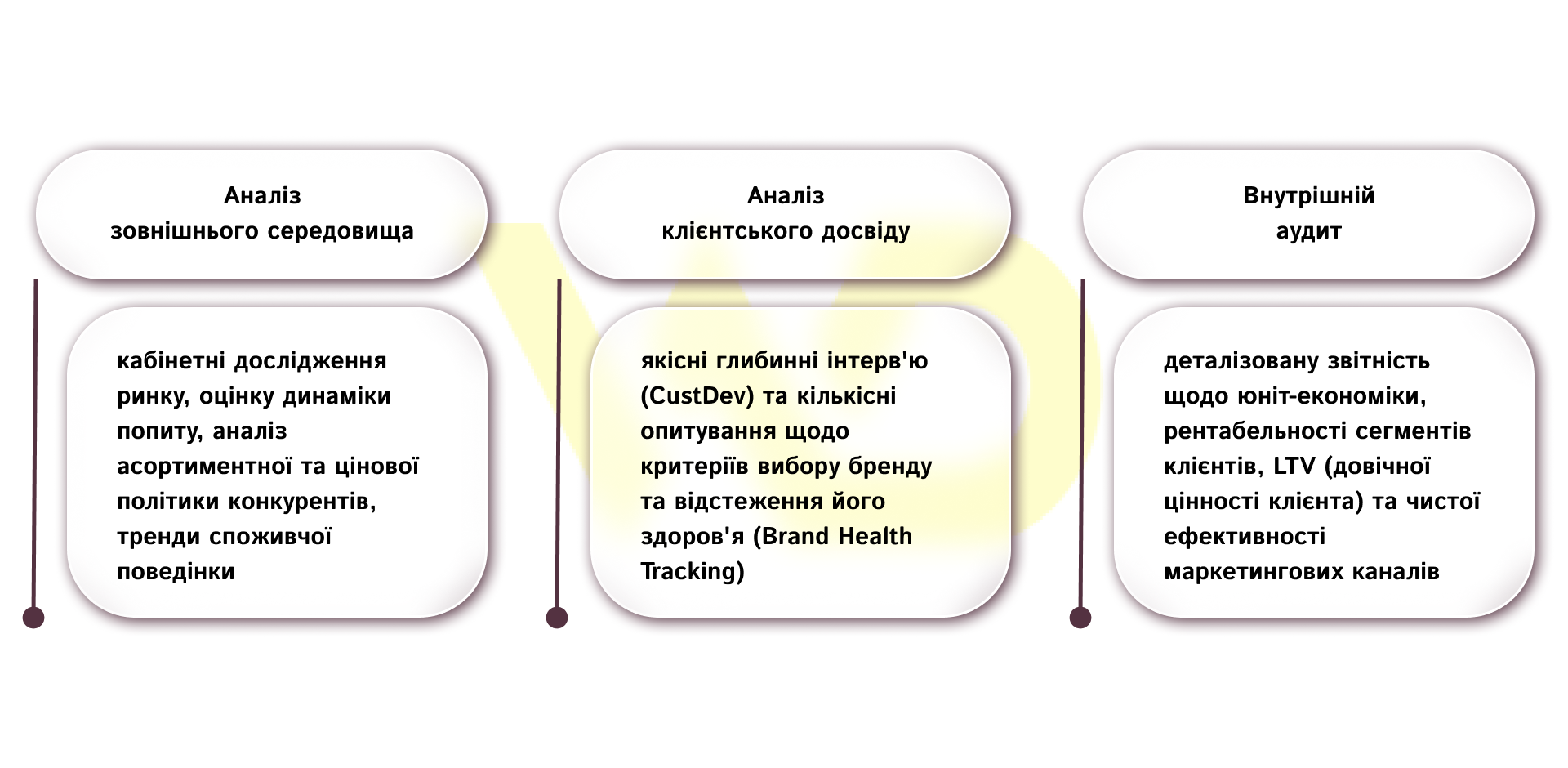
Special attention should be paid to the composition of the participants. The optimal size of a working group is 7 to 12 people. It must include C-level executives (CEO, CMO, COO, CFO) and heads of key departments.
It is very helpful to temporarily involve front-line employees, such as a support manager or a lead sales manager. They work directly with customers and can highlight specific issues that top management often overlooks.
To counteract internal corporate pressure and formalism, it is recommended to bring in an external, neutral facilitator. An independent moderator has no personal stake in internal conflicts, steers the discussion back onto a constructive track, enforces the agenda, and asks the team «uncomfortable» questions.
A well-structured information environment and the involvement of an external facilitator ensure that top management’s valuable time is spent on making strategic decisions rather than on disputes over basic facts.
How to choose a methodology for a strategy session: a comparison of key tools
The key to a successful strategy session is the right choice of methodological tools. There is no one-size-fits-all framework: the facilitator must combine methodologies depending on the business’s maturity, scale, and the challenges the company faces.
Depending on the focus of the strategic analysis, key tools are categorized by their objectives, context of application, and expected business outputs.
SWOT / PESTEL: comprehensive assessment of context and risks
This method is designed to conduct an initial audit of the business’s current state and assess the external environment. PESTEL helps systematize macroeconomic, technological, and regulatory pressure factors, while SWOT compares them with the company’s internal strengths and weaknesses.
The main value of the method lies not in simply compiling lists, but in constructing a cross-referenced matrix of actions that is, determining how to leverage strengths to capitalize on market opportunities and what steps to take to mitigate threats. The final output is a clear roadmap of strategic initiatives that protects the business from external shocks and guides the team through current market realities.
Porter’s 5 Forces: analysis of the competitive environment
This framework is used when planning for scaling up, entering new markets, or protecting profit margins. It allows for an assessment of pressure from five vectors: existing competitors, new entrants, substitute products, suppliers, and buyers.
Using this methodology helps top management understand exactly where the company is losing profitability and what strategic barriers need to be built. The result is a concrete action plan to raise barriers to entry for competitors and strengthen the company’s position in negotiations with partners and suppliers.
Business model canvas (Osterwalder): systematizing and reorganizing the business model
This tool is indispensable during business transformation, the launch of new products, or the revision of a value proposition. The Canvas breaks down a business into nine interconnected blocks: from key partners and resources to distribution channels, customer segments, and revenue streams.
The main advantage of the Canvas is that it visually illustrates systemic relationships. If a team changes the value proposition for a customer, the tool immediately highlights the necessary adjustments to operational processes, partnerships, and the cost structure. The final deliverable is a visual map of the new «To-Be» business model, ready for implementation.
Jobs-To-Be-Done (JTBD): researching customers true motivations
This methodology focuses on gaining a deep understanding of the specific «jobs» your product or service is used to accomplish. Unlike traditional demographic analysis, JTBD explores consumers’ emotional, social, and practical triggers.
Applying JTBD during a strategic session allows you to review your marketing communications, create a compelling value proposition, and identify new growth opportunities for your products. The end result is a detailed map of consumer needs, which serves as the foundation for updating your marketing and product strategies.
OKR (Objectives & Key Results): focusing and cascading goals
This framework is designed to translate a company’s abstract vision into specific, measurable goals at both the organization-wide and department-level. The method is typically applied at the final stage of a session to align teams.
OKR allows you to set 3–5 ambitious goals and define clear, measurable success metrics for each one. As a result, each department receives a transparent roadmap of actions, ensuring a unified focus and eliminating the disconnect between strategy and day-to-day operations.
During the session, these tools are applied sequentially. This allows the team to move from analyzing cause-and-effect relationships to developing a logical and actionable plan.
Implementing decisions and measuring ROI
The conclusion of a strategic session is only the beginning of true transformational work. A study by Marakon Associates and the Economist Intelligence Unit showed that, on average, companies realize only 63% of the financial potential outlined in their strategic plans, indicating a significant gap between strategy development and its practical implementation.
The main outcome of the session should not be a flashy presentation, but a concise and actionable roadmap built according to strict guidelines:
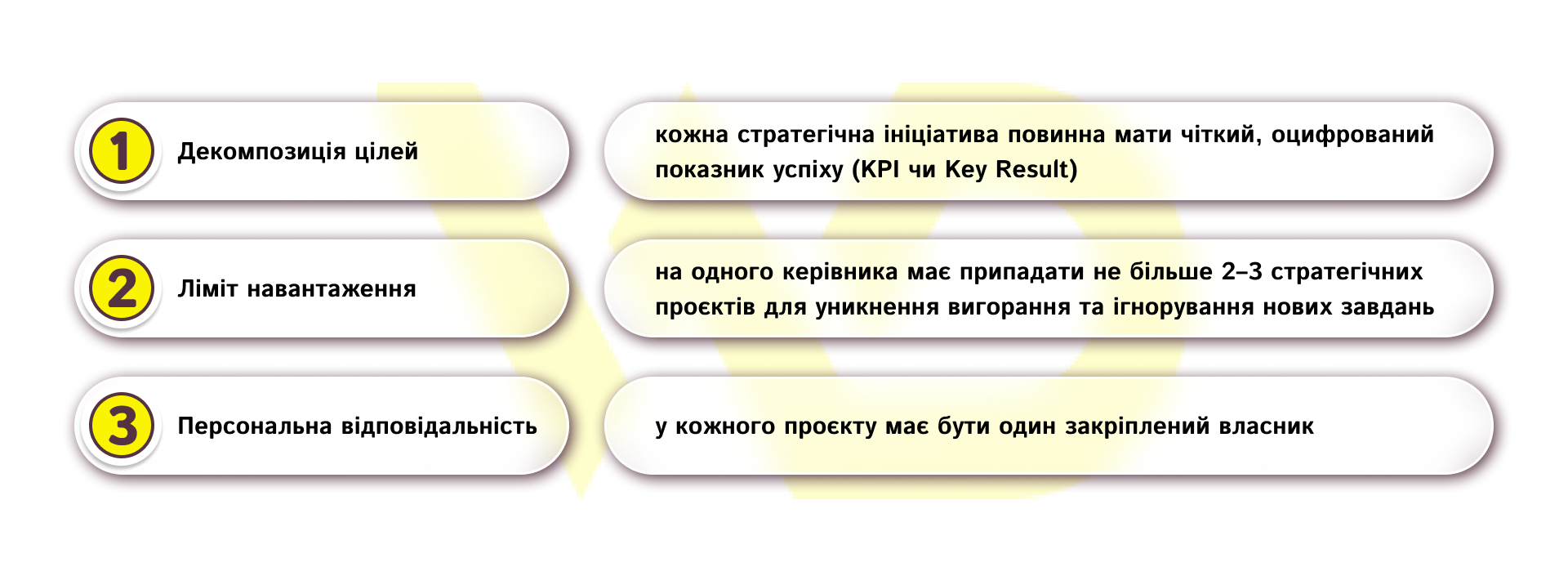
To ensure that the initiatives developed do not remain on paper, companies need to establish what is known as an «operational rhythm». To this end, a system of regular strategic check-ins is implemented:
- weekly brief status updates;
- monthly meetings to adjust actions in response to changing market conditions.
The return on investment (ROI) from holding a strategic session is calculated by comparing the costs of preparation, facilitation, and team engagement with the actual financial impact (increase in marginal profit, reduction in customer acquisition cost (CAC), growth in LTV) over a 6–12-month period.
For a business owner, the outcome of a strategic session can be assessed based on specific changes: the team has identified priorities, abandoned ineffective projects, and begun regularly monitoring the implementation of decisions. If this has happened, the session has brought practical benefits to the business.

commercial offer
Other articles by the author

31/03/2026
Right now, businesses have a real opportunity to make widespread use of AI agents, AI avatars, and automation. However, this requires a systematic approach to turn technological potential into sustainable business value.

26/03/2026
A gradual approach to integrating artificial intelligence is truly important because it helps avoid a number of risks and mistakes.
03/03/2026
In marketing, analytical data helps answer questions such as: why has conversion fallen, which channels bring quality traffic, and which customer segments are profitable in the current business.
Latest articles by #Useful tips

18/06/2026
A marketing director is, first and foremost, a top manager who is part of a company’s senior leadership and thinks in terms of the business as a whole, rather than individual advertising campaigns.
03/03/2026
In marketing, analytical data helps answer questions such as: why has conversion fallen, which channels bring quality traffic, and which customer segments are profitable in the current business.
25/02/2026
UTM tags are special parameters that are added to a regular sitelink after a question mark.