

 23/07/2026
  1352
1352

Інтернет-маркетинг
простою мовою
Content of the article
- /01 From SEO to GEO: how to maintain your business’s visibility in search
- /02 How to maintain brand authenticity and customer trust
- /03 Smart advertising automation
- /04 From chatbots to AI agents: a new level of communication
- /05 Real-time analytics: speed as a competitive advantage
- /06 Why content optimization is more important than new content
- /07 New demographics: generation alpha and opinion leaders
- /08 Security and legal aspects of AI use

How to stay on top: key digital trends and changes in user behavior

The development of generative artificial intelligence has completely changed the rules of the game in digital marketing. Today, it’s not enough for businesses to simply implement new tools; it’s crucial to understand how consumer psychology is evolving. Modern users are increasingly opting for «click less search», expecting to receive a ready-made and accurate answer right here and now, which threatens traditional traffic acquisition channels.
In this article, we’ll explore the key digital trends, as well as how to adapt your business strategy to new search engine algorithms, maintain brand authenticity, and retain your market leadership position
From SEO to GEO: how to maintain your business’s visibility in search
The traditional model of interacting with search engines is becoming a thing of the past. Previously, users would enter a query and browse the suggested list of websites on their own. Today, however, the integration of AI into search platforms has made search results interactive and personalized. A prime example is tools like Google AI Overviews and the advanced Google AI Mode. They generate a ready-made analytical summary at the top of the screen by gathering data from various web resources. All the user has to do is read the generated text or continue the conversation with the neural network in a chat format.
Under these conditions, traditional SEO can no longer function as an isolated tool. It is being replaced by the concept of GEO — optimizing a website for generative search engines.
The main task for businesses within the framework of GEO is to position their brand, product, or expert opinion as a primary source that artificial intelligence will cite in its responses.
Neural networks such as ChatGPT, Gemini, or Claude rely on the authority and structure of content when generating responses. If your company isn’t included in these models’ knowledge bases, you’re losing a huge share of potential customers.
Google’s large-scale Core Updates have become a major factor influencing search results, significantly tightening the requirements for E-E-A-T criteria (experience, expertise, authoritativeness, and trustworthiness). Search engines have learned to accurately detect attempts at manipulation and the artificial creation of «expert» profiles. The concept of topical authority has come to the forefront. To rank highly, a website must contain comprehensive, in-depth content that thoroughly covers a specific topic, rather than superficial texts created solely for keywords.
Only by simultaneously using traditional SEO tools and the latest GEO practices can companies build a sustainable, long-term channel for attracting targeted traffic.
How to maintain brand authenticity and customer trust
The availability of artificial intelligence tools has sparked a veritable content explosion. These technologies make it possible to create thousands of text pieces, realistic images through services like Gemini Imagine Art, and high-quality videos using models such as OpenAI Sora 2 in a matter of minutes. For businesses, this opens up attractive opportunities:
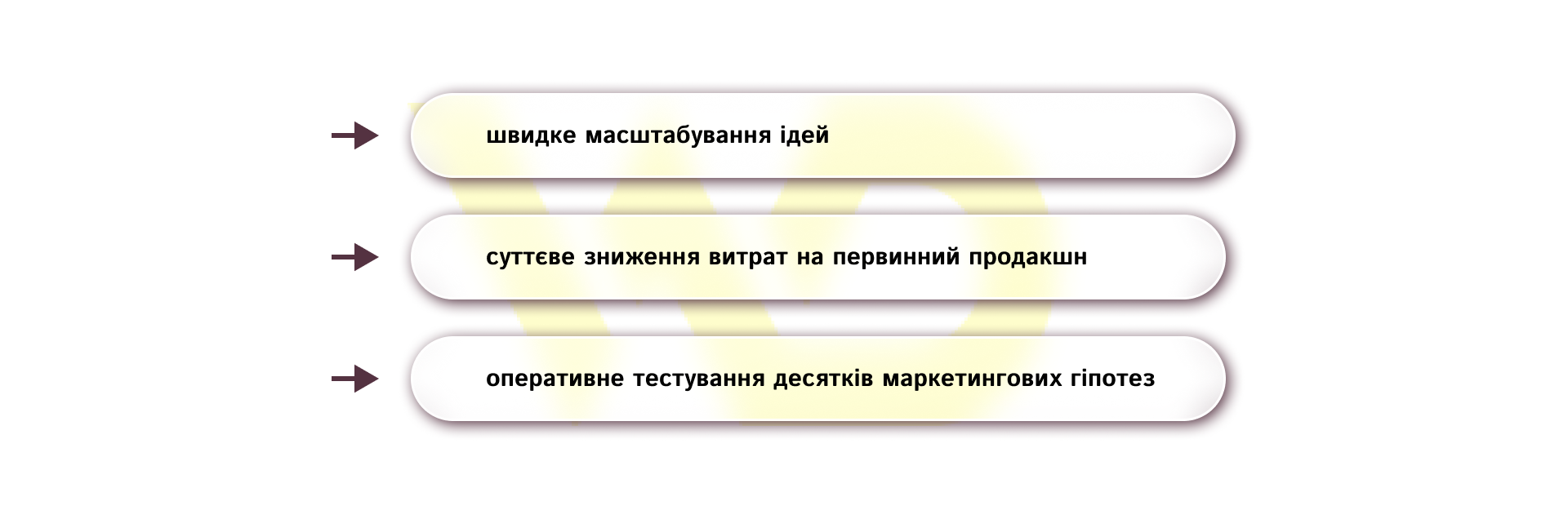
However, the ease of content generation hides a serious threat a crisis of authenticity.
When the information landscape becomes oversaturated with repetitive content, consumers begin to feel fatigued by its artificiality. Texts created solely by algorithms without human expertise often lack empathy, a unique style, and deep context. Moreover, artificial intelligence still suffers from the problem of so-called «hallucinations» the convincing distortion of facts, the fabrication of nonexistent statistics, or the invention of references. Publishing such content without rigorous human verification deals a devastating blow to a brand’s reputation.
The ill-considered pursuit of fleeting trends and the use of deepfake technologies without proper oversight also carries reputational risks. A striking example of this was the AI flash mob at the end of 2025. Unlike Angelina Jolie’s actual visit to «Lviv Croissants» in 2022, this time Ukrainian brands launched a massive wave of deepfakes in which the actress was supposedly visiting their clinics, gyms, showrooms, and so on.
Since most brands did not label these images as AI-generated, the audience reacted with a barrage of negative comments. Users sharply criticized the companies for misleading the public and for the unethical use of someone else’s image. This proves that today’s consumers instantly spot fakery.
To stay at the top, businesses need to strike a balance: use AI to automate routine design processes, but preserve human empathy, real-world experience, and a unique tone of voice in the final communications.
Smart advertising automation
The PPC sector has undergone significant changes thanks to the introduction of intelligent automation systems. Tools that previously relied on basic algorithms have evolved into comprehensive platforms. Updated feature sets powered by Google AI Max and business assistants based on Meta AI are capable of independently managing ad campaigns in real time. They automatically generate headline variations, combine creative assets, instantly pause irrelevant ads, and reallocate budgets across different channels to maximize conversions.
For large corporations and brands with substantial budgets, such innovations have been a lifesaver, as they enable the processing of millions of targeting combinations. However, for small and medium-sized businesses, companies with limited financial resources, or those operating in very niche markets, blind trust in automated algorithms can prove disastrous.
In today’s reality, the role of the PPC specialist is not being rendered obsolete but is undergoing a transformation. Since artificial intelligence is unable to independently assess customers’ psychological barriers or analyze the profitability of different product categories, the specialist takes on key tasks:
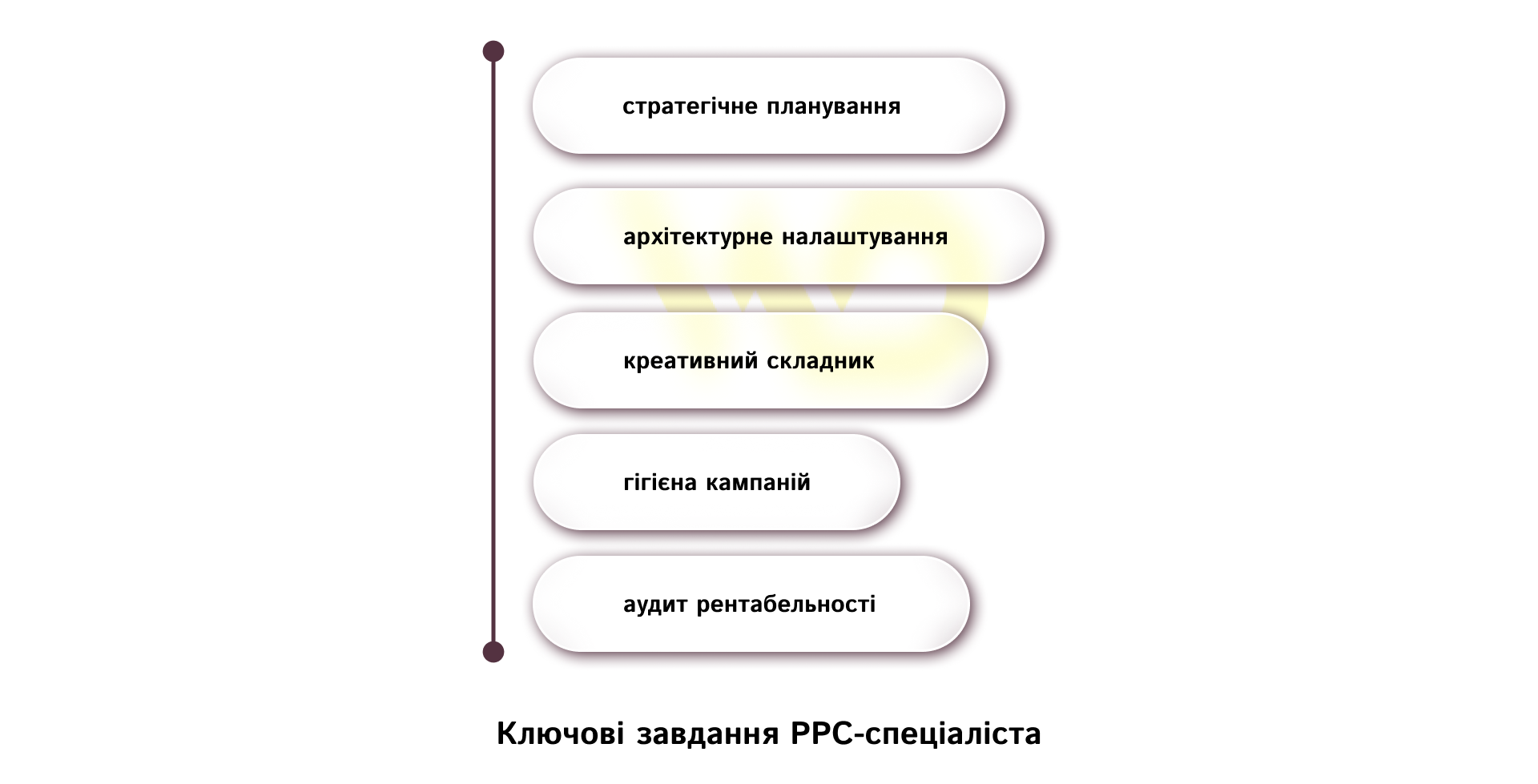
- Strategic planning: integrating campaigns into the company’s overarching business goals, which algorithms cannot determine on their own;
- Architectural setup: ensuring the correct initial settings and structure of advertising accounts;
- Creative component: developing conceptual ads capable of emotionally resonating with your specific target audience;
- Campaign maintenance: Regularly optimizing and updating negative keyword lists to filter out non-targeted traffic;
- ROI audit: continuous monitoring of algorithm performance to protect your budget from overspending and haphazard system testing.
It is human oversight that ensures artificial intelligence works to generate real business profits, rather than just producing impressive but meaningless statistics.
From chatbots to AI agents: a new level of communication
Traditional text-based chatbots, which operated according to rigid, linear scripts, no longer meet consumer needs. Users are growing tired of limited button options and standard responses like «I didn’t understand you; please rephrase your request». These primitive systems have been replaced by marketing AI agents based on modern large language models (LLM). They are capable of conducting lively, natural conversations, adapting to each customer’s mood and individual communication style.
Autonomous AI assistants can process complex, multi-step requests in real time. For example, instead of a simple search by category, a customer might write: «I need a gift for a colleague who loves hiking, within a $100 budget, to be delivered by Friday». The smart agent will independently analyze the product catalog, check inventory levels, factor in shipping times, and suggest several personalized options with a detailed explanation of each choice.
In the B2B segment, AI agents demonstrate high efficiency during the initial lead qualification stage. They work around the clock, responding instantly to inquiries from around the world. A bot can guide a customer through the initial stage of the sales funnel, gather the necessary technical information, address common objections, and pass a «warmed-up» lead to a sales manager for contract signing. This significantly increases the website’s overall conversion rate and optimizes the workload on the support team.
Real-time analytics: speed as a competitive advantage
Traditional monthly or quarterly reports have become completely obsolete, as the modern digital market demands an immediate response from businesses. The shift to real-time analytics radically changes the approach to marketing management thanks to three key factors:
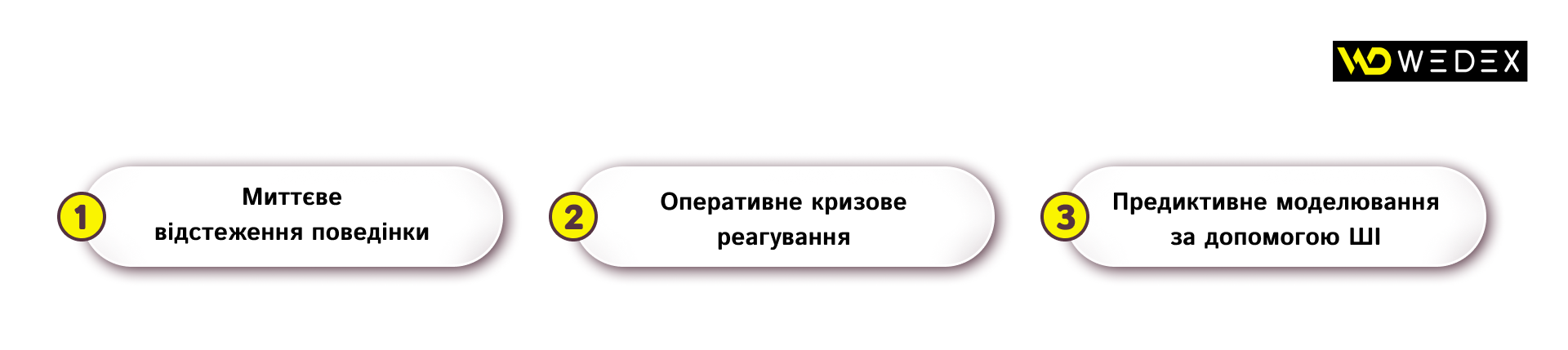
- Instant behavior tracking. The integration of end-to-end systems allows you to see user actions directly as they interact with the brand’s platform, capturing real consumption patterns.
- Rapid crisis response. Executives and marketers can immediately detect sharp fluctuations in demand, drops in conversion rates, or the ineffectiveness of new creative content. For example, if a technical error blocks mobile payments on a website, real-time monitoring will detect the anomaly within minutes, allowing developers to quickly fix the issue and prevent the company from incurring losses.
- Predictive modeling using AI. Built-in intelligent tools can analyze current trends, historical data, and even external factors, such as weather or seasonality. This helps predict consumer behavior in the near future.
Thanks to this approach, businesses can optimize their budgets and adjust their marketing strategies even before obvious changes occur in the market. This transforms analytics from a dry assessment of past mistakes into a tool for strategically staying ahead of the competition.
Why content optimization is more important than new content
A common mistake made by many companies that invest in content marketing is the constant creation and publication of new articles of low or average quality. The pursuit of quantity leads to cluttering the website with irrelevant information.
The current trend in digital marketing dictates a completely opposite approach a focus on optimizing existing content.
Old content that already has a history of indexing, backlinks, and basic trust from search engines is a hidden resource for driving traffic growth. Regularly auditing and updating archived articles allows you to bring them back to the top of search results with minimal resource expenditure compared to creating content from scratch.
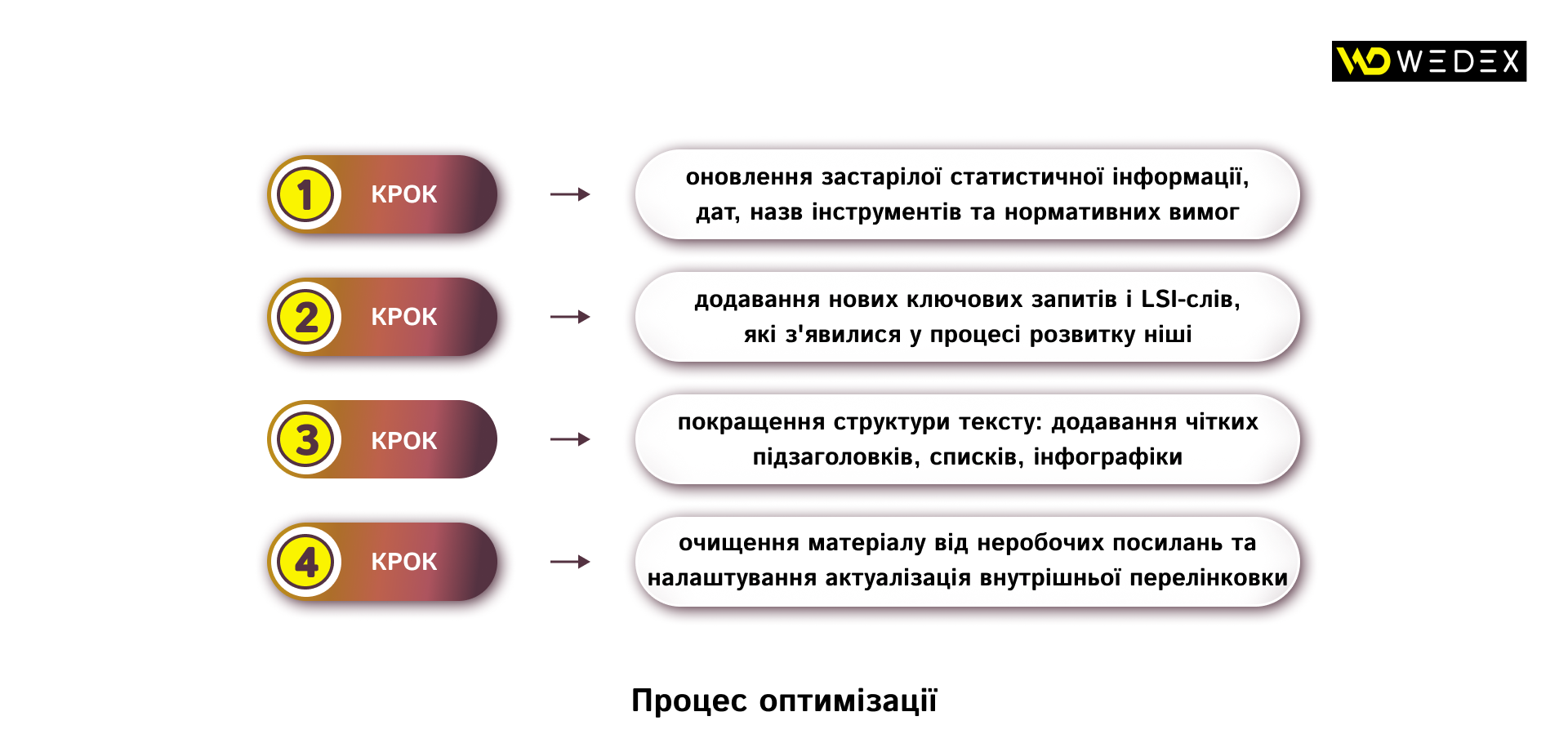
Google’s search algorithms strictly evaluate the usefulness and recency of information. When the system detects that an article from three years ago has been thoroughly revised, supplemented with up-to-date expert opinions and real-world examples, its ranking increases significantly.
A content strategy based on a balance between creating unique new long-form articles and regularly updating the existing knowledge base demonstrates a significantly higher return on investment (ROI).
New demographics: generation alpha and opinion leaders
The consumer market is undergoing noticeable demographic changes. Generation Alpha — children and teenagers born after 2010 — is beginning to enter the scene. Despite their young age, they are already having a significant influence on their parents’ purchasing decisions, and in a few years, they will become the primary customers with spending power.
Members of this generation are the first for whom the virtual world is a completely natural environment. Their behavioral patterns are radically different: they are fully focused on short-form video content, interactive gaming platforms, and voice interaction with gadgets. Traditional text ads or standard banners are ineffective for them.
At the same time, the concept of user-generated content (UGC) is transforming. Whereas UGC used to refer to simple text reviews on a website or product photos on social media, today this trend has evolved into a format of collaborative creation. Customers want to be direct participants in creating the brand’s story. Companies that engage their audience in developing new products, designing packaging, or creating collaborative creative content build a highly loyal core of consumers.
In the field of influencer marketing, there’s a clear shift in focus toward micro- and nano-influencers. Collaborating with big-name influencers with millions of followers often yields only a short-term spike in reach but doesn’t translate into actual sales due to low audience trust. Niche micro-influencers, on the other hand, have an extremely high level of engagement and serve as trusted advisors to their followers. Advertising on such blogs is perceived as a friendly recommendation, which ensures significantly higher conversion rates and reduces the cost of customer acquisition (CAC).
Security and legal aspects of AI use
The active adoption of artificial intelligence technologies has raised a number of serious issues for the commercial sector; ignoring them risks financial losses and lawsuits for companies. In digital marketing in 2026, two main problems are clearly defined.
- The copyright crisis and search engine penalties. Most language models were trained on databases without the explicit consent of the authors of the original works; therefore, using AI-generated content for commercial purposes without legal review creates the risk of plagiarism allegations. In addition, Google algorithms severely penalize websites for the widespread misuse of low-quality AI-generated text that lacks substantial human input.
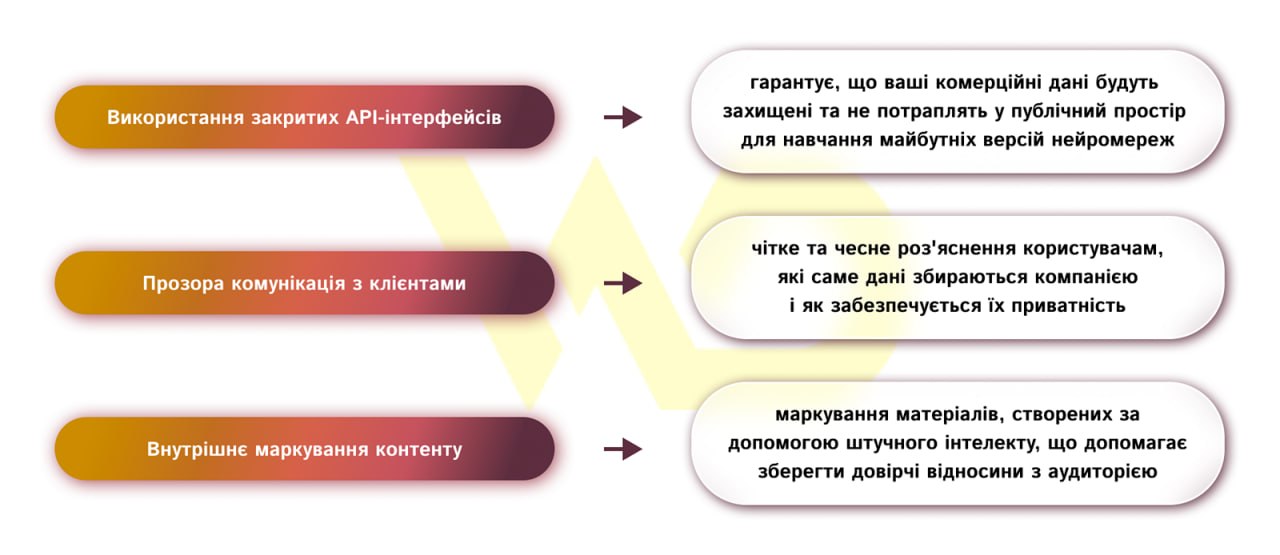
- Privacy and the threat of data leaks. The global trend toward completely phasing out third-party cookies and stricter GDPR requirements make first-party data the primary asset for businesses. When a company integrates internal AI tools or uploads customer databases to third-party cloud models for analysis, there is a serious risk of confidential information leaks.
To mitigate these threats, company leadership must develop a clear internal security policy based on three mandatory rules.
The shift to hybrid intelligence
To not merely maintain their position but consistently lead the market in an era of global transformation, business owners must change their very approach to managing marketing processes. The first step should be to conduct a comprehensive audit of current communication channels. It is important to objectively assess what proportion of content is generated automatically, whether the website is optimized for GEO search requirements, and how effectively existing analytical data is being utilized.
The key to a company’s successful development is the implementation of the «hybrid intelligence» (Human + AI) concept. Artificial intelligence technologies should fully take over all routine, large-scale, and technical tasks:
- initial data collection;
- basic analytics;
- automatic management of ad bids;
- 24/7 support.
At the same time, the human resources freed up must be redirected toward developing unique competencies that algorithms cannot replicate:
- strategic planning;
- building deep emotional connections with customers;
- creating expert, creative content;
- final verification of business processes.
The brands that will prevail in the competitive arena are those that can combine the computational power of artificial intelligence with genuine human empathy and proven experience.

commercial offer
Other articles by the author

29/04/2026
Coworking as an alternative to an office: a detailed analysis of advantages and hidden disadvantages
In today's business environment, coworking is seen as a hybrid model between working from home and the traditional office.

02/03/2026
Customer Development (CustDev or “castdev”) is an approach to product development that focuses on testing business hypotheses through direct communication with potential customers.

02/09/2026
Guest blogging remains one of the most effective tools for promoting a business, yet there are still many misconceptions surrounding it.
Latest articles by #Useful tips

06/10/2026
From a business perspective, updating content is a sensible way to protect existing investments.
30/09/2026
Google's main focus in 2026 was the large-scale rollout and deep algorithmic integration of the AI Overviews (AIO) tool.
16/09/2026
Choosing between search engine optimization and pay-per-click advertising is one of the most critical decisions when developing a marketing strategy.