

 16/07/2026
  1517
1517

Інтернет-маркетинг
простою мовою
Content of the article
- /01 What Ads look like in ChatGPT
- /02 Targeting in ChatGPT: the limits of what’s allowed
- /03 The transformation of the classic sales funnel under the influence of AI
- /04 ChatGPT Ads and Google Ads: what’s the difference?
- /05 Ad costs on ChatGPT and evaluating their effectiveness
- /06 Risks of AI commercialization
- /07 How to get ahead of the competition right now

The new era of digital marketing: how ChatGPT advertising works and how much it costs
The modern digital space is undergoing a fundamental transformation. Instead of analyzing dozens of web pages on Google, users are increasingly seeking instant answers in an AI chatbot. The official launch of OpenAI ad testing on February 9, 2026, was a historic moment that marked the emergence of a completely new media channel for business promotion.
In this article, we’ll take a detailed look at how ad display is technically implemented in ChatGPT, what restrictions the developer imposes on the audience, how the traditional sales funnel is changing, and how much it costs for a brand to establish a presence in the AI ecosystem.
What Ads look like in ChatGPT
Integrating commercial content into a space that users have come to regard as «free» of banners and intrusive marketing required OpenAI to exercise the precision of a jeweler. The developers categorically rejected the idea of weaving advertising text directly into the AI’s generative response. Such a move could have completely destroyed trust in ChatGPT objectivity, as users would have begun to suspect the AI of bias in favor of sponsors who pay for mentions. Therefore, advertising is presented as a separate visual element integrated into the overall interface design, subject to strict rules of adaptability.
When a user asks a question, the algorithm simultaneously launches two processes: generating a unique response based on a trained model and quickly searching for relevant sponsored content through an internal auction. On the screen both in the desktop version and in the mobile app a compact native block appears with a clear «Sponsored» label, which fully complies with international advertising transparency requirements (FTC).
OpenAI modern interfaces support several display options for these blocks:
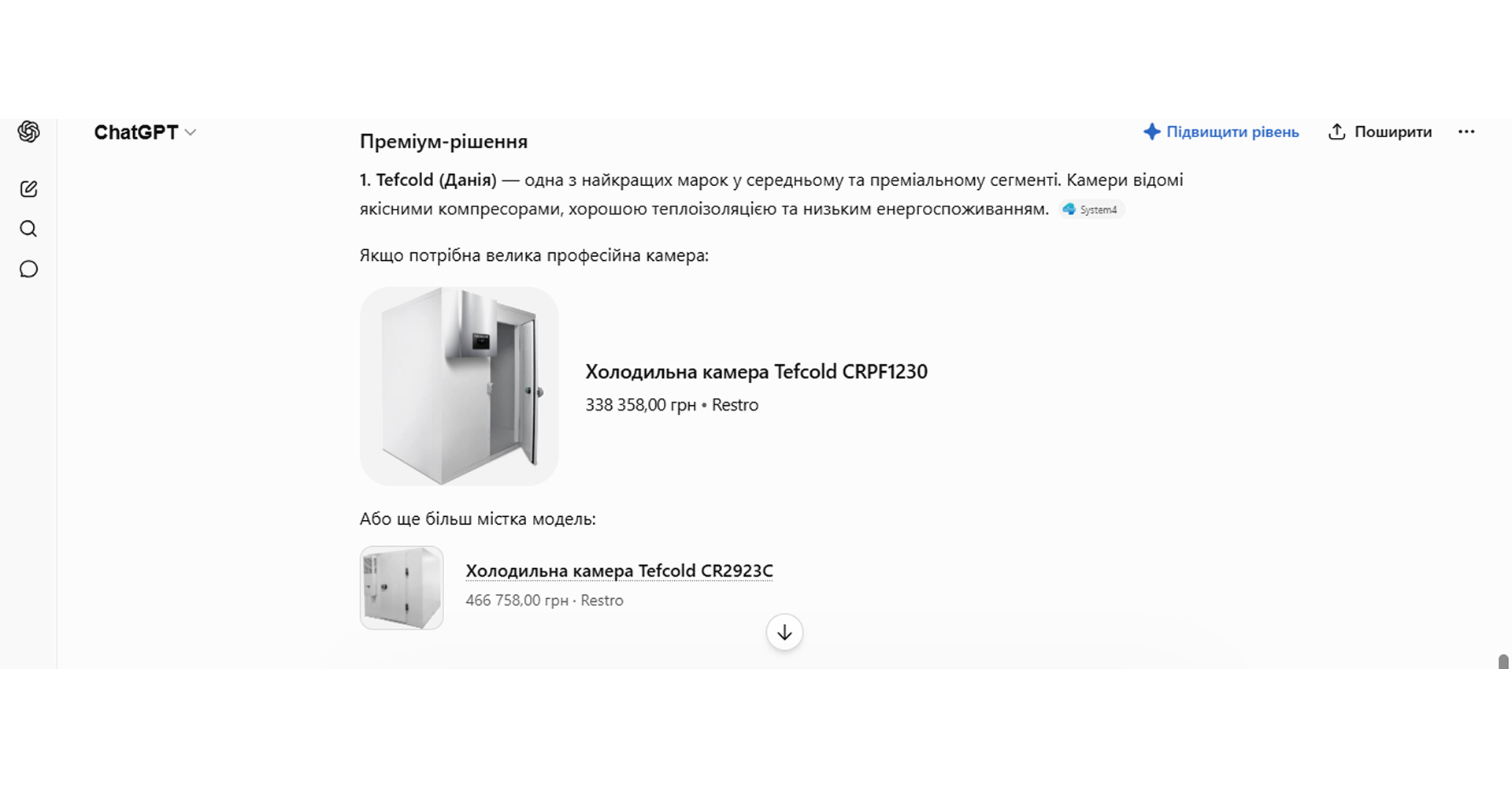
- information cards: blocks that, in addition to text, contain interactive elements, such as a mini product gallery or a quick-action button («Book Now», «Download Price List»);
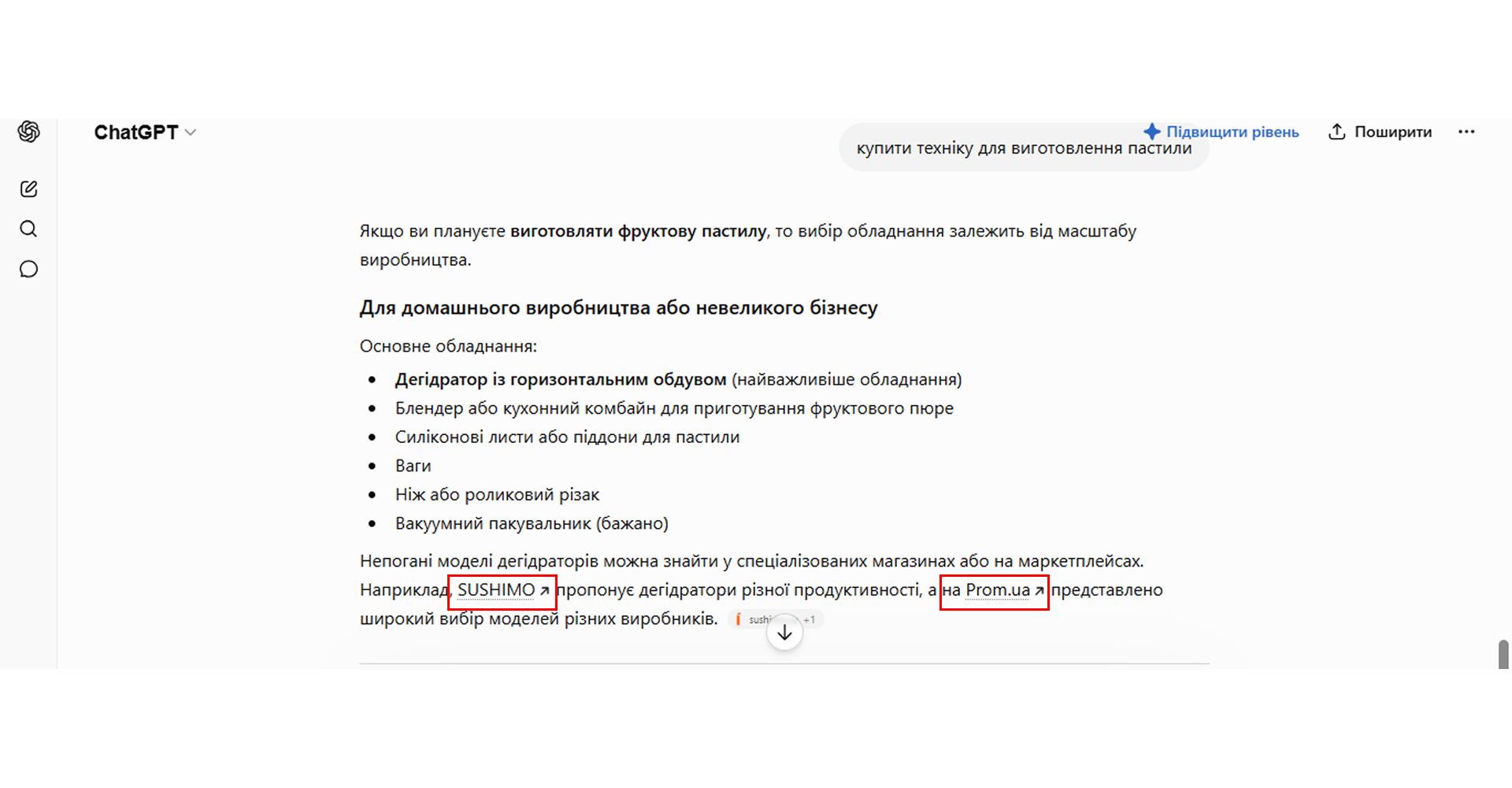
- text-and-link blocks: concise text recommendations placed below the AI main response, which appear as additional useful sources of information related to the conversation topic;
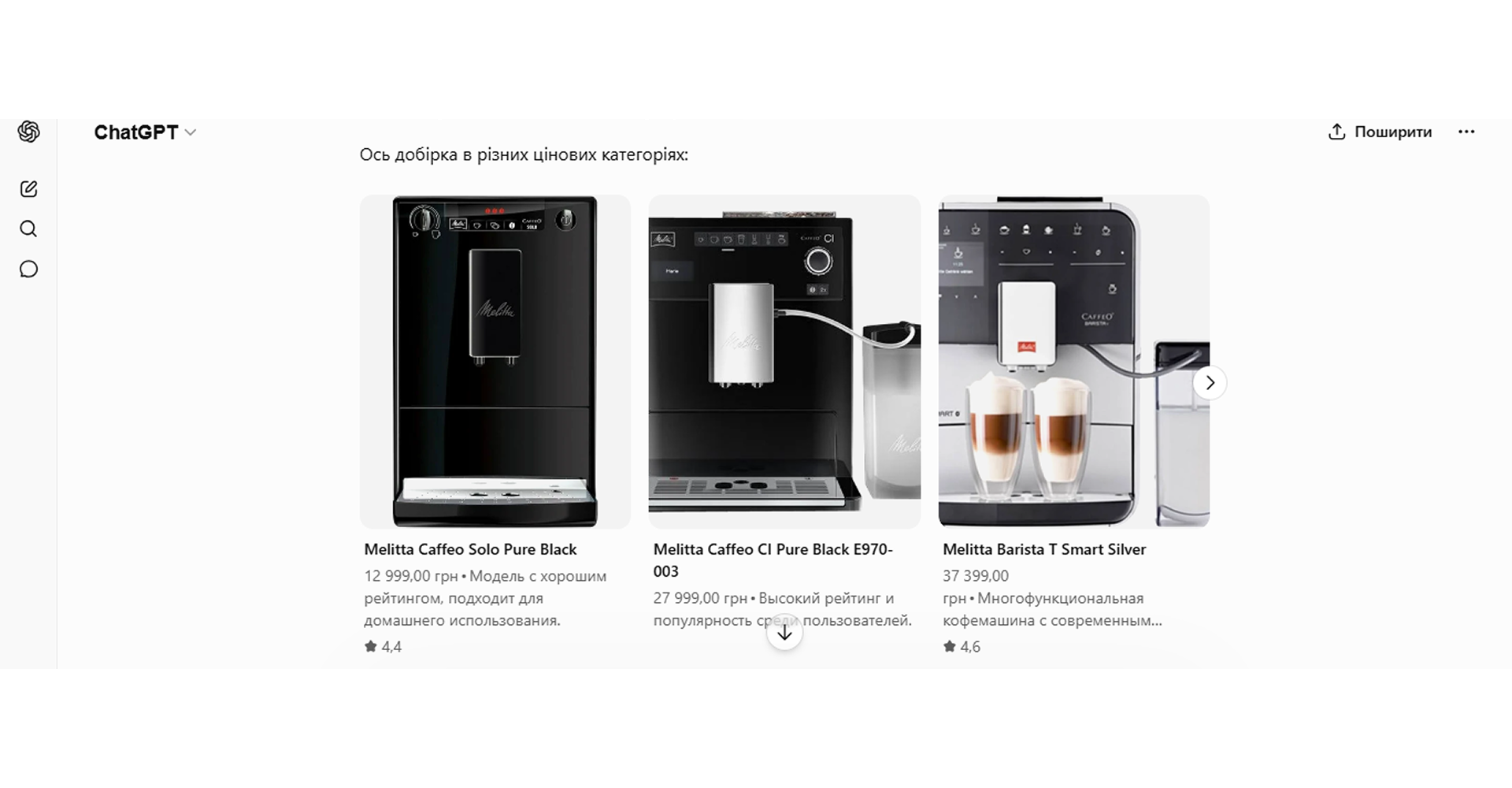
- product carousels: used when searching for specific physical products (clothing, electronics, home decor) and allow users to compare prices across multiple brands directly within the chat interface.
To better understand this, let’s look at a practical example of user interaction with the platform. Imagine an entrepreneur looking for ways to optimize the company’s internal processes who enters the query: «What steps are involved in a professional technical audit of a B2B company’s website, and what tools are needed for this?». ChatGPT details the structure of the audit (speed analysis, indexing check, micro-markup) and mentions standard services such as Screaming Frog or Google Search Console.
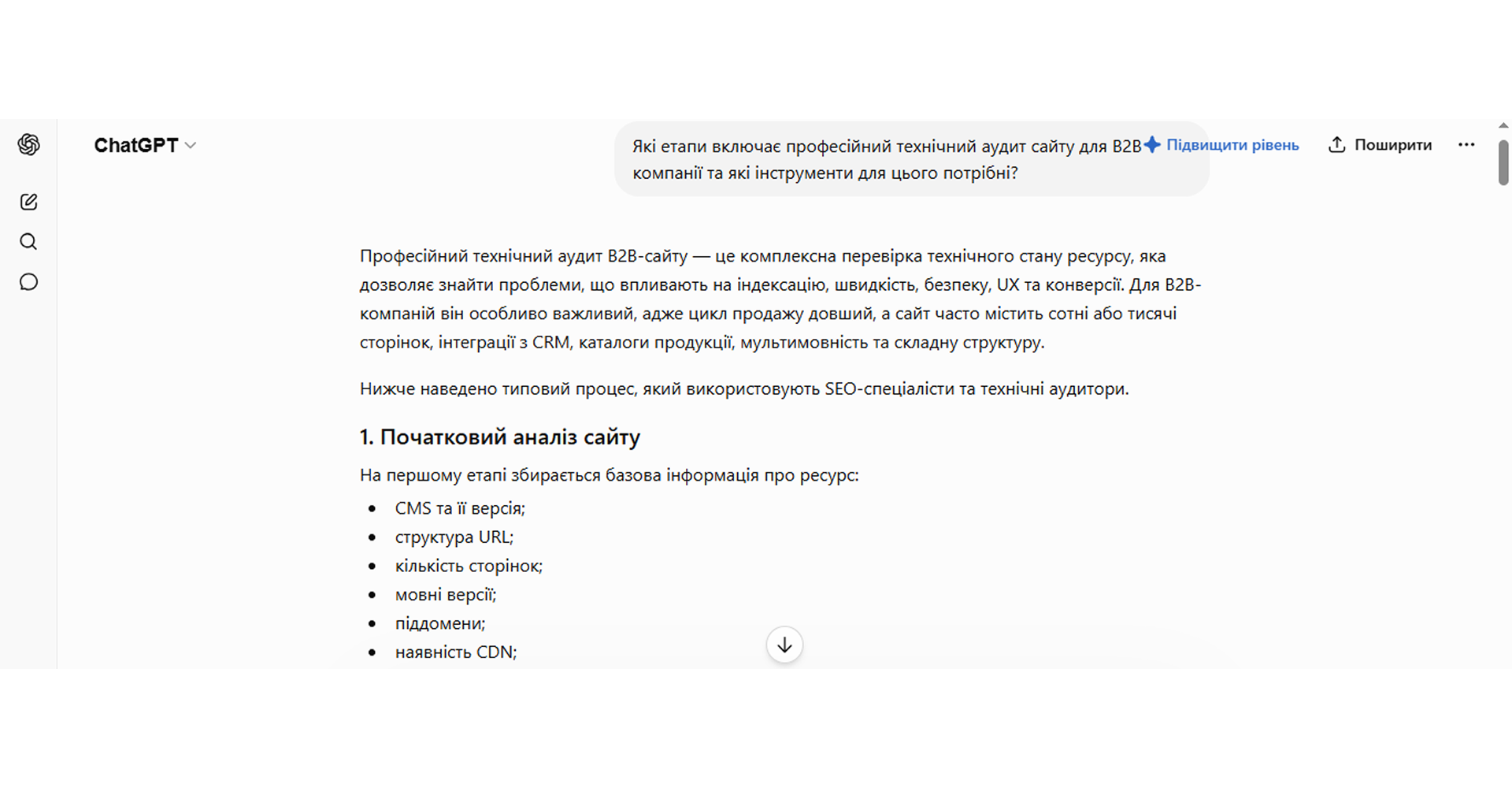
Along with this response, a neat information card from a marketing agency appears in the interface: «A professional SEO audit of your business by experts. We’ll identify technical errors in 3 days. Get a free initial consultation». The user sees a button that leads directly to the service’s landing page. This approach strikes a balance between the user’s interests and the advertiser’s the ad doesn’t interrupt the reading process or annoy the user with pop-ups, but appears precisely when the user’s engagement is at its peak.
Targeting in ChatGPT: the limits of what’s allowed
The mechanics of targeting in ChatGPT are fundamentally different from anything digital marketers have seen before in the areas of PPC or targeted advertising on social media. In traditional systems, ads are tied to specific, isolated keywords. The OpenAI ecosystem operates on the basis of semantic vectors and «context window» analysis. Artificial intelligence evaluates not just the last sentence, but the entire thread of the dialogue, the emotional tone of the conversation, and the user’s actual intent, which allows ads to be displayed even when a person hasn’t explicitly mentioned a product or brand.
However, in an effort to preserve its reputation and protect users’ personal data from leaks, OpenAI has implemented strict restrictions for the first wave of advertisers. These rules establish clear boundaries that protect privacy while also setting a clear framework for businesses.
|
Campaign Settings |
Current Terms and Restrictions During the Beta Test |
Strategic Importance for Business |
|
Geographic Coverage |
U.S. only (during the first wave of testing) |
Opportunity to test the technology in the most competitive market prior to a global release |
|
Available Plans |
Users of the Free and Go plans |
Reach a mass audience that is receptive to monetization of a free service |
|
Premium isolation |
Plus, Pro, Team, and Enterprise users do not see ads |
A clear distinction: the high-spending B2B segment within the platform purchases complete privacy without ads |
|
Age Restrictions |
Strictly 18+ (based on user profile verification) |
Full protection for minors and concentration of advertisers’ budgets on the adult audience |
|
Text confidentiality |
User chat text is not shared with advertisers |
Complete conversation anonymity; the brand receives only anonymized statistics on impressions and clicks |
OpenAI pays special attention to protecting users from manipulation in sensitive areas. The platform has imposed a complete ban on the promotion of:
- political campaigns;
- religious organizations;
- gambling and payday loans;
- specific medications (the YMYL category — Your Money Your Life).
The moderation algorithm evaluates each ad using neural network security filters before allowing it into the auction.
To ensure users feel they have full control over their privacy, the developers have provided transparent feedback tools. Anyone can click on an ad marker to see which phrases from their chat the system used to select that ad. Additionally, users can instantly hide a specific ad or report it as irrelevant. This compels businesses and marketing agencies to create the highest-quality, most useful content possible, since a high number of complaints will cause the AI algorithm to quickly and permanently lower the display priority of the entire ad campaign.
The transformation of the classic sales funnel under the influence of AI
The appearance of ads directly within the conversational interface shatters the traditional notion of a linear customer journey from brand awareness to purchase. In traditional marketing, the user journey is usually long: a person sees a banner, visits the website, reads a blog, subscribes to a newsletter, and only then makes a decision. Artificial intelligence compresses this funnel, making it virtually instantaneous and interactive.
The consumer journey is transformed into four key stages.
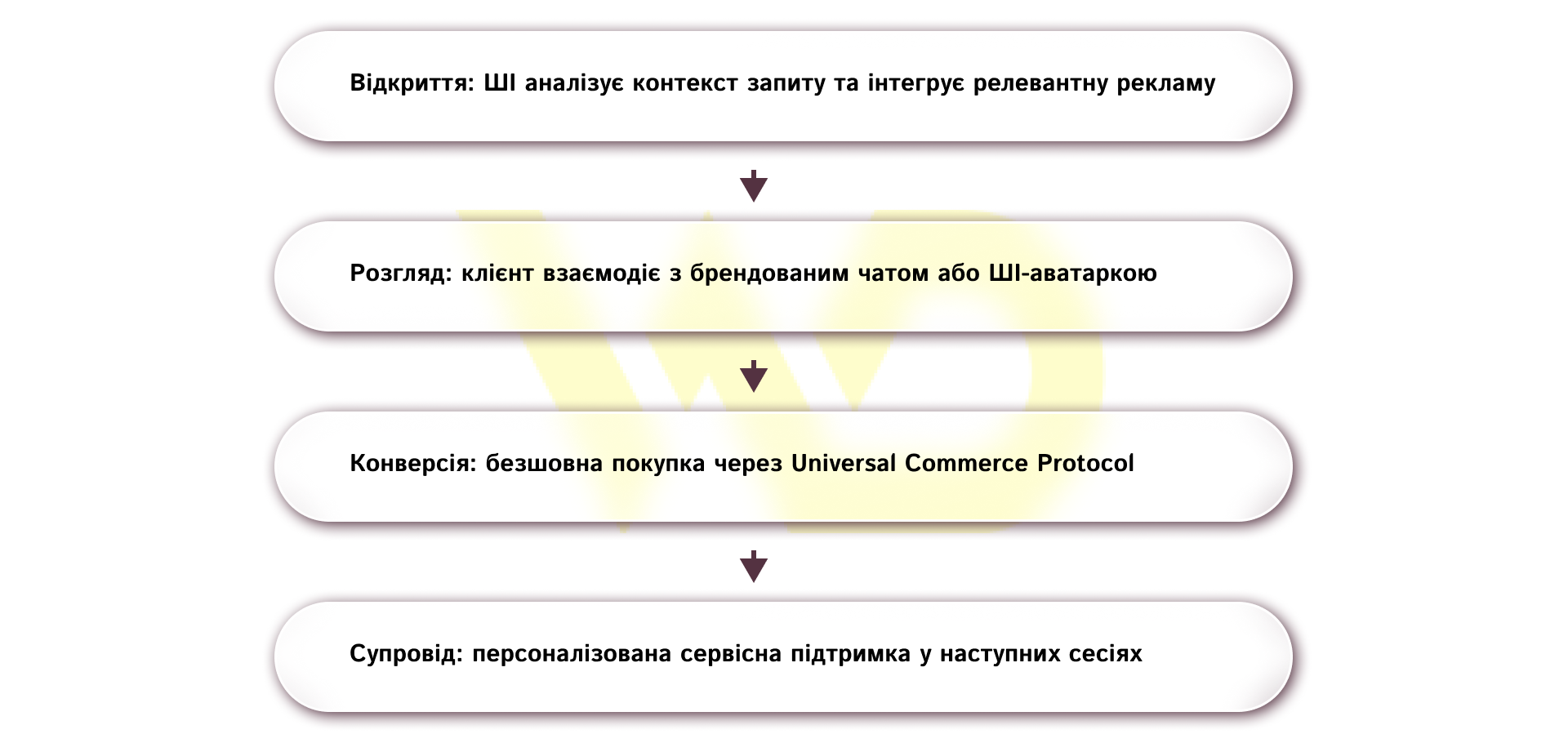
Discovery
The customer comes with a problem, not with a specific brand in mind. AI acts as an expert advisor that analyzes the context and gently suggests which product or service is best suited to the task by displaying a relevant sponsored ad.
Consideration
Traditionally, at this stage, the user compares features on competitors’ websites. A new trend is emerging in the AI ecosystem: the creation of «branded chats». Businesses can now integrate their own trained micromodels or AI avatars directly into the OpenAI platform. Users can start a conversation with a virtual company representative and ask specific questions about delivery terms, warranties, or product specifications without leaving the ChatGPT window.
Conversion
This is where the biggest revolution is taking place. Thanks to the development of global standards, such as the Universal Commerce Protocol, and successful integrations by major retailers for example, the experiences of American brands like Etsy and Wayfair the purchasing process is becoming seamless. Customers no longer need to navigate to a third-party website, fill out lengthy registration forms, or manually enter credit card information. Payment and order completion can take place directly through the ChatGPT interface using a linked wallet or instant payment systems.
Post-conversion and loyalty
The interaction doesn’t end once the transaction is complete. If a customer returns to ChatGPT with questions about using a purchased product or setting up a service, the AI remembering the previous purchase context can automatically connect to the brand’s service knowledge base. This creates a sense of premium, personalized support and dramatically increases the customer retention rate, while reducing the workload on the company’s actual customer support staff.
ChatGPT Ads and Google Ads: what’s the difference?
For a business to assess the potential of this new tool, it must be compared to the current monopolist in the contextual advertising market Google Ads. This isn’t just a comparison of two platforms; it’s a contrast between two completely different philosophies of engaging with content consumers.
- Google operates on the principle of indexing the past: it searches for keyword matches in existing texts.
- ChatGPT generates a response here and now, tailoring it to the user’s immediate emotional state and information needs.
Let’s take a look at a comparison table that clearly illustrates the key differences between these two approaches to digital marketing.
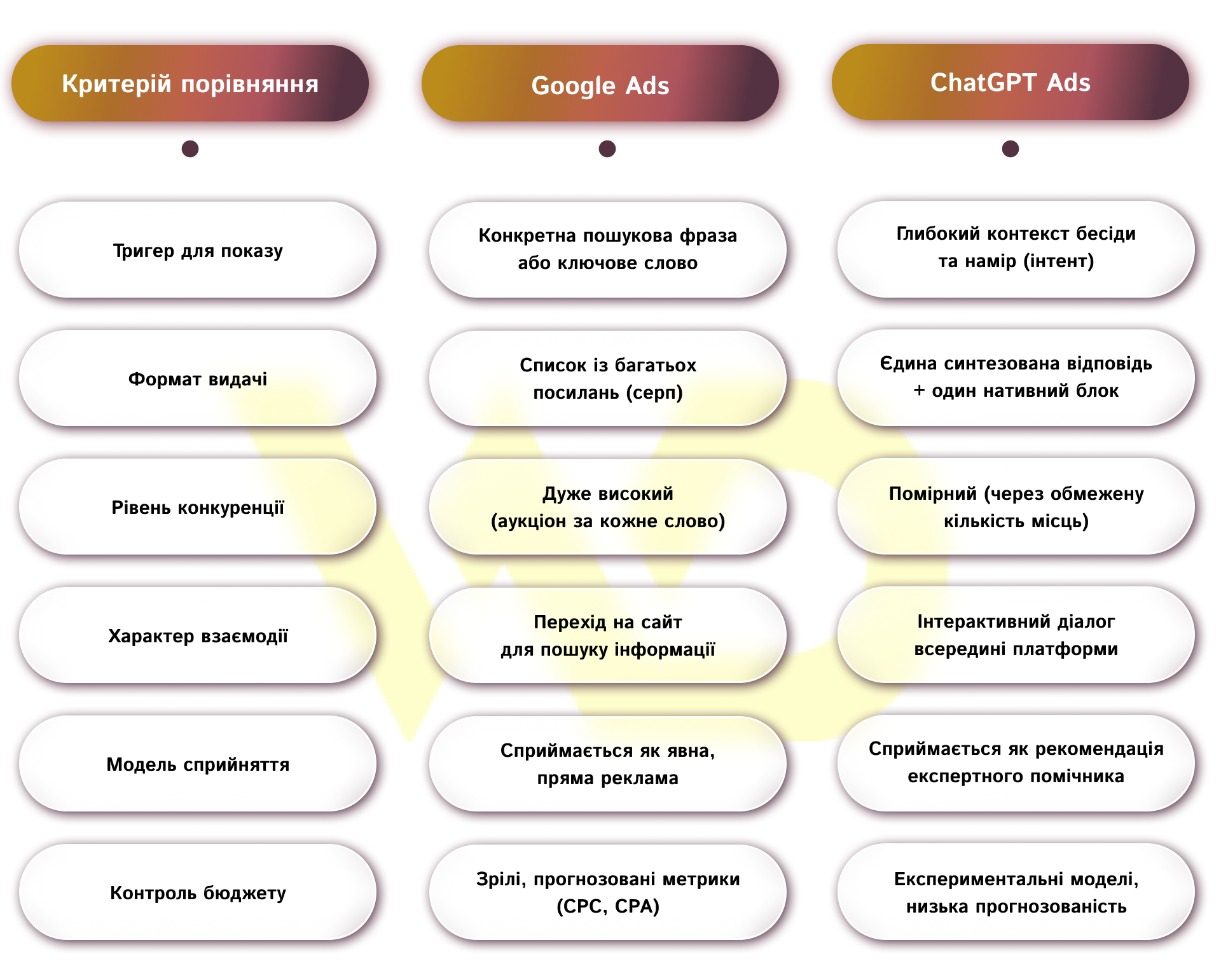
Thus, advertising on ChatGPT in its early stages is, by its nature, closer to high-quality media campaigns and brand-building tools. It’s difficult to predict a guaranteed direct response in the first few days after launch, but the level of trust in AI recommendations is significantly higher than in a typical online banner ad.
It’s important to understand that ChatGPT Ads shouldn’t become a complete replacement for your Google Ads efforts. A business will see the greatest results from the synergy between these tools. When a brand is simultaneously present in both traditional search results for a conservative audience and in AI-powered sponsored answers for progressive users, it creates a powerful effect of dominance in the information landscape, which significantly increases the overall conversion rate of the company’s marketing strategy.
Trust your advertising to the experts at WEDEX
We’ll help you set up and manage Google Search Ads so they work in tandem with new advertising features and effectively attract potential customers.
Ad costs on ChatGPT and evaluating their effectiveness
As the tool is developing rapidly, the pace of OpenAI pricing evolution is striking. At the initial launch stage in February 2026, the entry barrier was extremely high and accessible only to large corporations. However, within just a few months, the rules of the game were significantly liberalized thanks to the launch of a custom self-service dashboard.
Analyzing the launch of the first campaigns, industry analysts from Digiday and experts from the research agency The Growth Syndicate noted a sharp decline in ad placement costs. While in February 2026, ads were sold exclusively through the world’s largest agency holding companies (Omnicom, WPP, Publicis) with a minimum budget ranging from $200,000 to $250,000, but following the official launch of the self-service platform in early May 2026, OpenAI completely eliminated the mandatory minimum spending requirement for businesses.
According to the official technical documentation in the OpenAI Help Center and independent monitoring data from AdClarity, as of June 2026, the following prices are in effect:
|
Ad Metrics |
Reach Model (Reach / CPM) |
Click Model (Clicks / CPC) |
|
Economic Concept |
Payment for every 1,000 ad impressions to users |
Payment based solely on actual clicks on the ad |
|
Official Recommendations |
Default maximum bid — $60 |
Recommended starting bid: $3 to $5 |
|
Actual market snapshot |
Average adjusted bids: $25 to $45 |
Bids below $3 rarely pass the delivery threshold |
|
Entry threshold for testing |
None (start with $20–$50 per day) |
None (start with $20–$50 per day) |
|
Auction algorithm |
Second-price + content relevance weighting |
Second-price + content relevance weighting |
Budget alone no longer guarantees winning an auction. The OpenAI system is based on the principle of «relevance weighting»: artificial intelligence evaluates how naturally the ad text complements the context of the user’s conversation.
A professionally written, native ad with a moderate bid regularly outperforms weak, purely commercial banners with the maximum budget.
To assess the effectiveness of investments in this channel, marketers have to look beyond standard web analytics reports. According to a specialized study by The Growth Syndicate, traditional click tracking serves only as a baseline, since OpenAI has already implemented conversion-based optimization (CPA) and its own Conversions API tool for accurately tracking user actions.
It is recommended to evaluate the success of ChatGPT campaigns using the following metrics:
- Share of voice in AI: the percentage of mentions of your brand or impressions of your ad unit within a specific niche over a defined time period;
- Conversational engagement rate: a metric that tracks how many users, after viewing a sponsored ad unit, continued the conversation with the AI or began asking for more details about the brand’s product;
- Cost per contextual lead: the final ratio of the budget spent to the number of actual inquiries or purchases made as a result of the chatbot’s recommendations.
Despite the platform’s accessibility, the first steps require caution and a measured approach. Independent spending tracking by AdClarity shows that the total advertising volume on ChatGPT reached approximately $109 million in April 2026 alone. This indicates that major international players are actively adopting the tool. For testing purposes, it is recommended to set aside an initial test budget of $20 to $50 per day to gather preliminary data on your audience’s behavior within the AI platform before making decisions about a large-scale reallocation of marketing funds.
Risks of AI commercialization
The rapid commercialization of generative artificial intelligence also has a downside. Businesses planning to enter OpenAI territory must be fully aware of the potential reputational and technical risks in order to develop a strategy to minimize them in advance.
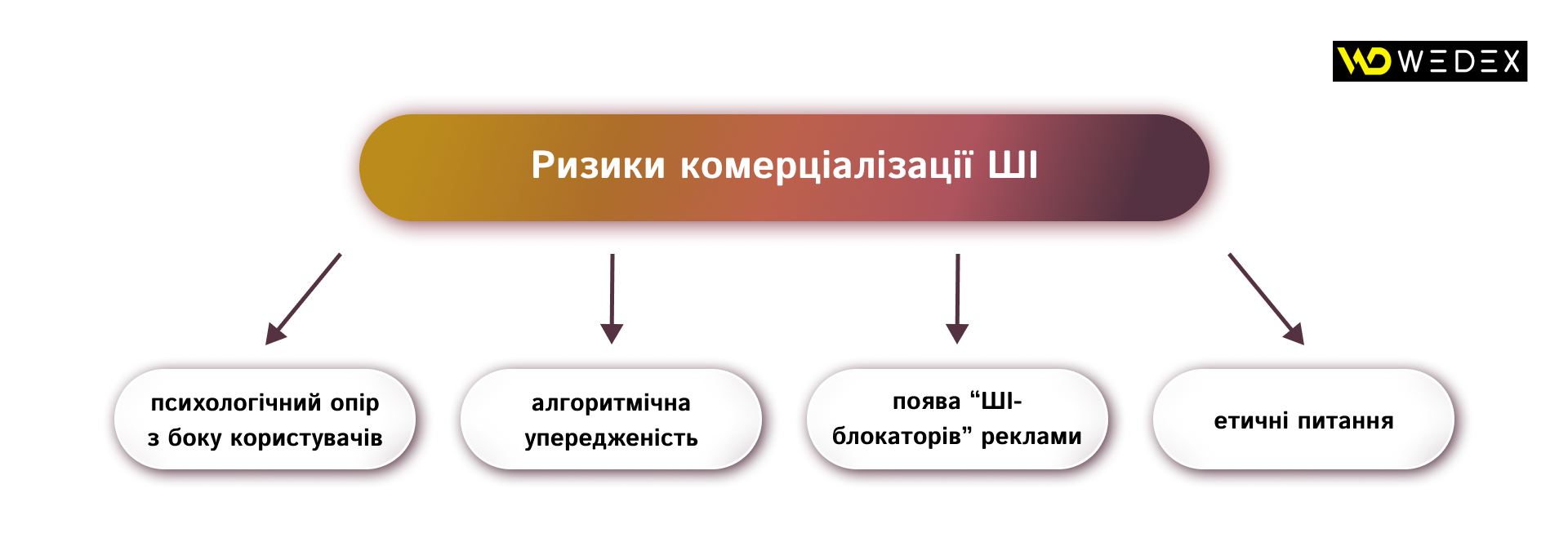
- Psychological resistance from users.
A significant portion of the audience chose ChatGPT precisely as an alternative to the traditional internet, which is overloaded with aggressive marketing. The appearance of sponsored content could trigger a wave of criticism and negative feedback. If a brand is too intrusive or its ads are only partially relevant, this could damage the company’s reputation. Users will begin to perceive the brand as an intruder into their private intellectual space.
- Algorithmic bias.
AI models are still prone to hallucinations and errors. There is a risk that your ad will appear alongside text that contains factual errors or portrays the topic in a light that is negative for your product.
- The emergence of «AI ad blockers».
Similar to AdBlock extensions for browsers, developers are already working on plugins and custom settings that will remove sponsored blocks from ChatGPT responses. This could significantly reduce actual audience reach.
- Ethical concerns.
The issue of using personal conversation histories to train advertising algorithms remains unresolved, which could lead to lawsuits and increased government regulation of the AI sector.
To mitigate these risks, businesses must completely abandon aggressive sales tactics.
Advertisements in ChatGPT should provide maximum value to the reader. They should appear as a helpful, user-friendly link to a credible study, an expert guide, or a free tool that genuinely helps solve the problem that led the user to the AI.
How to get ahead of the competition right now
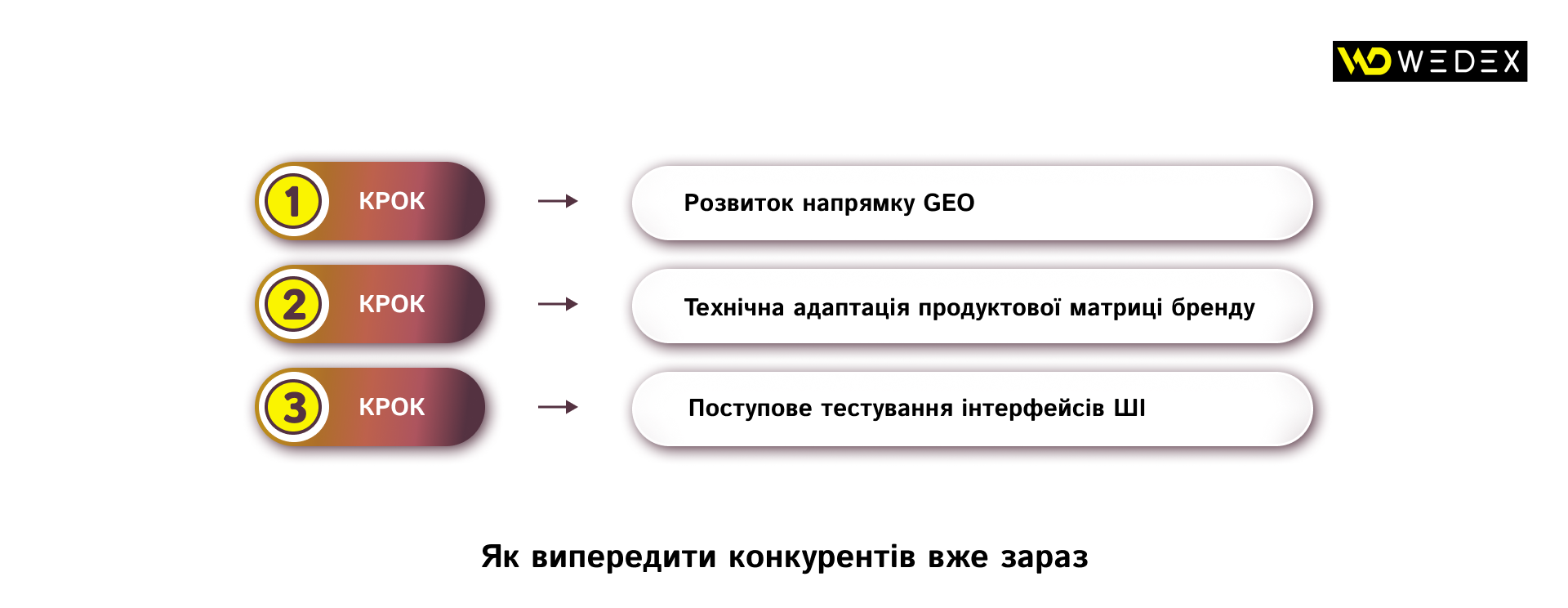
The era of AI-driven digital marketing is already here. Waiting until the technology becomes mainstream and fully understood is a strategic mistake that will push your company to the sidelines of the market. To stay ahead of the competition and prepare your business for the global dominance of AI-powered search, you need to act systematically and methodically:
STEP 1. Develop GEO (Generative Engine Optimization)
Optimize your content to meet the requirements of generative engines. This is a parallel and extremely important process that runs alongside purchasing direct advertising. Marketers need to structure the text on the corporate website so that algorithms from OpenAI, Perplexity, or Gemini can easily scan it, extract key facts, and cite your company as an authoritative primary source in their free responses. To do this, you need to create in-depth, expert-level content with clear tables, diagrams, and unique statistical data.
STEP 2. Technical adaptation of the brand’s product matrix
Bring your website’s structured data into perfect order, and set up clean and clear API integrations and product feeds. The simpler and clearer your product or service descriptions are for bots, the higher the likelihood that ChatGPT will select your offer to display in a sponsored block when a user makes a commercial query.
STEP 3. Gradual testing of AI interfaces
Start creating your own custom AI assistants (GPT) within the OpenAI platform to automate routine consultations with your customers. This will allow your team to gain an internal understanding of how neural networks think, learn to formulate prompts correctly, and prepare knowledge bases. When ChatGPT advertising becomes fully available in the European and Ukrainian markets, you’ll enter this niche with ready-to-use, trained AI solutions, refined interaction mechanics, and a clear understanding of the psychology of the «new consumer in the age of artificial intelligence».
Ultimately, advertising in ChatGPT is not just another addition to the marketing toolkit, but a fundamentally new format of dialogue between brands and consumers, where success depends not on the largest budget, but on the highest utility and accuracy of the response.
A business that dares to go beyond traditional search and begins to explore the AI ecosystem today will not only outpace its competitors it will single-handedly shape the rules of the game in the digital marketing of the new era.

commercial offer
Other articles by the author

08/05/2026
For local businesses, a Google profile is often the first point of contact, even before a visit to the website or a phone call.

12/06/2026
In professional circles, UX refers to the entire ecosystem of human interaction with a brand, digital product, or service.
01/07/2026
The TikTok platform has evolved from an entertainment app into a global marketplace, where the user’s journey from discovering a brand to making a purchase has been reduced to just a few clicks.
Latest articles by #Useful tips
09/09/2026
The Facebook lead form helps businesses collect contact information from potential customers directly from an ad, without requiring them to visit the website.

08/09/2026
Today, an influencer is a distinct media platform with its own editorial policy, a keen understanding of its audience, and an established level of trust.

04/09/2026
Instagram Shopping is a set of Meta features that allows businesses to integrate their product catalog with their social media profile.