

 08/09/2026
  1195
1195

Інтернет-маркетинг
простою мовою
Content of the article
- /01 The first message to a blogger as part of a marketing strategy
- /02 What a business should do before opening direct
- /03 How to write an effective first message: 5 elements
- /04 Practical scripts for Instagram Direct
- /05 Common mistakes in communicating with bloggers and how to avoid them
- /06 How to negotiate with an Instagram blogger: reminders, rejections and finalizing terms
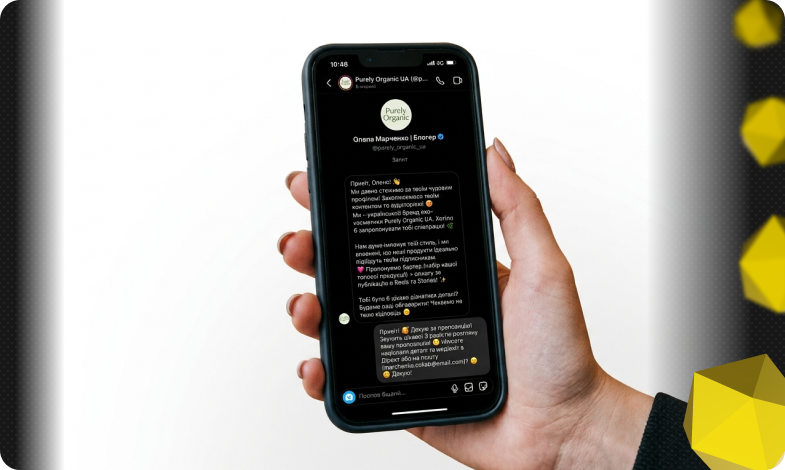
How to reach out to a blogger about a collaboration on Instagram: common mistakes and effective scripts
Most businesses attempts to attract customers through influencers come to a halt as early as the first direct message. Companies send out dozens of identical messages, receive silence or indifference in response, and draw the wrong conclusion that influencer marketing is ineffective. The problem usually lies in the fact that the initial outreach is perceived as a dry formality rather than the start of marketing negotiations.
In this article, we’ll break down how to prepare a brand for outreach, the logic behind crafting the first message to a blogger about a collaboration, how to structure a proposal correctly, and how to turn that initial outreach into a predictable promotional tool.
The first message to a blogger as part of a marketing strategy
Today, an influencer is a distinct media platform with its own editorial policy, a keen understanding of their audience, and an established level of trust. When a business reaches out to an influencer, it’s not just buying seconds in Stories or integration in Reels it’s buying the loyalty of the followers the blogger has built up over the years.
That’s exactly why mass-sending templated text messages on the «maybe someone will respond» principle no longer works. Failing to tailor the message to a specific account signal to the influencer or their manager that the company hasn’t analyzed the platform, doesn’t understand the context of the content, and views the influencer solely as an advertising billboard. This immediately lowers the response rate and creates a negative first impression of the brand.
Furthermore, focusing solely on the number of followers is one of the biggest pitfalls for businesses. Managers often strive to partner with profiles that have hundreds of thousands of followers, ignoring actual engagement rates (ER) and audience quality. In practice, however, collaborating with micro- and nano-influencers — who have between 3,000 and 50,000 followers — in niche markets often yields a significantly higher conversion rate and a lower customer acquisition cost (CAC).
The first message should be a natural extension of a well-thought-out marketing strategy. It should demonstrate that you clearly understand why this particular creator is a good fit for your product, what value their audience will gain from this collaboration, and what specific business outcome the company expects.
What a business should do before opening direct
The success of the first contact depends 70% on the groundwork the company has laid before sending the message. Even a perfectly worded pitch will lose its meaning if, after visiting your brand’s profile, the blogger sees an unprepared or half-empty account. Before deciding how to propose a collaboration to a blogger, you need to conduct systematic internal preparation.
First and foremost, you should assess the state of your own platform. Influencers who care about their reputation always check who they’re entrusting their audience to. If the company’s landing page lacks clear positioning, recent reviews, intuitive navigation, or up-to-date information on product availability, the blogger will most likely reject the offer to avoid jeopardizing their followers’ loyalty with a partner’s subpar service.
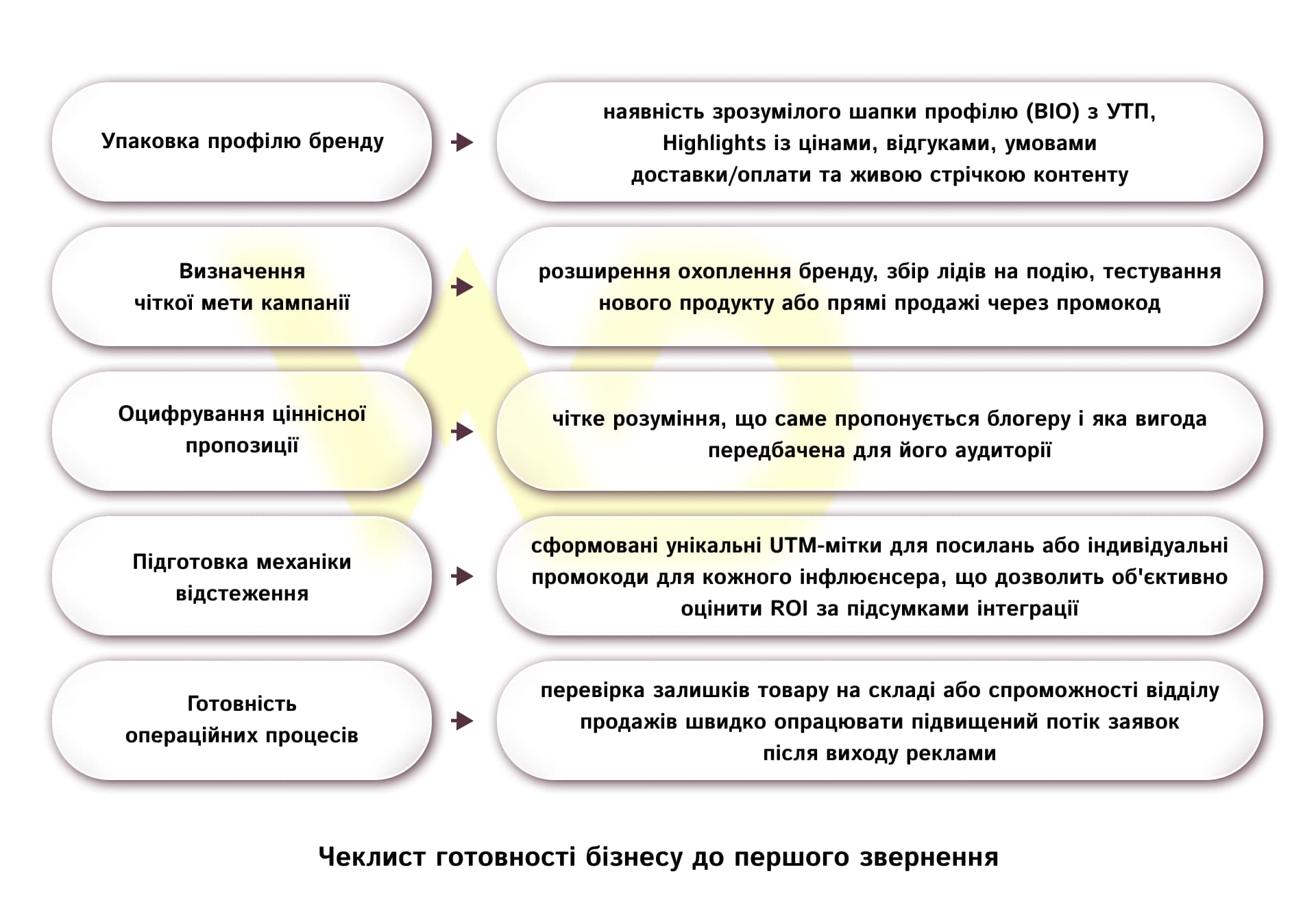
Once all internal systems are in place and the landing page looks compelling and professional, the risk of being rejected due to an unattractive or suspicious-looking brand account is minimized. Only then can you move on to drafting the initial outreach message.
How to write an effective first message: 5 elements
The first message in Direct is a concise, business-like presentation of your idea. Influencers and their managers review dozens of requests every day in the «Message Requests» tab. To ensure your message isn’t ignored or shelved, it must be easy to read, visually structured, and provide answers to key questions at first glance.
The optimal structure for an initial message consists of five sequential elements, with each section serving a specific purpose in the communication funnel:
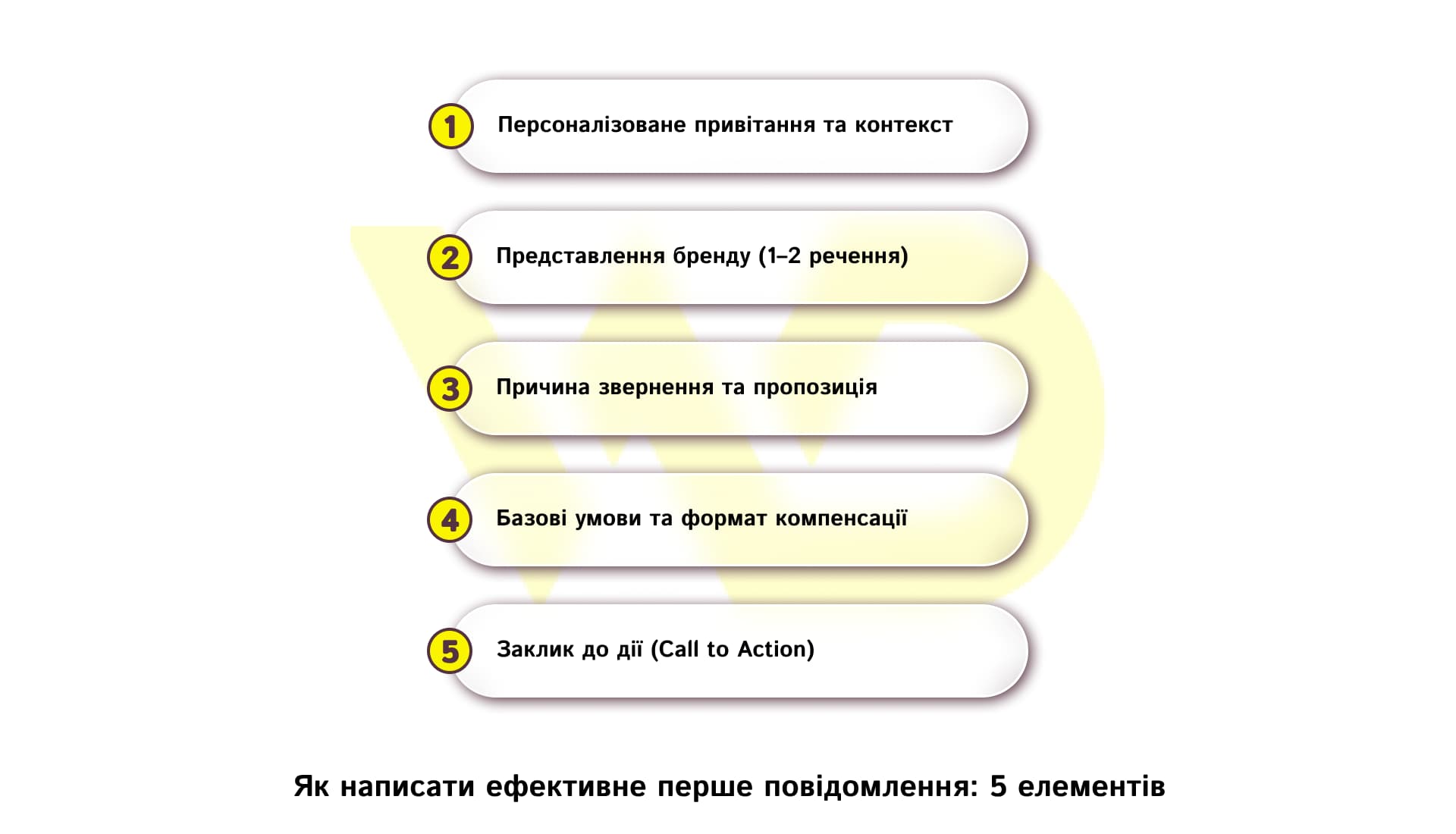
- Personalized greeting and context: address the recipient by name and briefly mention a specific piece of their content (e.g., their latest post, a Stories topic, or a specific feature of their blog), which immediately dispels any suspicion of mass spam.
- Brand introduction (1–2 sentences): a concise summary of your business without advertising clichés or a lengthy history of the company’s founding.
- Reason for reaching out and proposal: a clear explanation of why this specific account was chosen for collaboration and what format of integration is envisioned (Stories, Reels, product review, etc.).
- Basic terms and compensation format: a brief outline of the terms a fixed fee based on the creator’s rate, a barter arrangement, or a gift.
- Call to Action (CTA): one specific and simple question at the end that encourages a brief response and continues the dialogue.
An important question businesses face: should you specify a specific budget right away? If you have a limited, fixed budget for the integration, it makes sense to mention the amount in your first message this will save both parties time if the blogger’s rate is significantly higher. If, on the other hand, you’re willing to work within the blogger’s price range, it’s best to request a media kit with current reach figures and placement terms at this initial stage.
Remember that the main goal of the first Direct message isn’t to finalize all the technical specifications or sign a contract, but to get an initial confirmation of interest. Overloading the text with unnecessary details, legal requirements, or long descriptive blocks right at the start only creates an additional barrier to getting a response.
Practical scripts for Instagram Direct
Every marketing goal requires its own approach to communication. Trying to send the exact same message for a barter proposal as for a commercial advertising order makes the message seem out of place. Let’s look at practical scripts for Instagram, designed to respect the recipient’s time and clearly convey the business proposal.
Script 1. Request for a paid collaboration (based on a price list)
This format is suitable when a company has a dedicated budget for influencer marketing and plans to purchase ads from creators with a relevant target audience.
Script example:
«Hello, [Name]! I really enjoyed your latest review [specify the topic or product the blogger actually covered] especially your take on [a brief detail from the content].
My name is [Your Name], and I represent the brand [Brand Name] (we produce/provide [brief description of the product]).
We’d like to offer you a paid collaboration in the form of [Stories / Reels]. We see that our audiences share common interests, so we’d be happy to help you learn more about our product.
Please let us know if you have any available dates for advertising in [month/week] and where we can find your current pricing and reach statistics».
The logic behind this script is that the message begins by demonstrating that you’ve viewed the blog, which immediately dispels any suspicion of spam. This is followed by a brief self-introduction and a clear question about pricing and terms.
Important! Be sure to mention a specific detail from the author’s content. Referencing a specific post makes your message more personal and shows that you’ve chosen the platform deliberately.
Scenario 2. A high-quality barter proposal (for micro- and nano-bloggers)
Barter works effectively with influencers whose audience ranges from 3,000 to 30,000 followers, and where the product itself has a high cost or significant value for example, clinic services, designer clothing, handmade goods, or hotel stays.
Sample script:
«Hello, [Name]! We really enjoy following your blog, and we especially like your take on [topic/category].
I’m [Your Name] from [Brand Name]. We manufacture [product] and would like to offer you a barter partnership.
We’d be happy to provide you with [specific product/service] in exchange for an honest review or mention in your format (Stories or a post).
Please let me know if you’re interested in this arrangement and if you generally use similar products».
The barter is offered not as «free advertising», but as an exchange of value. The question at the end gives the blogger the opportunity to politely decline if they don’t need the product itself.
Important! Clearly specify exactly which product or service is being offered. Proposals like «something from our catalog» create unnecessary cognitive load.
Scenario 3. Product as a gift (non-committal seeding)
Seeding is used to build loyalty and organic reach. The main rule of seeding is that there are no requirements for a mandatory post.
Sample script:
«Hello, [Name]! Our team at [Brand Name] is truly impressed by your aesthetically pleasing content on [blog topic].
We’ve just launched a new line of [product name] and would love to send it to you as a gift, with no obligation to promote or post about it.
If you’d be willing to accept our box, please let us know where we can send the package».
Removing the obligation to publish a review builds trust. If your product is truly high-quality and aesthetically packaged, the blogger is highly likely to do a genuine unboxing on their Stories without any additional paid conditions.
Important! Make sure the gift category matches the blogger’s lifestyle in other words, don’t send vegan cosmetics to someone who doesn’t identify with those values.
Scenario 4. Proposal for a long-term partnership or ambassador program
This scenario applies after successful one-time integrations or when working with creators who are already loyal users of your brand.
Sample script:
«[Name], hello! We’ve noticed that you periodically mention our brand [Brand Name] in your reviews, and our team really appreciates that.
We’re looking for long-term brand ambassadors for the upcoming season. We resonate with your values and style, so we’d like to discuss a long-term collaboration format (monthly integrations, a special promo code for your followers, and a fixed compensation).
Would you be interested in considering this arrangement? If so, we’d be happy to send you more detailed terms via email or discuss them through your preferred messaging app.»
The text builds on existing loyalty. The offer of a long-term partnership provides the blogger with stability, so authors are more willing to agree to special terms or a discount on their fee.
Important! Mention details of your previous collaboration (past posts, orders, or joint projects).
When using these scripts, it’s important to remember: any template is just a guide for communication. Natural language, attention to detail, and a willingness to tailor the offer to the influencer’s needs are what distinguish a professional business pitch from run-of-the-mill spam.
Common mistakes in communicating with bloggers and how to avoid them
Most unsuccessful attempts to establish contact with bloggers stem from a lack of understanding of the platform’s specifics and the desire to apply classic B2B templates to the flexible environment of Instagram. When the initial outreach is structured without taking the author’s psychology into account, the marketing campaign loses its effectiveness even before discussions about terms begin.
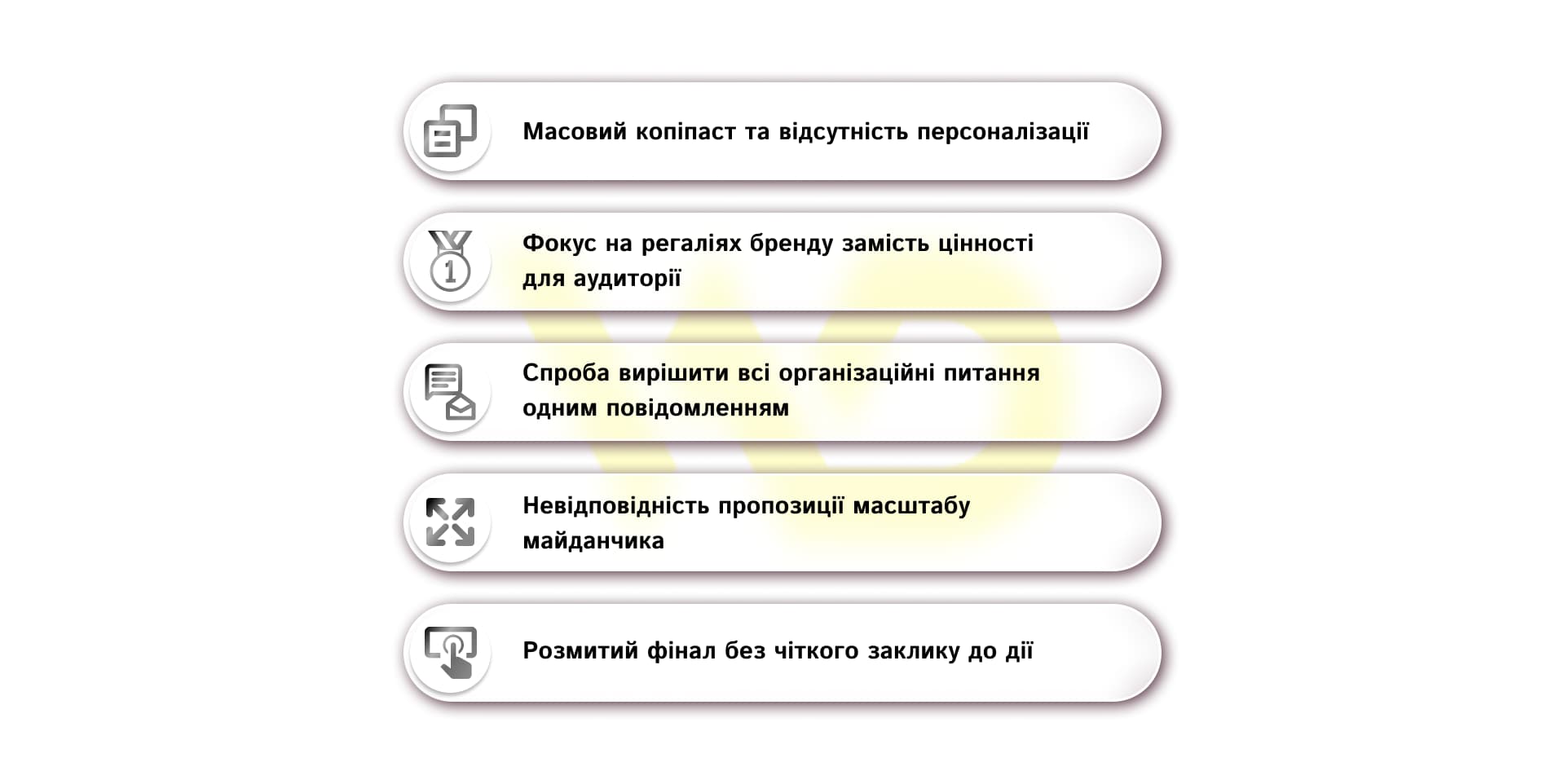
Mass copy-pasting and a lack of personalization
A marketer’s desire to «check off» a task and send dozens of Direct messages in a single day automatically turns a business pitch into spam. Experienced content creators instantly spot templated text where only the name has been changed and send it to the archive or block it. To avoid this trap, simply spend a few minutes analyzing the profile: one relevant detail about their latest post or a series of Stories convinces the blogger that you’re reaching out to them intentionally and significantly increases the response rate.
Focusing on brand credentials instead of value for the audience
A common mistake among beginners is crafting messages filled with corporate jargon and self-promotion. Stories about a «market leader» or a «young, rapidly growing company» are completely irrelevant to a blogger if they don’t see any benefit for their followers. An influencer prioritizes the loyalty of their own community, so communication should shift from the influencer’s own ambitions to addressing the needs of their readers through a unique product, an exclusive bonus, or an engaging review.
Trying to resolve all organizational issues in a single message
An excessive desire to save time often results in the first Direct message turning into a document filled with detailed technical specifications, lighting requirements, timing, and deadlines. Such cognitive overload forces the author to put off reading it «until later», where it remains. The initial outreach should serve only one purpose to spark initial interest. All technical requirements and conditions are sent only after the blogger has confirmed their willingness to engage in dialogue.
A proposal that doesn’t match the platform’s scale
Offering a barter deal or a free gift to a blogger with an audience of over 200,000 followers is perceived as a lack of respect for their resources. This stems from a failure to categorize influencers by target audience. For established media accounts, barter is a thing of the past, so they should be offered commercial terms or a fixed fee right away. Barter and seeding arrangements are best reserved for micro- and nano-bloggers who are actively building their portfolios.
A vague conclusion without a clear call to action
Even a well-written text loses its meaning if it ends with a simple statement of facts without a concluding question. The blogger reads the message but doesn’t understand what specific action is expected of them and leaves it unanswered. Every message must end with a specific question that encourages a brief response and naturally continues the communication funnel.
Systematically working to eliminate these mistakes allows you to transform an initial outreach from a chaotic mass mailing into a controlled and predictable process.
How to negotiate with an Instagram blogger: reminders, rejections and finalizing terms
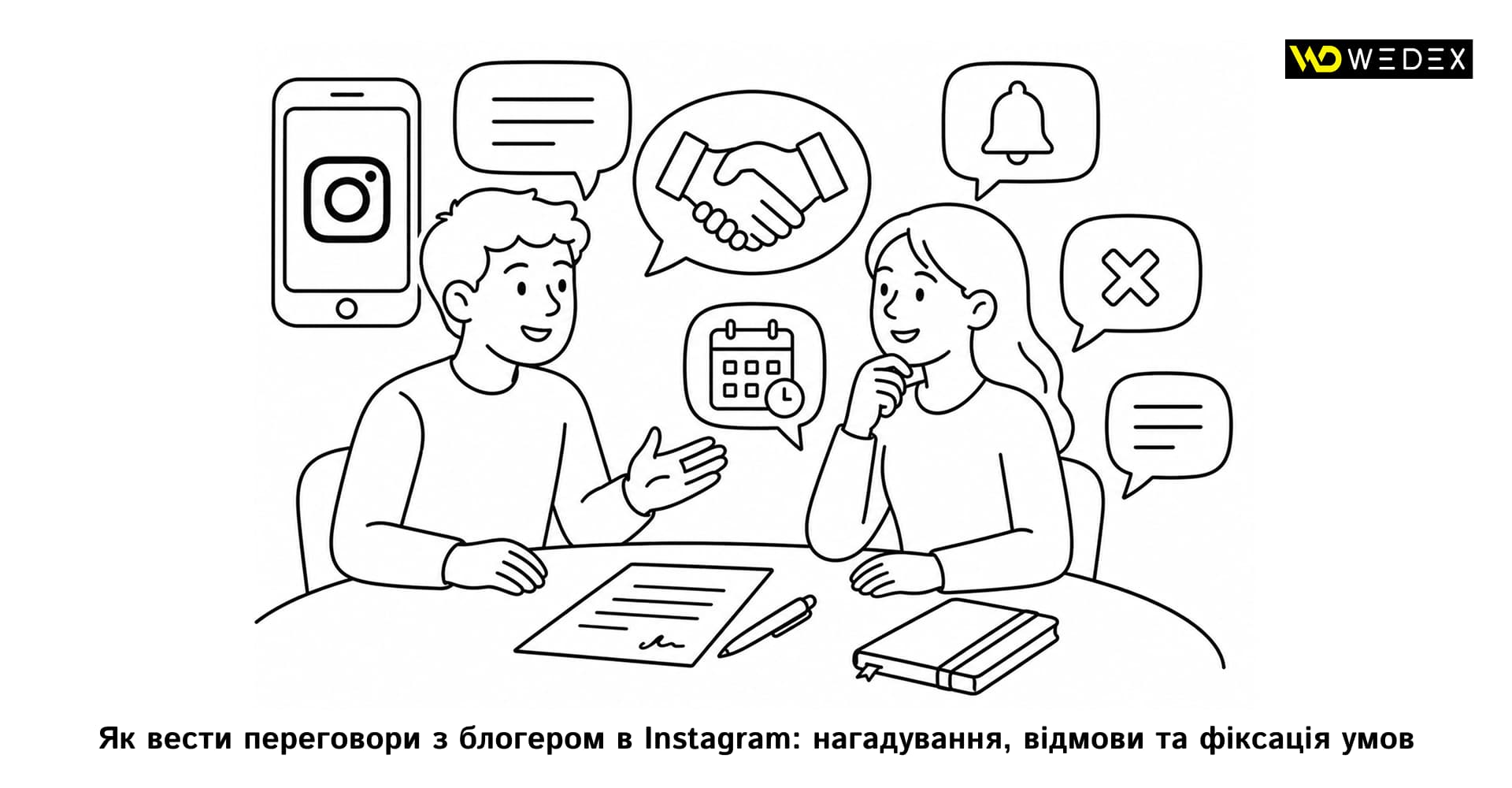
Sending the first message is just the start of the communication funnel. In the world of Instagram Direct, messages from unfamiliar profiles end up in the «Requests» folder, where bloggers often simply don’t notice the notifications or forget to reply due to their heavy workload. The ability to properly manage the conversation and negotiate without pressure determines the final outcome of the entire advertising campaign.
Rules for effective follow-ups if a blogger doesn’t respond
Following up is standard business practice, provided you maintain appropriate time intervals and a polite tone. The first follow-up should be sent no sooner than 48–72 hours after the initial contact.
Example of a follow-up message:
«[Name], hello! Just a quick reminder so my message doesn’t get lost among your other inquiries.
Please let me know if you’ve had a chance to review our proposal regarding [brief description of the product]. I’d be happy to answer any questions you may have!»
If there’s no response within 3–4 days after the first reminder, you can send a brief follow-up. A lack of response even after that indicates disinterest in the offer, so further attempts will be perceived as spam or pressure in which case, it’s best to end the conversation and move on to other candidates.
Responding to a request for details or a quote
When an influencer responds and asks for details or a price quote, it’s important to respond promptly. A delay of more than 24 hours significantly reduces the influencer’s level of interest.
Example of a response script to a request for terms:
«Thank you for your quick response, [Name]!
Regarding the details: we’re planning an integration in the format of [2 Stories demonstrating usage / 1 Reels review]. The estimated release dates are [dates].
Our budget for this collaboration is [amount in UAH] / We’ll base our offer on your pricing.
Please let us know if these terms work for you and if it would be convenient for you to review a brief technical specification.»
How to respond to a rejection
Rejection is a natural part of influencer marketing. An influencer may decline an offer due to a heavy workload, the product category not aligning with their current plans, or personal beliefs. A professional response helps maintain a positive brand image.
Example of a response script to a rejection:
«[Name], thank you for taking the time to respond!
I completely understand your position. We’d be happy to revisit this in the future if your plans or formats change. Wishing you inspiration and a great day!»
This response leaves the door open. A clear and calm response sets the brand apart from those who react negatively or disappear without a trace, laying a solid foundation for potential future collaborations.
Moving from correspondence to an agreement: formalizing the terms
After receiving preliminary approval, it’s important to clearly document all terms to avoid misunderstandings regarding deadlines or the content of the ad.
To do this, the company should prepare a brief technical brief in advance that includes:
- key messages;
- mandatory focal points;
- terms for product display.
The exact date and time of publication, deadlines for preliminary approval of content drafts, and the payment method (advance payment or full payment after publication) should be agreed upon separately. For legal entities and sole proprietors, the best approach is to formalize the terms in a contract. The product or access to the service must be provided in advance so that the blogger has time to test the service or product before the shoot.
Collaborating with Instagram bloggers isn’t just a haphazard series of messages—it’s a full-fledged marketing communication channel where the quality of relationships directly impacts bottom-line profits. By treating each outreach as a personalized business presentation, a company builds a pool of loyal creators who become reliable brand ambassadors for the long term.

commercial offer
Other articles by the author

03/03/2026
A proper assessment provides insight not only into how many users have opened the application, but also into how well the product is performing in terms of business objectives.

20/03/2026
An ambassador isn’t just a marketing channel—it’s a multifunctional resource: trust, content, traffic, reputation support, and product narrative.

29/05/2026
This is actually very important for businesses, because when content loses visibility, it doesn't just affect «pretty statistics» it also impacts real results.
Latest articles by #Useful tips
22/10/2026
To properly link Instagram to Facebook, you need to distinguish between the different types of accounts within the Meta ecosystem, since confusion between a personal profile and a business page is the most common cause of errors during setup.
09/09/2026
The Facebook lead form helps businesses collect contact information from potential customers directly from an ad, without requiring them to visit the website.
08/09/2026
Today, an influencer is a distinct media platform with its own editorial policy, a keen understanding of its audience, and an established level of trust.