

 02/06/2026
  1343
1343

Інтернет-маркетинг
простою мовою
Content of the article
- /01 Digital environment architects: development as the foundation
- /02 Data as a strategic asset: analytics and artificial intelligence
- /03 Aesthetics and functionality: UI/UX design
- /04 Profit drivers: marketing in the digital age
- /05 Guarding quality and security: QA and cybersecurity
- /06 Managing chaos: project and product management
- /07 New horizons: the cloud and no-code development
- /08 How businesses can navigate the selection of specialists

Most in-demand IT specialists: who employers are looking for

Modern business no longer views IT as a support function. Today, technology is the business itself. While just a few years ago companies competed over the number of developers they could attract, by 2026 the focus has shifted to the economics of efficiency. Employers are looking not just for people to execute technical tasks, but for solution architects capable of integrating innovation into the company’s business model, ensuring its sustainability and profitability.
In this article, we will examine the structure of the modern IT market, identify the specific competencies required to achieve particular strategic goals, and analyze key roles based on current market demands and digital transformation trends.
Digital environment architects: development as the foundation
Developers remain at the heart of any digital ecosystem. However, the demands placed on them have evolved significantly. Today, businesses are moving away from narrow specialization in favor of specialists who understand the entire product development cycle.
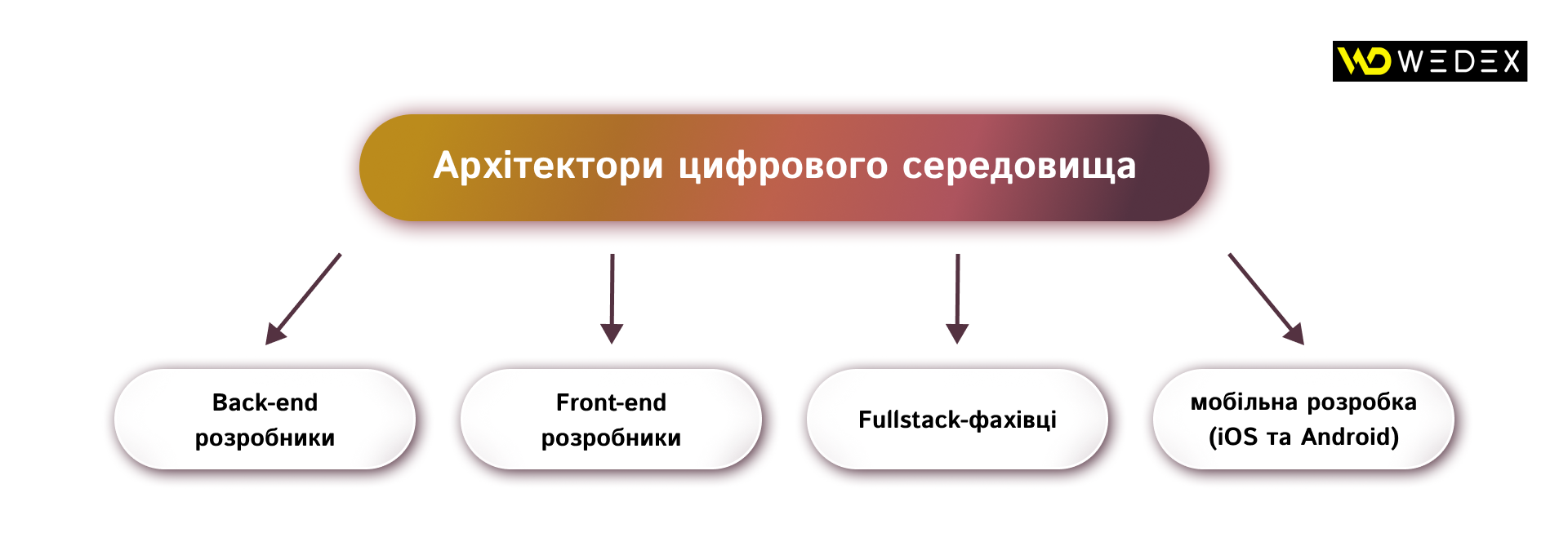
Back-end developers
Back-end developers remain critically important, as they are responsible for the «invisible» part of the product: logic, data processing, and security. Using languages such as Java, Python, or Go allows for the creation of high-load systems capable of handling millions of requests. For businesses, this means service stability even during peak periods, such as large-scale sales or marketing campaigns.
Front-end developers
Working in tandem with back-end developers are front-end developers, who create the interface that users interact with. By 2026, their role will extend beyond layout they will be responsible for the performance of the client-side and the service’s accessibility across various devices.
Full-stack specialists
However, full-stack specialists have become the real trend. For small and medium-sized businesses, this is a universal solution: a single person can handle both the server-side and visual aspects. This significantly accelerates the development of a minimum viable product (MVP) and reduces communication costs between different departments.
Mobile development (iOS and Android)
Mobile development holds a special place. Since the share of mobile traffic worldwide has long exceeded 60%, having a user-friendly app is no longer a competitive advantage but a basic requirement. Businesses are looking for specialists who can work with cross-platform frameworks such as Flutter or React Native, which allow a product to be released on two platforms simultaneously, saving up to 40% of the development budget.
Data as a strategic asset: analytics and artificial intelligence
In 2026, data is called the «new oil», but without proper processing, it remains nothing more than digital noise. Companies seeking to make decisions based on numbers rather than intuition are actively seeking out data analysts and experts.
Data scientists and data analysts
Data scientists are professionals who use complex mathematical models and algorithms to uncover hidden patterns in large datasets. For example, in the retail sector, these specialists help implement dynamic pricing systems or predict customer churn. Meanwhile, Data Analysts focus on interpreting existing data, visualizing it in reports that are easy for management to understand. This allows businesses to see the true picture of each sales channel’s profitability in real time.
Machine learning (ML) and AI
There is a particular demand for specialists in Machine Learning (ML) and AI. Following the boom in generative artificial intelligence, businesses needed people capable of training models for specific niche tasks: from automated customer support to the intelligent analysis of legal documents. Implementing AI solutions today allows companies to reduce operating costs by 20–30% within the first year of use.
Aesthetics and functionality: UI/UX design
Today’s users are spoiled by high-quality software. If the interface isn’t intuitive within the first three seconds, the customer will go to a competitor. That’s why the role of UI/UX designers has shifted from «drawing buttons» to designing the customer experience.
A UX (User Experience) designer studies user behavior, creates prototypes, and conducts testing to ensure the path to purchase is as short as possible and as pleasant as possible. A UI (User Interface) designer is responsible for visual appeal, brand consistency, and emotional response.
For a marketing agency or e-commerce project, these specialists are key, as the conversion rate depends on their work. High-quality product design can boost sales without requiring an additional advertising budget, simply by removing barriers in the user’s path.
Profit drivers: marketing in the digital age
Even the perfect product will go unnoticed without systematic promotion. Marketing-oriented IT specialists serve as the bridge between technology and sales.
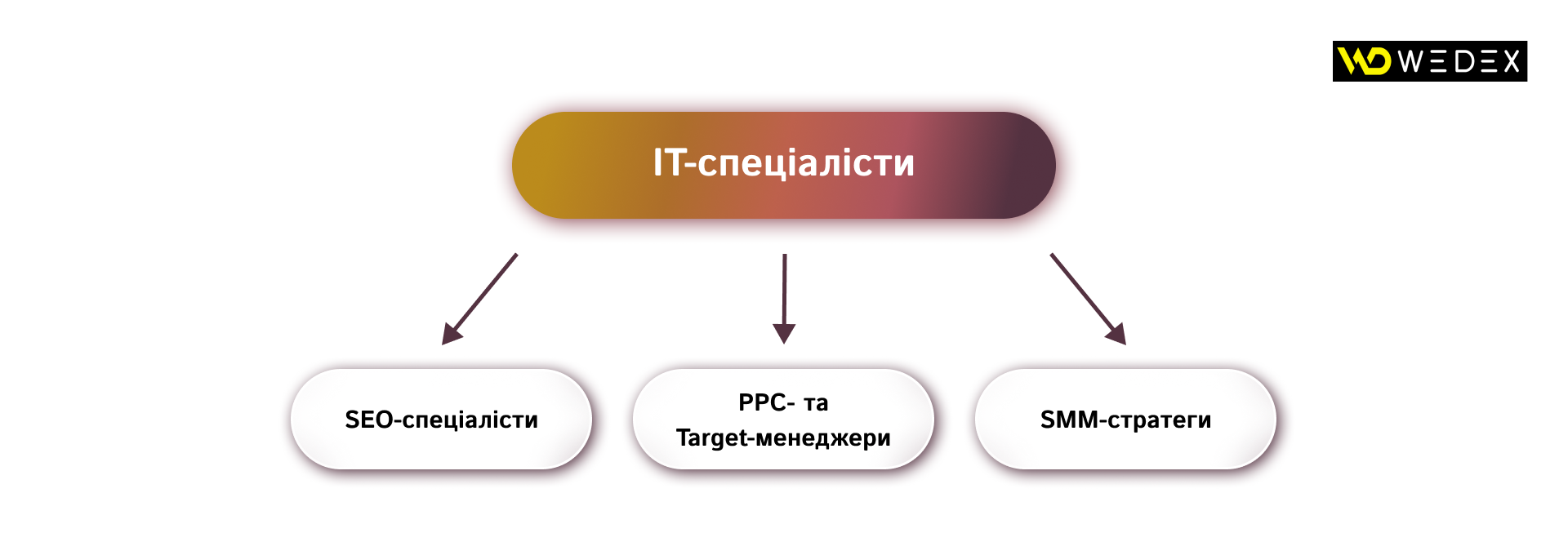
SEO specialists
By 2026, the role of an SEO specialist has gone far beyond simply selecting keywords. The main challenge has become adapting to Search Generative Experience (SGE)—a system where artificial intelligence generates a direct answer for the user right on the search results page. Now, the specialist’s task is to ensure that the brand becomes the primary source for these AI-generated answers.
A modern SEO expert focuses on the E-E-A-T concept (Experience, Expertise, Authoritativeness, Trustworthiness). For businesses, this delivers not just traffic, but high audience trust. The specialist works on the semantic design of the website; that is, instead of stuffing the text with keywords, they create expert content that addresses the user’s complex search intent. Additionally, technical SEO in 2026 is critical for the speed at which AI bots index content. Investing in such a specialist provides the company with a steady stream of «free» leads, protecting the business from the constant rise in the cost of paid advertising.
Entrust your SEO efforts to a team of professionals
The WEDEX team will help you build an effective SEO strategy: from technical audits to content strategy and optimization for Google’s new algorithms and AI-powered search results.
PPC and target managers
The advertising platforms of Google, Meta, and TikTok are already almost fully automated. Today, a professional PPC specialist or targeting specialist is not someone who simply clicks buttons to launch ads, but a strategist and data analyst. With the complete phase-out of third-party cookies, these specialists are learning to work with first-party data a company’s internal customer data.
The primary value of a PPC manager to a business lies in managing the ROAS (Return on Ad Spend) metric. They use intelligent scripts to automate bids, buying traffic at the lowest price during peak conversion times. In addition to the math, such a specialist acts as a «creative director»: they analyze which visual solutions work for a specific audience and assign tasks to designers based on data. This allows the business to scale sales predictably, avoiding budget waste on irrelevant clicks.
SMM strategists
Social media platforms have definitively transformed from communication spaces into full-fledged e-commerce hubs. An SMM strategist is now responsible for creating the customer journey within social media platforms. Today, users – especially Gen Z and Gen Alpha – use Instagram or TikTok as search engines. Therefore, a specialist must possess social SEO skills to ensure the brand’s content is visible.
The work of an SMM strategist is focused on two goals: building a community and driving direct sales through social commerce tools (in-app stores, live sales streams). The specialist doesn’t just publish content; they shape the brand’s tone of voice, collaborate with influencers to attract new audiences, and build a customer service system through comments and messaging apps. For businesses, this translates to a high LTV (lifetime value): people buy from those they trust and with whom they have an emotional connection. An SMM strategist turns a casual page visitor into a loyal ambassador for your product.
Guarding quality and security: QA and cybersecurity
The speed of product release often conflicts with its quality. However, code errors result not only in reputational damage but also in direct financial losses. QA (Quality Assurance) engineers ensure the system’s reliability. Automated testing allows for the verification of thousands of scenarios in a matter of minutes, which is critically important for financial institutions and services with a high volume of transactions.
Cybersecurity is no less important. In a world where the number of cyberattacks grows by 15–20% annually, protecting customer data has become a matter of survival. Cybersecurity specialists don’t just «set up firewalls»; they develop security protocols, conduct system stress tests, and train staff on the basics of digital hygiene. For businesses that handle personal data or finances, such a specialist is a guarantor of legal and operational security.
Managing chaos: project and product management
Technology doesn’t work on its own it needs to be managed. This is where specialists who combine technical expertise with business acumen come into play.
Project manager (PM)
A project manager is someone who transforms the chaos of ideas and technical constraints into a clear action plan. The role of a PM has gone beyond simply monitoring deadlines. Today, they are a specialist in risk and resource management. They ensure that the project is delivered on time, within the agreed budget, and in accordance with the technical specifications.
For the business, the PM is the primary point of contact. They act as a mediator: translating abstract business needs into technical requirements for the team and, conversely, explaining complex technical nuances to the client in simple terms. Using methodologies such as Agile, Scrum, or Kanban, the PM ensures process transparency you always know what stage the development is at and where every penny of the budget is being spent. While the PM is responsible for «getting it right», the business gains confidence in the stability of the process.
Product manager
The product manager has a fundamentally different focus to ensure the product is viable and in demand in the market. They are the product’s «mini-CEO», viewing development through the eyes of both the end user and the business owner simultaneously. They analyze competitors, study audience needs, and shape the development roadmap.
The product manager is responsible for strategic success and is the one who decides which features will generate the most revenue and which ones should be abandoned to avoid wasting resources. They work with hypotheses, conduct testing, and are responsible for monetization and user retention metrics. Their main goal is to find the intersection between technological capabilities, people’s needs, and business objectives. If the product manager is responsible for «doing the right thing», you’re guaranteed that the end result will be not just working code, but a successful market product.
New horizons: the cloud and no-code development
Over the past few years, roles that were rarely mentioned before have come to the forefront. Cloud Architects help companies migrate their infrastructure to the cloud (AWS, Azure, Google Cloud). This gives businesses incredible flexibility: the ability to scale capacity in minutes and pay only for the resources they use.
The niche for Low-code/No-code developers is also growing rapidly. These are specialists who assemble complex systems from pre-built blocks. This is an ideal option for internal business process automation or quickly testing hypotheses when it doesn’t make sense to spend six months on full-scale development.
How businesses can navigate the selection of specialists
The choice of specialists depends on the company’s stage of development and its strategic goals. At the start, one full-stack developer and a jack-of-all-trades marketer are often enough. However, as the business scales, there is a need for deep specialization that is, dedicated analysts, security experts, and professional managers.
So, what should a business owner keep in mind:
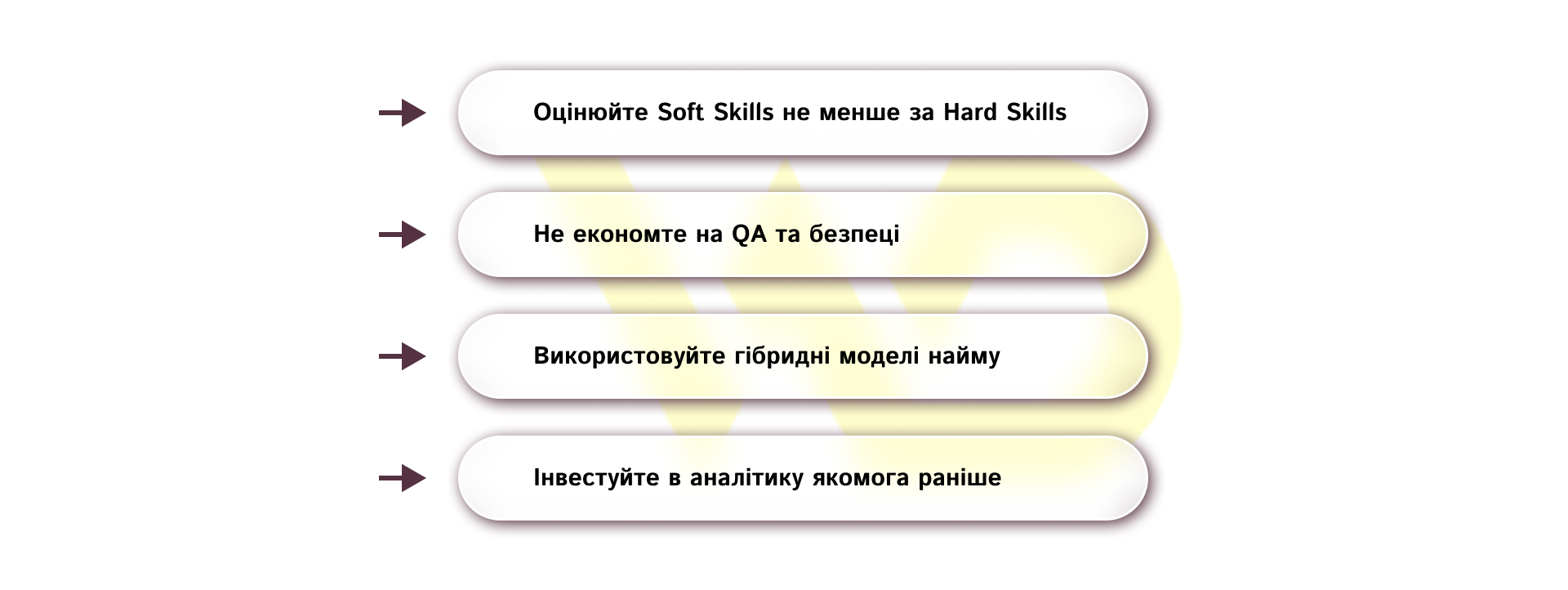
- Value soft skills just as much as hard skills. Today, a specialist’s ability to explain a complex technical problem in simple terms and work effectively in a team is critical. The IT department should not be a «state within a state»; it must be integrated into overall business processes.
- Don’t skimp on QA and security. Fixing a bug during the development phase costs tens of times less than restoring the system after a crash or data breach.
- Use hybrid hiring models. For strategic tasks, it’s better to have in-house specialists (Product Manager, key developers), while narrower tasks (SEO, design, cloud architecture) are more effectively outsourced to specialized agencies.
- Invest in analytics as early as possible. Even a small dataset, collected correctly from the very beginning, will become the foundation for implementing artificial intelligence a year later, giving you an edge over competitors.
The IT world is changing rapidly, but the basic principle remains the same. The best specialists are those who see real customer problems and business needs behind the lines of code. By investing in the right people today, you ensure your company’s technological leadership for years to come.

commercial offer
Other articles by the author
31/03/2026
Gemini is not just a single language model, but an entire platform that brings together several different models.

17/04/2026
Microsoft Copilot is an AI assistant built into the company's workflows, while the business version is specifically designed for corporate data, applications, and information security.

27/05/2026
For businesses, this isn't just a technical detail it's the foundation for SEO, content, website structure, and launching advertising campaigns.
Latest articles by #Useful tips
06/10/2026
From a business perspective, updating content is a sensible way to protect existing investments.
30/09/2026
Google's main focus in 2026 was the large-scale rollout and deep algorithmic integration of the AI Overviews (AIO) tool.
16/09/2026
Choosing between search engine optimization and pay-per-click advertising is one of the most critical decisions when developing a marketing strategy.