

 15/07/2026
  1300
1300

Інтернет-маркетинг
простою мовою
Content of the article
- /01 Who is a Project Manager and what is their mission in a company
- /02 Why a PM is needed beyond IT
- /03 The difference between a Project Manager and a Product Manager
- /04 From brief to release: the stages of a PM work
- /05 PM hard and soft skills
- /06 How project management optimizes business budgets
- /07 How to integrate a PM approach to scale your company

Who is a Project Manager (PM): a detailed analysis of the profession and its role in business
According to a large-scale global study by the Project Management Institute (PMI), by 2030 the global economy will need more than 25 million new professionals in the field of project management. This rapid growth in demand is driven by the fact that modern business has become more dynamic and processes have become cross-functional. Today, a project manager (PM) is not just an administrator who shuffles cards in a task manager, but a strategic business partner who directly impacts the company’s profitability.
In this article, we’ll take a detailed look at what a PM’s job entails, why their role is critical for marketing and digital projects, and exactly how professional management protects companies’ budgets from financial losses.
Who is a Project Manager and what is their mission in a company
A Project Manager is a specialist responsible for the successful implementation of a project from the moment an idea is conceived to the final release, within clearly defined deadlines, budgets, and quality requirements.
The PM serves as a so-called «single point of contact» for communication. They act as a bridge connecting the client or top management with the direct executors: designers, copywriters, targeting specialists, analysts, and technical specialists.
The project manager’s main mission is based on four principles.
- Strict adherence to deadlines. Time on the market is money. A delay in launching a marketing campaign or product can cost the company market share. The PM organizes the work so that each stage is completed on time.
- Control of financial limits. A project must not only be completed; it must also stay within the planned budget. The manager monitors resource expenditures and prevents situations where funds run out halfway through the project.
- Achieving business goals. A project isn’t created just for the sake of the process itself. Its goal is to solve a specific business problem: attract customers, increase conversion rates, automate sales, and so on. The PM focuses the team specifically on these KPI.
- Ensuring profitability. For a marketing agency or an in-house department, a successful project is a profitable one. The manager optimizes processes to minimize cost overruns and team downtime.
To gain a deeper understanding of this specialist’s value, let’s compare how things unfold in a company with professional project management versus one without it.
|
Criterion |
Project without a PM |
Project with a PM |
|
Communication with the client |
Chaotic. The client writes directly to developers or designers, constantly changing requirements along the way. |
Systematic. All requests go through the PM, who evaluates their feasibility and documents them in the technical specifications. |
|
Deadline Management |
Deadlines are approximate. Constant postponements due to «unforeseen circumstances». |
Clear planning using Gantt charts or sprints. Risks of delays are assessed in advance. |
|
Resource Allocation |
Uneven. One specialist is overloaded, while another is waiting for tasks. Work proceeds in fits and starts. |
The team’s workload is optimized. Everyone knows their tasks, the order in which they’ll be completed, and their priorities for the week ahead. |
|
Risk Management |
Reactive. The team addresses problems only after they have already led to a crisis or losses. |
Proactive. Risks are identified during the planning phase, and time and budget buffers are built in to account for them. |
|
Final Result |
Often does not meet initial expectations or requires significant revisions. |
The product or campaign meets the success criteria outlined in the initial specifications. |
Thus, having a PM completely changes the course of the project for the better.
Why a PM is needed beyond IT
Historically, project management methodologies were developed in high-risk sectors with massive budgets in construction, engineering, and the aerospace industry. Later, with the onset of the digital revolution, the software development (IT) industry adopted these approaches. For a long time, there was a stereotype in society that a Project Manager was exclusively a figure from the information technology sector. However, the situation has now changed dramatically.
Modern digital marketing, e-commerce, retail, and the creative industries have long since caught up with the IT sector in terms of complexity. Launching a comprehensive advertising campaign for a brand today is not simply a matter of «setting up targeting on social media». It’s a complex cross-functional process that includes in-depth market analysis, content strategy development, website SEO optimization, creative development, CRM system integration, and web analytics setup.
The difference between a Project Manager and a Product Manager
In the business world, there’s often confusion between two roles with similar-sounding titles: Project Manager and Product Manager. At first glance, it seems that both manage processes, but in reality, there’s a profound conceptual difference between them. A lack of understanding of these differences leads to one specialist being required to perform the functions of the other, which negatively impacts results.
Let’s try to draw a clear line between them.
- A Product Manager is a strategist. They are responsible for the entire product lifecycle, study market needs, analyze competitors, set pricing, and determine what the product should be like so that people will buy it. Their main questions are: «What exactly are we creating? Why does the market need it? How will we make money from it?». Their focus is on customers and the market.
- A Project Manager is a tactician and a practitioner. They are less concerned with the overall product concept than with the process of bringing it to life. The PM’s main questions are: «How will we implement this? What resources do we need? Will we meet the deadline by the first of the month? What risks could hinder development?». Their focus is inward on the team, processes, deadlines, and the quality of execution.
To better understand this, let’s take a closer look at the differences between these two roles.
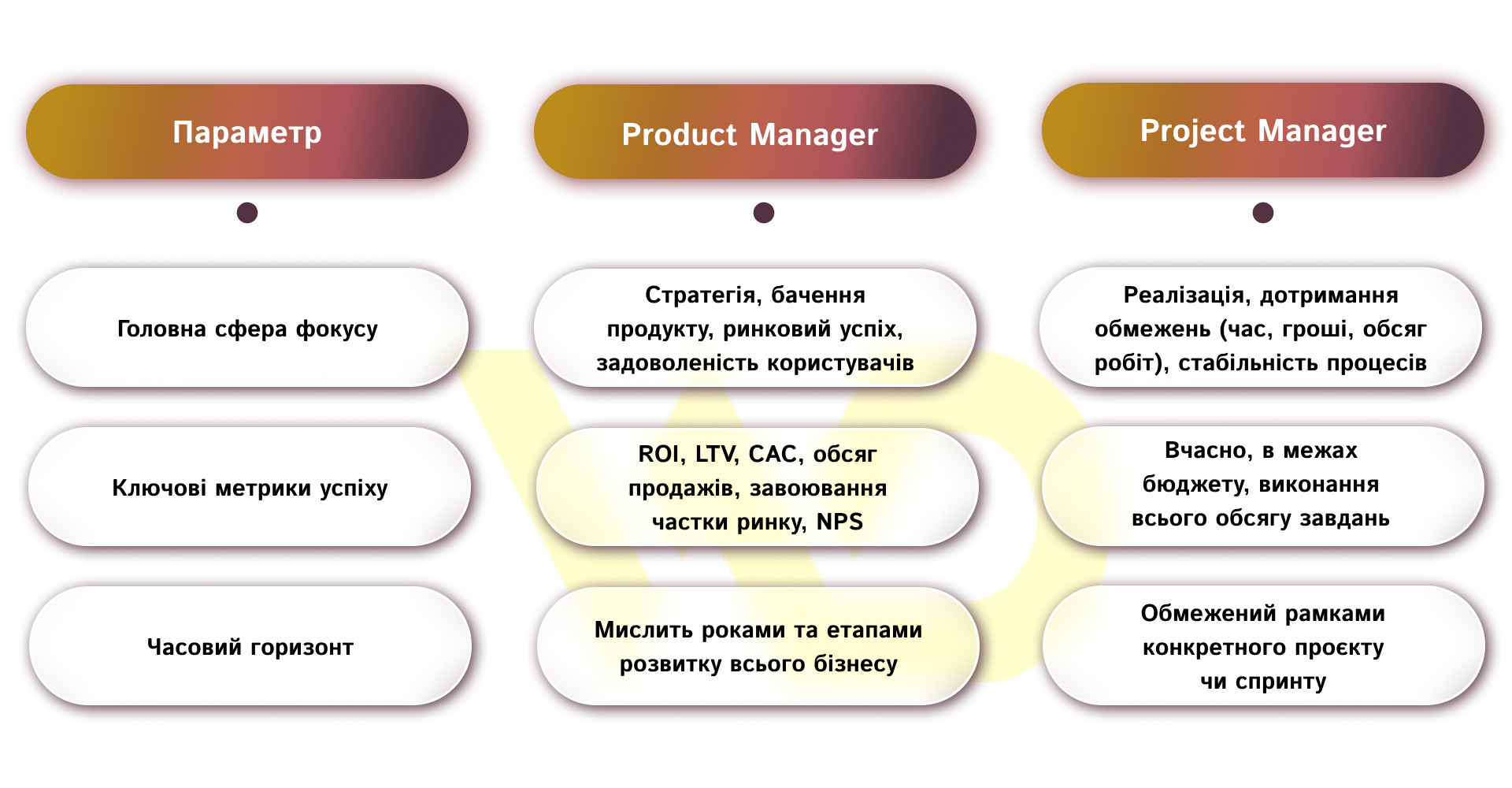
So, they’re very different. But for ideal business synergy, both specialists are needed.
From brief to release: the stages of a PM work
To gain a detailed understanding of a Project Manager’s responsibilities, let’s examine their work step by step through the classic stages of any project’s lifecycle.
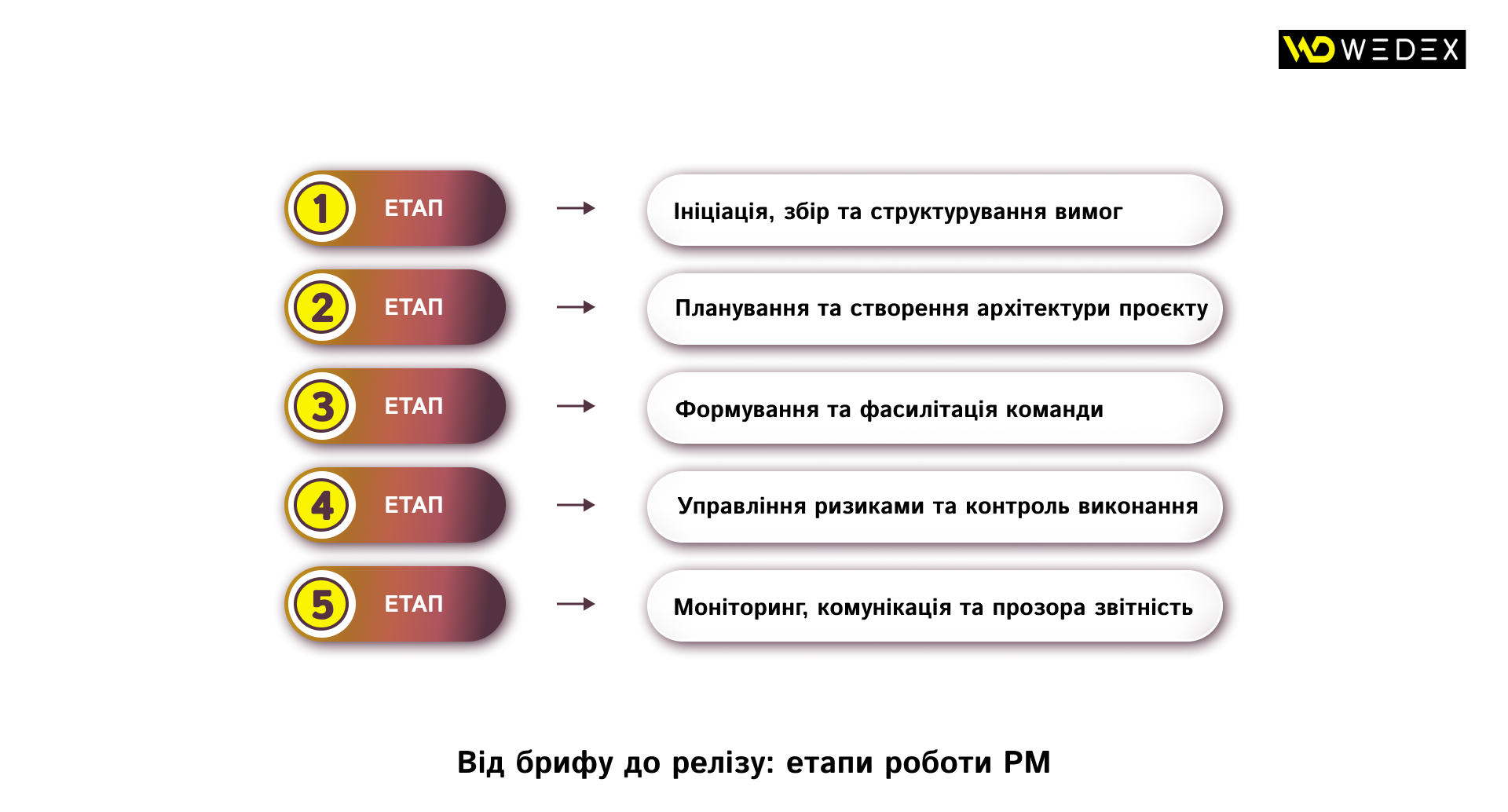
Stage 1: initiation, gathering, and structuring requirements
It all starts with the first contact with the client. At this stage, the PM acts as an active listener and analyst. The manager’s task is to draw out the client’s true business needs. Often, the client comes in with vague statements like, «We need a cool rebranding and lots of new customers».
The PM transforms these desires into clear, measurable business metrics and documents them in the brief and the initial technical specification. They agree on the criteria for the project’s success, identify key decision-makers, and define the initial boundaries of what will be done and what will definitely not be done.
Stage 2: planning and creating the project architecture
Once the goals are approved, the PM begins breaking down the tasks. The overall goal is divided into dozens of smaller subtasks. The manager maps out the sequence in which they will be completed. For example, you cannot launch pay-per-click (PPC) advertising until the analyst has set up goals in Google Analytics and the copywriter has written the text for the landing page.
At this stage, the PM creates a schedule, most often in the form of a Gantt chart, which clearly shows the relationships between tasks and deadlines. A budget plan is also developed, taking into account expenses for the team’s salaries, the purchase of licenses and services, and advertising budgets.
Stage 3: team formation and facilitation
A project doesn’t happen on its own it’s made by people. The PM assesses exactly which skills are needed to execute the plan and brings in the appropriate specialists. If it’s the in-house marketing department, the manager coordinates the specialists’ workload with department heads. If the agency lacks resources, the PM works with HR to quickly bring in trusted freelancers.
An important role of the manager here is onboarding. They gather the team for a kickoff meeting, where they present the project goals, assign roles, explain communication guidelines, and set up the workspace in the task management tool.
Stage 4: risk management and progress monitoring
Once work is in full swing, the PM shifts into active monitoring mode. Their main task at this stage is to combat the arch-enemy of all projects: uncontrolled scope creep. This is the situation where, during development, the client constantly asks for things like, «Let’s add this little button, and let’s swap the positions of these two blocks it’ll be quick».
Every such «little thing» leads to delayed deadlines and the team spending more hours than planned. A PM knows how to politely but firmly refuse such requests or suggest that these requests be moved to the next phase of work under a separate budget. In addition, the manager monitors risks on a daily basis: if a designer gets sick, the PM quickly finds a replacement; if copy from the client is delayed, the manager restructures the sprint so the team doesn’t sit idle.
Step 5: monitoring, communication and transparent reporting
The PM serves as the team’s primary shield against external pressure and, at the same time, the client’s main source of reassurance. They hold regular, brief daily meetings with the team to track the status of tasks and resolve obstacles in a timely manner.
For the client, the manager prepares clear progress reports that are free of unnecessary technical details. Thanks to this, the client always knows what stage their investment is at and doesn’t bother the team every hour with questions about when everything will be ready. The phase concludes with a successful demonstration of the results, the signing of work completion certificates, and the handover of materials to the client.
Navigating all these stages requires the PM to strike a delicate balance between technical constraints and business expectations. It is precisely this step-by-step oversight that ensures the path to release remains predictable, and that the process itself delivers clear commercial value to the company owner rather than headaches and stress.
PM hard and soft skills
To successfully oversee the completion of dozens of tasks and maintain control of the situation, a Project Manager must possess a unique set of hard and soft skills, as well as be proficient in using modern software.
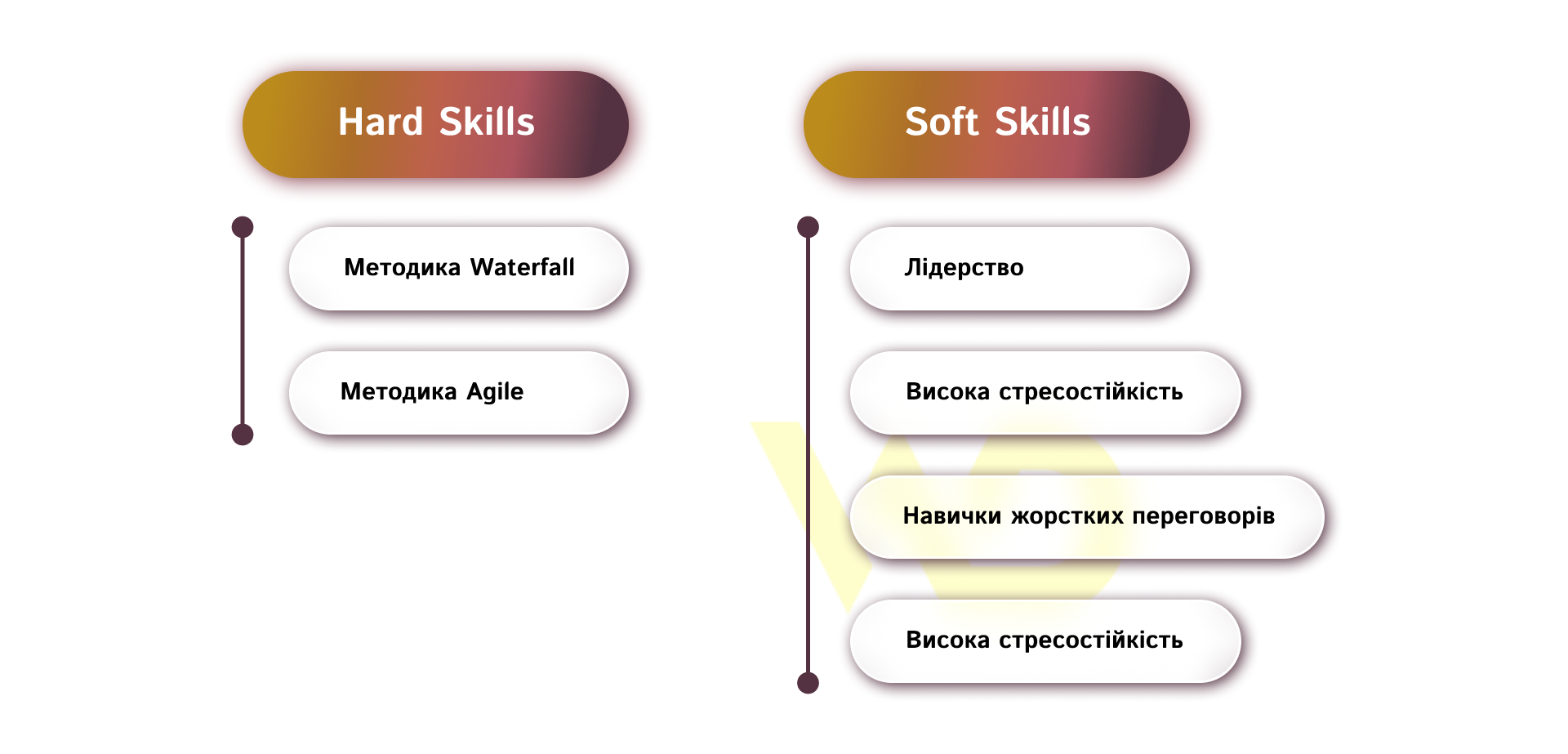
This balance of competencies defines a professional capable of bringing any business idea to fruition.
Hard skills: methodologies and frameworks
A professional manager never works «on intuition». They rely on proven global management standards. Their toolkit includes two key philosophies:
- Waterfall (the classic cascade model). Work proceeds strictly sequentially: stage by stage. Moving on to the next step is impossible without fully completing the previous one. This is ideal for projects with clear, unchanging requirements, such as opening a brick-and-mortar store or developing a complex technical core for a website;
- Agile (flexible methodologies: Scrum, Kanban). The project is broken down into short cycles (1–2-week sprints), at the end of each of which the client receives a working interim result. This is the ideal choice for digital marketing, where market conditions are constantly changing, and you need to quickly test hypotheses and adjust course on the fly.
However, knowledge of methodologies alone is not enough, because management is always about working with people.
Soft skills: the art of human relations
A PM spends about 90% of their work time communicating, so their personal qualities are extremely important. These include:
- leadership (the ability to motivate the team when everyone is tired);
- high stress tolerance (the ability to keep a cool head in crisis situations);
- tough negotiation skills and a high level of empathy, which helps them understand the underlying motives of both clients and colleagues.
As for technical tools, to put their skills into practice, modern PMs operate within a complex digital ecosystem. This ecosystem helps automate routine tasks, maintain organization, and address specific business needs.
Task managers (task tracking systems)
They allow you to visualize task progress, assign responsibilities, and monitor deadlines.
- Jira is the industry standard for complex technical projects. It’s indispensable when you need to track thousands of small bugs and work within the strict rules of Scrum sprints.
- Asana and ClickUp are highly flexible and visually intuitive platforms. They’re ideal for marketing agencies because they let you easily set up custom workflows and view tasks as lists or Kanban boards.
- Monday.com is a powerful tool focused on management analytics that provides top management with a comprehensive overview of all the company’s projects at once.
Visualization and design tools
Before creating tasks in a task manager, a marketing strategy, or a website structure, you need to visualize them graphically. To do this, PMs use interactive online boards.
- Miro and FigJam are virtual spaces that are ideal for brainstorming, creating mind maps, and building customer journey maps (CJM).
- Lucidchart is software for in-depth analysis, where managers build detailed flowcharts and algorithms for user interaction with the future product.
Time tracking and calendar planning systems
Since a team’s time is money in business, the PM must clearly understand the cost of each process.
- Toggl and Harvest are specialized time trackers where employees log the time spent on tasks, and the PM sees precise analytics on the project’s profitability.
- Google Calendar is a basic synchronization tool that helps coordinate team call times and track overall deadlines.
Communication platforms and corporate knowledge bases (Wiki)
The golden rule of effective management: information must not get lost in the chaos of personal chats. The workspace is structured using the following applications.
- Slack and Microsoft Teams are corporate messaging platforms where dedicated channels are created for each individual project to facilitate communication strictly related to the project.
- Notion and Confluence are digital project encyclopedias where the PM stores the brief, technical specifications, access permissions, and guidelines, allowing new team members to onboard instantly.
But keep this in mind! No task manager or time tracker — not even the most expensive one — will automatically make a project successful. Software is merely a tool in the hands of a master. The real value lies in how the Project Manager configures the workflow between these services, how they adapt them to your company’s unique business processes, and, most importantly, how they breathe life into these dry digital records through human synergy and clear oversight.
How project management optimizes business budgets
Professional project management directly optimizes business expenses through three factors:
- Eliminating payment for «idle hours». Without clear planning, highly paid specialists — such as senior developers or lead designers — are often forced to sit idle while waiting for text approvals or server access. A project manager organizes processes so that the task pipeline never stops, and the business pays exclusively for productive work.
- Minimizing rework costs.
According to the analytics firm The Standish Group, misunderstood client requirements at the outset are the cause of nearly 40% of all failed projects.
If a team spends a week creating banners or landing pages in the wrong style because the client «meant something else», the company loses real money. The PM clarifies the details before work begins, saving the budget.
- Accelerating Time-to-Market (TTM). The speed at which a product or advertising campaign reaches the market is a competitive advantage. By optimizing processes, the PM helps launch the project weeks and sometimes even months earlier. This means the business starts generating profit and recouping its investment much faster.
Let’s look at an example.
Imagine a company is launching a major update to its online store ahead of the peak sales season. The project team consists of four specialists with a combined hourly rate of $100. Without a project manager, poor coordination and confusion in the technical specifications caused the project to be delayed by 15 business days (an additional 120 business hours). Direct losses from paying for the team’s overtime: 120 hours × $100 = $12,000. In addition, due to the delayed release, the company missed the start of a seasonal sale such as Black Friday losing potential revenue estimated at tens of thousands of dollars. If a qualified project manager whose services would have cost significantly less than the amount of direct losses had been involved in the project, the project would have been released on time.
Thus, paying for a project manager’s services is not an extra expense, but a profitable investment and a kind of «insurance» for your business budget against catastrophic mistakes and delays.
How to integrate a PM approach to scale your company
The world of project management is constantly evolving. The main driver of change today is the rapid development of artificial intelligence (AI) technologies. However, AI will not replace professional managers; on the contrary, it will become their powerful superpower. Modern PMs actively delegate routine, manual tasks to artificial intelligence.
Today, AI is used for predictive risk analytics based on historical data from past projects, automatic scheduling and sprint planning, as well as for instant transcription and the creation of meeting minutes. This frees up a lot of the manager’s time, which they can then devote to face-to-face communication with clients, motivating the team, and solving complex business dilemmas.
Here are a few important tips for integrating a project-based approach:
- Clearly define the point of no return. If your company is simultaneously implementing more than three complex cross-functional projects, and you, as a manager, spend more than 30% of your time clarifying task statuses and resolving conflicts among employees you absolutely must hire a full-time Project Manager.
- Choose contractors with dedicated project management. When commissioning digital marketing, website development, or brand-building services from an agency, always make sure the agency’s team includes a dedicated project manager. Never agree to an arrangement where you’re forced to personally oversee every designer or copywriter at the agency. A dedicated PM on the contractor’s side ensures that your tasks will be heard and completed exactly on time.
- Foster a culture of documenting agreements. Even if you’re managing a small team, avoid assigning major tasks «verbally» or in chaotic personal messaging app chats. Any agreement must be documented in writing with a clear deadline and defined acceptance criteria.
Project management is a philosophy of efficiency that teaches businesses to think rationally, respect their own and others’ time, use financial resources wisely, and always focus on the end result. The successful integration of strong project management allows a company to move beyond a state of constant survival and chaos, transitioning to systematic, predictable, and profitable scaling in the market.

commercial offer
Other articles by the author

17/04/2026
Automating SMM processes is a practical necessity for businesses operating in an environment characterized by a high volume of content, limited resources, and constant competition for audience attention.

02/02/2026
The main business advantage is not just a “good impression,” but the ability to convert interactions into quality data: segmentation, personalization of communications, and automatic lead qualification.

20/03/2026
Detailed feedback allows you to take targeted action, conserve resources, and increase revenue.
Latest articles by #Useful tips

29/09/2026
A content pipeline transforms the creation of content from a spontaneous creative process into a managed production system. In such a system, AI serves as a powerful assistant.
10/09/2026
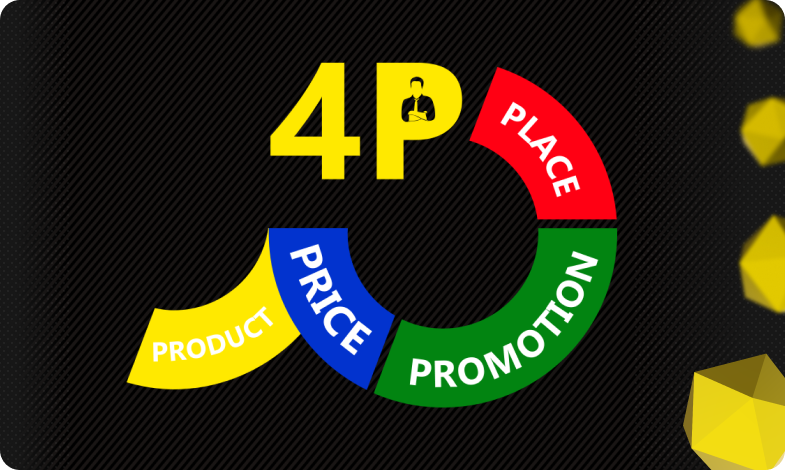
The 4P model serves as an architectural foundation that transforms disparate marketing activities into a single, manageable system.
08/09/2026
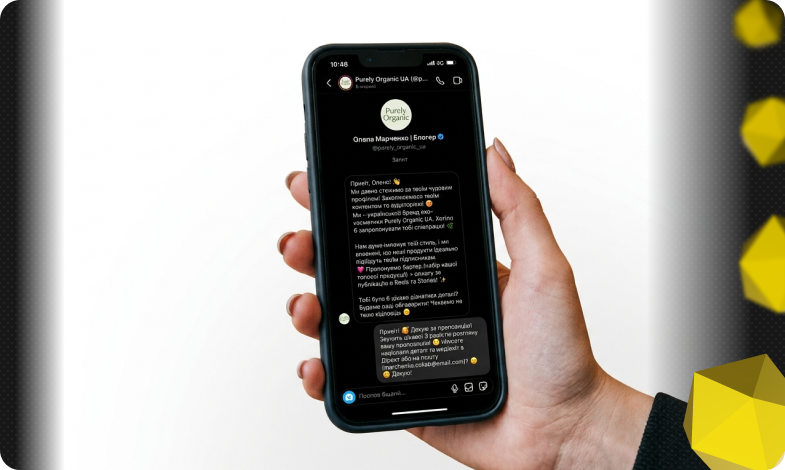
Today, an influencer is a distinct media platform with its own editorial policy, a keen understanding of its audience, and an established level of trust.