

 02/07/2026
  1211
1211

Інтернет-маркетинг
простою мовою
Content of the article
- /01 What is a white paper and why is it suitable for business
- /02 Why white papers generate high-quality leads, not just traffic
- /03 What topic to choose to ensure your white paper effectively generates leads
- /04 How to structure a white paper to build a contact list
- /05 Where to publish a white paper and how to promote it
- /06 How to turn collected contacts into leads
- /07 How to evaluate the effectiveness of a white waper

How to use a White Paper to generate high-quality leads and build a contact list
In B2B marketing, it’s important to get not just inquiries, but contacts from people who are genuinely interested in the topic and ready to engage further with the company. That’s why the white paper has become one of the most effective tools for businesses. In this article, we’ll break down how to choose a white paper topic, format it correctly, set up lead capture, and evaluate the effectiveness of this tool.
What is a white paper and why is it suitable for business
A white paper is an in-depth analytical piece in which a company doesn’t just talk about itself, but explores a topic important to the market, explains a complex problem, and offers a clear approach to solving it.
Unlike a typical promotional piece, a white paper is based not on bold promises, but on facts, logic, arguments, and practical value.
This format works particularly well in B2B: it helps demonstrate expertise, build trust, and gather contact information from people who have already shown interest in the topic.
For businesses, this format is also valuable because it combines educational and marketing functions. The reader receives informative content, while the company gains the opportunity to engage with a potential client on a deeper level.
This is the main advantage of a white paper: it doesn’t force a purchase but gently guides the reader toward engagement.
This approach is particularly effective in niches with long sales cycles, where decisions aren’t made instantly. If a white paper is well-structured, addresses the audience’s actual needs, and provides tangible practical value, it becomes more than just downloadable content it’s a full-fledged tool for generating high-quality leads.
Why white papers generate high-quality leads, not just traffic
Unlike a typical blog, which often focuses on reach and general brand awareness, a white paper allows you to take the next step that is, to offer truly valuable content in exchange for contact information. As a result, the company gains not just a visitor, but a potential customer with whom it can continue to communicate.
White Papers also generate higher-quality leads because:
- if a person provides their contact information for such content, it means the topic is truly important to them;
- not everyone is willing to spend time on in-depth analytical content, so the database ends up with more interested contacts;
- when a company shares meaningful, useful, and well-reasoned information, it comes across as an expert rather than a salesperson;
- people don’t feel pressured because they receive value first, and only then are they offered further contact;
- The longer the decision-making cycle, the more important it is to provide the audience with a thorough explanation rather than a brief promotional message.
As a result, the company gains not only contacts for its email list but also additional data about its audience’s interests. This allows for more precise segmentation of potential customers, the tailoring of future marketing messages, and more effective allocation of resources across various promotional channels. That is why a white paper often becomes one of the key elements of a systematic lead management strategy in B2B marketing.
What topic to choose to ensure your white paper effectively generates leads
A successful white paper doesn’t start with the design or even the table of contents it starts with the right topic. The topic determines whether the target audience will be interested in the material or whether the document will simply «get lost» among the general content. In a high-quality white paper, the topic should:
- align with marketing objectives;
- be tailored to a specific target audience;
- have clear boundaries;
- be supported by evidence;
- conclude with a clear call to action.
Without these elements, the content easily becomes too general and, as a result, ineffective as a lead-generation tool.
What works best isn’t an abstract topic like «the benefits of digital marketing» or «modern approaches to sales», but a specific business problem that can be explored in depth and detail.
The topic should not merely spark general interest but lead the reader to think: «Yes, this is exactly my problem, and here’s a clear path to solving it».
What to consider when choosing a topic
Start with what’s actually troubling the market. For informational content, including white papers, it’s important to focus on the fact that people want to understand the topic, figure out the solution, compare approaches, and only then make a decision. Such content is better received when it’s created from the audience’s perspective rather than the brands, and aims to foster a deeper understanding of the topic rather than drive direct sales.
This is particularly important in B2B, as decisions are often made by more than one person. According to a LinkedIn article, B2B purchases are typically group decisions, and even relatively minor decisions can involve five or more stakeholders. This means that a white paper’s topic should be useful not only to a single specialist but also to other roles within the company namely, those who influence approval, security, budget, or technical implementation.
A good topic for a white paper usually emerges at the intersection of three things: the audience’s real pain points, requests from the sales team, and the opportunity to demonstrate expertise through facts rather than self-promotion.
HubSpot also recommends creating content that addresses the objections and questions salespeople hear when talking to potential customers. This is a very practical guideline because if a topic helps address a common objection or explain a complex solution, such content has a much higher chance of generating high-quality leads.
Which topics work best
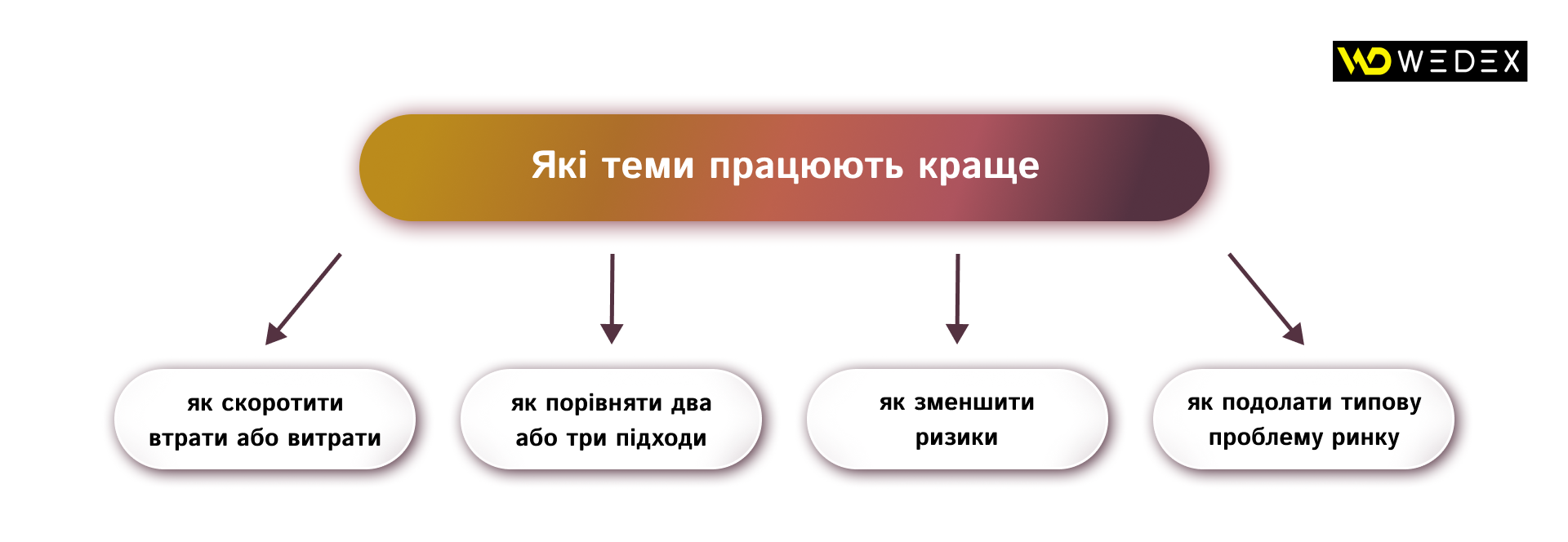
Topics that address the following types of inquiries work well:
- How to reduce losses or costs. These topics immediately resonate with businesses because they relate to money, time, and operational efficiency.
- How to compare two or three approaches to a single task. Comparisons help the audience make an informed decision and are better suited for B2B, where choices are rarely impulsive.
- How to minimize risks during implementation. This is especially important for topics where decisions affect multiple departments or require agreement among different stakeholders.
- How to overcome a common market problem that «everyone knows about» but hasn’t been effectively solved. These are the types of topics that come across as expert insights when backed by facts and logic.
A white paper allows you to choose not just an «interesting» topic, but one that serves as an entry point into the sales funnel. People don’t download the file because they «might find it interesting to read», but because they want to find an answer to a specific question related to their work or current task. This is precisely what makes the lead more valuable to the business.
How the topic relates to the quality of leads
It is the topic itself that determines who will leave their contact information. If a white paper is too general, people download it mainly out of curiosity. If the topic addresses a specific problem, the contact information is provided by a more motivated person who genuinely plans to explore the solution.
That’s why a strong White Paper doesn’t start with the product it starts with a problem that’s hurting the business. The more precisely this problem is defined, the easier it is to create content that will be read by the right audience, rather than random visitors.
How to structure a white paper to build a contact list
A strong white paper begins even before the text with a well-designed lead capture mechanism. It’s crucial that users clearly understand what they’re getting and why it’s worth providing their information. HubSpot notes that an effective landing page, audience segmentation, and analytics are key elements for gated content. This means that the white paper itself and the page where it’s available must function as a single, integrated system.
In practice, it looks like this:
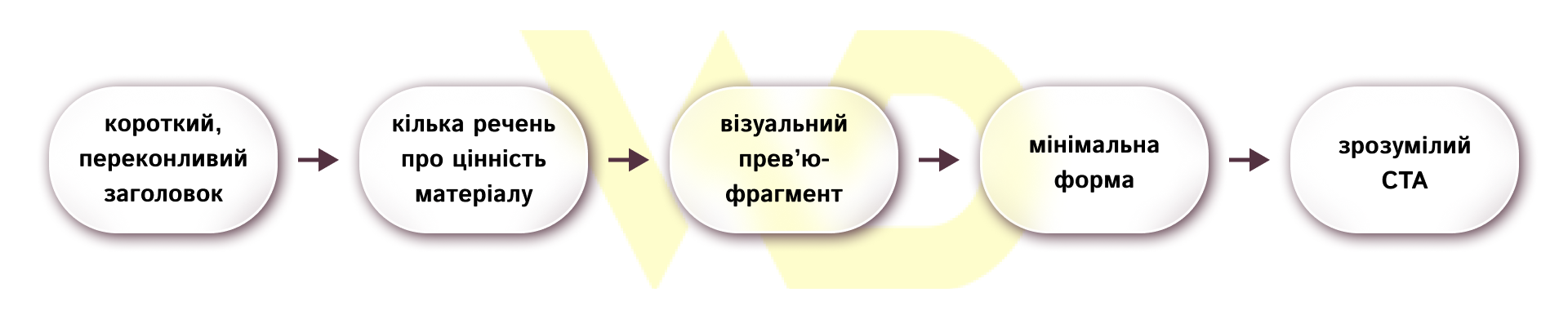
The form should not include unnecessary fields unless they are required for further segmentation. The simpler the process for obtaining the material, the higher the chance that the user will complete the action and provide their contact information. At the same time, it’s important to plan in advance where this data will go next: into a CRM, email automation, or a separate nurture sequence.
The document itself should also support lead generation, not just «be useful». To achieve this, it needs logical sections:
- problem;
- analysis;
- solution options;
- selection criteria;
- practical conclusions.
It’s worth emphasizing the importance of evidence, logical structure, and an effective call to action. If the reader reaches the end and sees a clear next step, a consultation, a demo, a checklist, or a form on the website the white paper begins to function as part of the sales funnel, rather than as an isolated PDF.
Where to publish a white paper and how to promote it
For a white paper to truly drive lead generation, it’s not enough to simply create a high-quality PDF and post it on your website. This content must be integrated into multiple touchpoints with your audience so that people can find it through their preferred channel and download it without unnecessary barriers. It’s also important not only to draw attention to the document but also to choose the right promotion strategy. So, let’s look at where it makes sense to place the document.
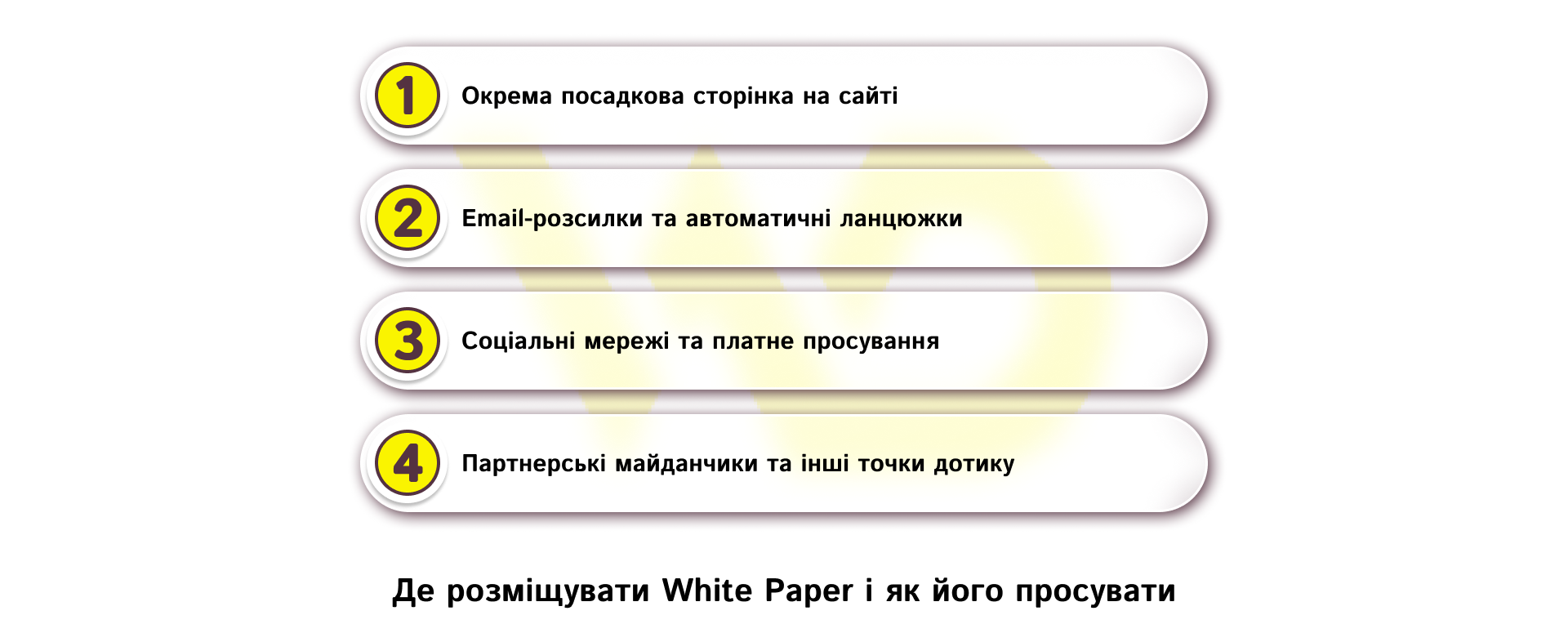
A dedicated landing page on the website
A white paper is most effective when a dedicated landing page with a clear offer is created for it. Such a page should not contain any unnecessary distractions. The landing page shapes the first impression of the document, so it must immediately answer the user’s main question: what will I get after filling out the form, and why is this worth my attention?
Email campaigns and automated sequences
Email remains one of the most powerful channels for promoting a white paper, especially if the company already has a contact list or subscriber base. In this case, the document can be used as valuable content to engage the audience. Both standalone emails announcing the white paper and a series of follow-up messages after the download — for example, with additional explanations, case studies, or an invitation to a consultation — work well.
Social media and paid promotion
Social media helps showcase a White Paper to a wider audience, but it’s especially important to frame the message correctly. For cold users, educational and problem-focused approaches work best: not «download our document», but «find out how to solve a specific business problem». If the audience is already familiar with the brand, you can move on to a more direct offer emphasizing practical benefits. Paid promotion is also appropriate if the White Paper is aimed at a narrow target audience; in that case, advertising helps attract people with relevant interests more quickly and generate higher-quality leads.
Partner platforms and other touchpoints
In addition to your own channels, you can distribute the White Paper through partner resources, industry communities, webinars, or themed events. This is especially useful when the business operates in a complex niche and needs to build trust with a new audience. In such channels, it’s important not to repeat the same messages but to adapt the presentation to the platform’s context: in some cases, an analytical focus works best; in others, practical benefits; and in still others, an invitation to access a ready-made solution in a convenient format.
A white paper should be promoted not through a single channel, but across an entire system of touchpoints, where each element reinforces the others.
How to turn collected contacts into leads
Collecting contact information is only the first step. A high-quality lead isn’t generated the moment a form is filled out, but rather when the company properly follows up on the data it has collected. In marketing analytics, it’s no longer enough to look only at views or clicks; it’s important to manage leads throughout their entire lifecycle, determining who is ready to buy and who still needs to be nurtured. That’s why a white paper should be integrated into a nurture strategy, rather than standing alone.
In practice, this means a series of follow-up interactions:
- a download confirmation email;
- a brief accompanying document;
- an invitation to a consultation;
- a relevant case study or additional analytical resource.
MarketingProfs notes that leads require several points of contact before they’re ready to buy, which means a single white paper shouldn’t conclude the entire communication cycle. It should kick it off.
How to evaluate the effectiveness of a white waper
After launching a white paper, it’s important to look not only at the number of downloads but also at what happens next. For businesses, this tool is valuable precisely because it allows them to understand how much the topic truly resonated with the audience and which leads have potential for further engagement. If people read the material, save it, return to it, and engage with subsequent touchpoints, it means the white paper is fulfilling its role not just formally, but based on actual demand.
The impact should be evaluated comprehensively:
- how well the topic resonated;
- whether the delivery format was convenient;
- whether the content met the audience’s expectations;
- whether the document supported further communication with the sales team.
This data helps businesses not just create a single successful piece of content, but gradually build a content system that attracts more qualified leads and provides clear signals about market needs. This is the main strength of a white paper: it not only collects contacts but also reveals exactly how your audience thinks.

commercial offer
Other articles by the author

21/05/2026
A relevant page is a page that most accurately matches the intent of the person who entered the query.

02/03/2026
Customer Development (CustDev or “castdev”) is an approach to product development that focuses on testing business hypotheses through direct communication with potential customers.

06/05/2026
A workshop is an interactive, hands-on session during which participants listen to an expert and work together on a specific task.
Latest articles by #Useful tips

29/09/2026
A content pipeline transforms the creation of content from a spontaneous creative process into a managed production system. In such a system, AI serves as a powerful assistant.
10/09/2026
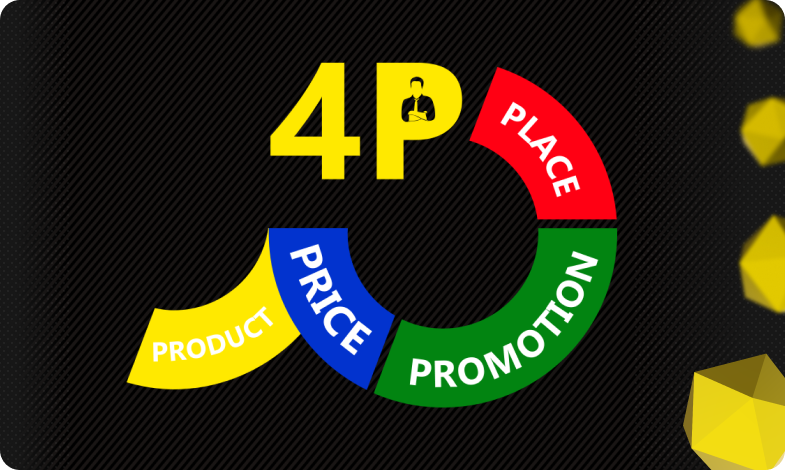
The 4P model serves as an architectural foundation that transforms disparate marketing activities into a single, manageable system.

08/09/2026
Today, an influencer is a distinct media platform with its own editorial policy, a keen understanding of its audience, and an established level of trust.