

 18/08/2026
  1202
1202

Інтернет-маркетинг
простою мовою
Content of the article
How to check an Instagram account for fake followers, likes, and comments

Advertising with bloggers is one of the fastest ways to attract customers for a business. However, every year companies lose significant budgets by purchasing ad placements on profiles with fake audiences. When a blogger inflates their metrics, the business is paying for «thin air»: the ads are seen not by potential customers, but by bots or members of mutual follow groups.
In this article, we’ll break down the methods unscrupulous creators use to inflate metrics, how to conduct an initial visual audit of a page, calculate the engagement rate, verify views on Stories and Reels, which services automate verification, and how to properly outline the terms of collaboration in a contract.
Mechanisms and types of inflated metrics
To detect fraud, it’s important to understand exactly how the illusion of popularity is created. Inflated metrics can be:
- technical, i.e., using software;
- artificially stimulated through human actions that do not benefit the business.
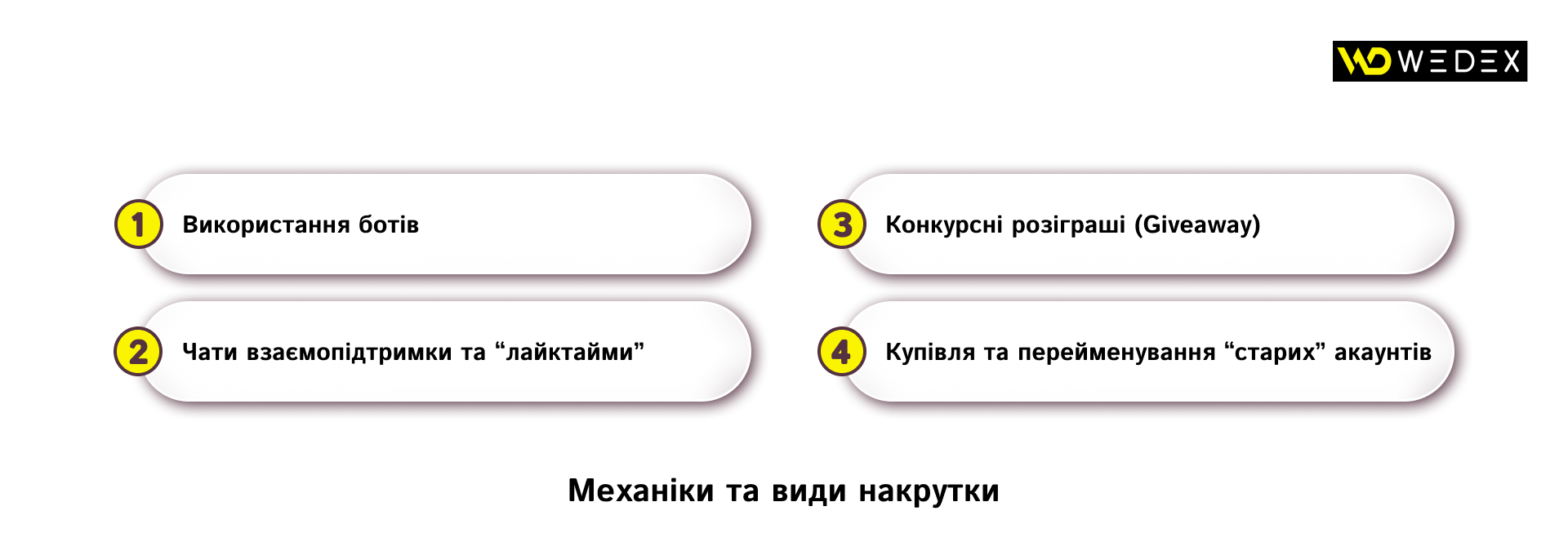
Use of bots
Bots are fake accounts created by special software. They have no real owners and exist solely to inflate the number in the «Followers» field. Modern bot networks can automatically like posts and leave basic comments, mimicking human activity.
Mutual support chats and «like sessions»
These are groups on messaging apps where bloggers agree to help each other out. As soon as one of them posts something new, the other group members immediately like it and leave comments.
For example, the owner of a leather shoe brand commissions an ad from a blogger with 50,000 followers. The post receives 100 enthusiastic comments. However, an investigation reveals that all of them were written by other microbloggers from the same mutual assistance chat group. None of them are target customers and none plan to buy the shoes.
Giveaways
A blogger sponsors a giveaway where the main requirement for participants is to follow all the specified accounts. As a result, the page attracts a large number of people who want to win a free prize, such as a new phone. As soon as the giveaway ends, 50% to 80% of these people unfollow immediately, and those who remain simply reduce their engagement because they aren’t interested in the author’s content.
Buying and renaming «old» accounts
An influencer buys a page that previously featured, for example, humorous memes, deletes all the posts, and starts a blog about personal finance. Old followers don’t recognize who this is and don’t engage with the new posts, creating the effect of a «dead» account.
Renowned digital marketing expert Neil Patel notes on his blog, NeilPatel.com:
«Any KPI can become a ‘measure of complacency’ if it is measured without considering the context or a clear link to business goals. For example, tracking the total number of followers on social media can be a ‘self-congratulatory metric’ if it isn’t linked to engagement levels, conversions, or revenue.»
All of the mechanisms described distort the true picture of a page’s popularity. When evaluating a blogger, it’s important not just to look at the total number of followers, but to understand how that number was achieved. That’s why experienced marketers focus not on the number of followers or likes, but on the quality of the audience, the level of engagement, and the account’s ability to deliver real business results.
Quick account check: how to spot fake followers
Before ordering paid analytics, it’s worth reviewing the followers profiles and comments yourself. This visual review takes just a few minutes and helps weed out obviously inflated accounts.
Start your analysis by looking at the ratio of the blogger’s followers to the accounts they follow. An average person rarely follows more than 300–800 accounts. If a blogger has 100,000 followers but follows only 4,000–6,000 accounts themselves, this indicates the use of mass following an outdated method where the blogger follows everyone indiscriminately in the hope of getting followed back.
Next, open the list of followers and review the first 30–50 profiles. The main signs of bots are:
- strange usernames consisting of random combinations of letters and numbers (for example, user_83749283 or qwert_9982);
- no profile picture or the use of generic stock images;
- an empty page with no posts despite having several thousand followers;
- followers from countries unrelated to the blogger’s target audience for example, thousands of accounts from India or Egypt following a Ukrainian food blogger.
Also pay attention to the nature of the comments under the most recent posts. A meaningful comment from a real person is always related to the topic of the post.
|
Genuine feedback |
Result of fake engagement (bot or chat) |
|
Thanks for the recipe! Can I substitute coconut milk for the cream to make it lower in calories? |
«Awesome!», «Gorgeous 🔥🔥🔥», «Great photo!», «Wow 😍 « |
A preliminary visual analysis allows you to quickly understand who you’re dealing with. If most comments consist solely of emojis, and profiles without avatars predominate among followers, there’s no point in continuing to evaluate such an account.
ER and account size classification
The next step is to analyze audience engagement using the ER (Engagement Rate) metric. It shows what percentage of the total number of followers actually interacts with the content that is, likes posts and writes comments.
The following formula is used to calculate the base ER:
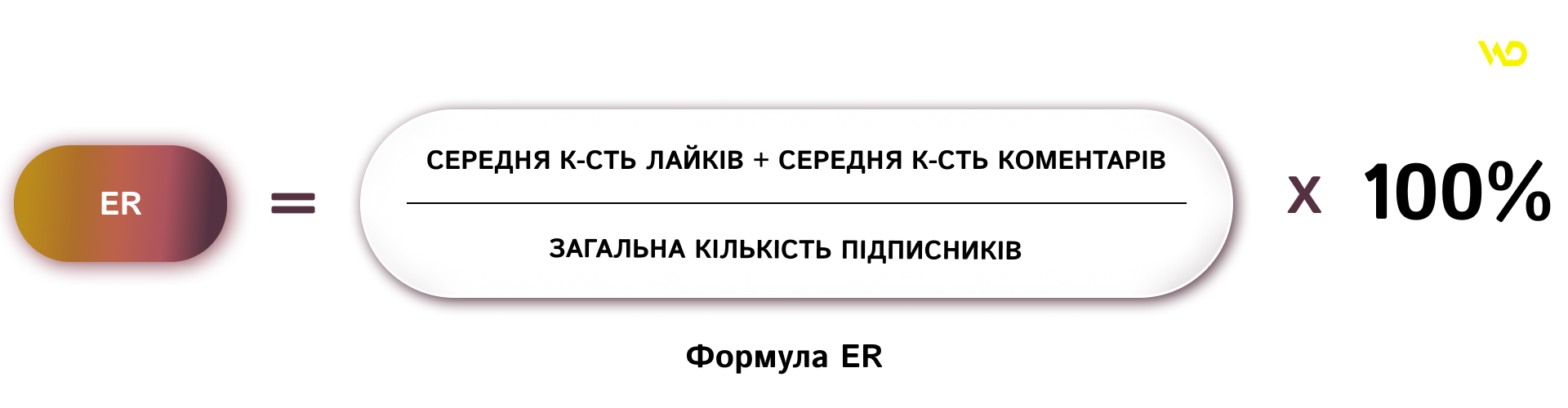
It’s important to understand that there’s no one-size-fits-all ER figure. The larger a bloggers audience, the lower their engagement rate this is a normal part of how Instagram algorithms work.
Approximate engagement rates based on account size:
- nano-bloggers (1,000–10,000 followers): 5%–8% and higher;
- micro-bloggers (10,000–100,000 followers): ranges from 2% to 5%;
- macro-bloggers (100,000–1,000,000 followers): 1.5%–3%;
- million-follower bloggers (over 1,000,000 followers): often 1%–1.5%.
For example, a blogger has 20,000 followers. Their most recent posts receive an average of 400 likes and 20 comments. Let’s plug these values into the formula:
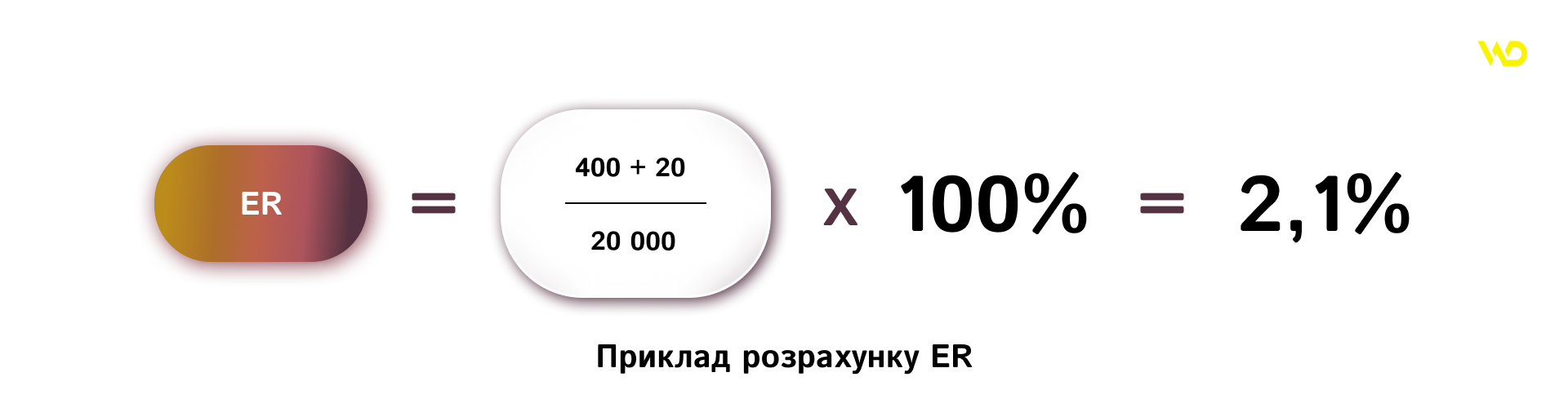
For a micro-blogger, this is a normal engagement rate. However, if a blogger with 20,000 followers receives only 30 likes (ER = 0.15%), it means that most of their audience either doesn’t see or ignores the content.
Also pay attention to an ER that’s too high for example, 15–20% for a blogger with 200,000 followers. If the same number of likes consistently appears under every post for example, exactly 3,000 under each post throughout the year this is a sign of automated bot activity.
Calculating engagement allows you to translate your impressions of an account into concrete numbers. By comparing the results with market averages, you can objectively assess the quality of the account.
Growth trends and analysis of stories and reels
Today, Instagram users attention is primarily focused on two formats: short videos (Reels) and temporary posts (Stories). Analyzing an account based solely on the photos in the feed is no longer sufficient.
An important metric is the audience growth chart. With natural account growth, the number of followers increases gradually or in small «steps» following the release of a successful video or an advertisement by other creators. If, however, the graph shows a sharp spike of 10,000 followers in a single day, followed by a consistent daily decline, this is a clear sign of mass bot inflation or a giveaway event.
When analyzing Stories and Reels, keep the following benchmarks in mind:
- Stories views: Normally, between 5% and 20% of total followers view a single Story. For example, for an account with 50,000 followers, normal views range from 2,500 to 10,000. If there are only 200–300 views, the account has been inflated;
- Reels views: Recommendation algorithms show videos not only to followers, so view counts can vary significantly. If one video has 100,000 views, but the other 10 posts each have 500 views, you should calculate average reach based on typical posts, not on a single viral video.
For example, let’s say a blogger’s video has 1,000 views but 900 likes. In real life, the ratio of likes to views on Reels is 3–7%. This imbalance indicates that the blogger bought likes for the video through a specialized service but forgot to inflate the view count as well.
To verify the authenticity of the metrics, always ask the blogger for a screen recording not static screenshots, which are actually very easy to fake in a photo editor. In the video, the blogger should open the Instagram app, go to the «Insights» section, and show statistics for the last 30 days, including a breakdown of top cities, audience age, and profiles reached.
A detailed analysis of video formats and verified statistics protect you from manipulation. The data you receive will show the actual size of the audience that will see your ad.
Services for automated account analysis
To avoid spending hours manually checking every follower and comment, you can use specialized analytics tools. They collect account data in a matter of seconds and generate a ready-to-use report.
Popular services include:

- TrendHERO: a tool for analyzing Instagram accounts. It determines the percentage of real people, bots, mass followers, and commercial pages among followers, and provides an overall audience quality score on a scale from 1 to 100;
- HypeAuditor: an international platform for in-depth analytics. It detects fake likes, shows the geographic location of followers, and estimates the actual percentage of a high-quality audience;
- LiveDune: a service that’s convenient for tracking follower growth trends in real time and comparing engagement rates (ER) across different periods.
When analyzing the service’s final report, pay attention to the audience composition. An account is considered safe for advertising if its high-quality audience makes up more than 60–70%.
Using automated tools significantly saves time and reduces the risk of human error. The key is to evaluate the report’s metrics in conjunction with the blog’s topic and specific characteristics.
Safe collaboration and minimizing business risks
To protect your company from financial losses, the vetting of bloggers must be clearly regulated. Following a systematic process will help you avoid working with unreliable partners.
Step-by-step plan for vetting and launching an ad campaign:
- Initial screening: a quick visual review of the profile, analysis of comments, and the follower-to-following ratio.
- Statistics review: Record a screen video showing the account’s internal statistics for the last 30 days.
- Automated audit: profile analysis using third-party services and calculation of engagement metrics.
- Agreeing on the technical specifications (TS): a clear description of exactly what the blogger must say and show, with mandatory use of promo codes or UTM tags to track sales.
- Drafting the contract: signing an agreement with clearly specified requirements for content placement and the responsibilities of the parties.
Be sure to specify a minimum reach for posts in the advertising services agreement. For example, you can specify: «The service provider guarantees a minimum reach for advertising Stories of at least N views within 24 hours». It’s also worth including provisions prohibiting the removal of advertising content before the agreed-upon deadline and penalties in the event of detected fraudulent views during the advertising campaign.
A systematic approach to account verification allows businesses to achieve predictable results from influencer marketing. By spending a little time on an audit before launching an ad campaign, you’ll save your budget and direct it where it will generate real sales and new customers.

commercial offer
Other articles by the author
08/09/2026
Today, an influencer is a distinct media platform with its own editorial policy, a keen understanding of its audience, and an established level of trust.

02/06/2026
The best specialists are those who can see the real problems faced by clients and the needs of the business behind the lines of code.

12/08/2026
Understanding your audience forms the basis for every decision: from choosing the color scheme for your designs to setting up complex funnels in Meta Ads.
Latest articles by #Useful tips

09/09/2026
The Facebook lead form helps businesses collect contact information from potential customers directly from an ad, without requiring them to visit the website.
08/09/2026
Today, an influencer is a distinct media platform with its own editorial policy, a keen understanding of its audience, and an established level of trust.
04/09/2026
Instagram Shopping is a set of Meta features that allows businesses to integrate their product catalog with their social media profile.