

 29/05/2026
  1407
1407

Інтернет-маркетинг
простою мовою
Content of the article

Can virtual numbers be used for SMS marketing?
Today, businesses are switching to virtual numbers en masse-they help reduce communication costs, enter new markets without local offices, manage remote teams, and require no additional equipment. All you need is an internet connection and any functional device.
However, standard virtual telephony typically doesn’t support sending SMS due to carrier restrictions. Given that 72% of consumers (according to Infobip) make purchases specifically after receiving an SMS, and the ROI from this channel reaches 7,100% (according to Shopbytes), in this article we’ll explore how to overcome technical limitations and turn your virtual number into a full-fledged sales channel.
When virtual numbers are the optimal solution for SMS marketing
It makes sense to use a virtual number for SMS when a business handles a high volume of inquiries, operates across multiple markets, and requires in-depth analytics and reporting.
Mass messaging
Thanks to high-quality virtual telephony, marketers can quickly launch SMS campaigns without the risk of having their personal numbers blocked.
Meanwhile, sending order confirmation or shipping label messages can be automated and will occur without manager intervention. This reduces the likelihood of errors that arise from manual entry and frees up work time for direct sales. At the same time, the customer is confident that their order hasn’t been lost and is already being processed.
According to Ringostat statistics, involving buyers in the sales funnel this quickly increases loyalty and boosts conversion rates by an average of 18%.
International reach
Thanks to virtual telephony, businesses can use local numbers for SMS campaigns in different cities or countries.
For example, a Ukrainian company is planning to enter the Polish market. Instead of sending messages from a Ukrainian number, which may be perceived as foreign spam, the business can quickly activate a Polish mobile number (with the +48 code) or a purely local Warsaw number (+4822). This will help avoid high roaming rates and significantly increase recipients’ trust, as people are more likely to open messages when they see a «local» code.
The need for a unified workspace
In companies that use multiple communication channels, managers are often forced to switch between browser tabs or even different devices. As a result, data gets lost, and customers wait hours for a response.
This problem is solved by the Ringostat Smart Phone virtual telephony app, which brings together calls, messenger messages, and SMS in a single window. A manager can make a call with a single click or send an SMS without leaving the app.
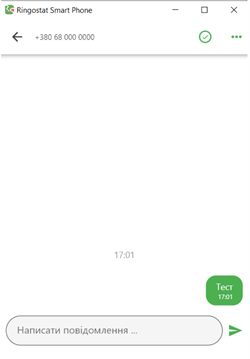
When integrated with call tracking and CRM, you can also build more personalized conversations and offer relevant upsells. When a request comes in, the manager sees a card in the app with insights about the buyer:
- which search query brought them there;
- which website pages they viewed most often;
- history of previous visits;
- data from the CRM, if the customer is already in the database.
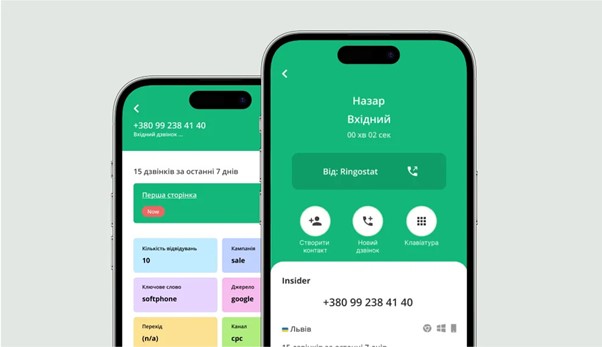
The effectiveness of this approach is confirmed by the case study of the «Helsi» medical platform. Thanks to the consolidation of tools within the app, the number of follow-up calls for clarification decreased by 40%, and medical facility directors became more willing to agree to meetings due to the personalized approach and quick response times.
Customers also frequently contact the «Levirin» beauty salon in Wrocław via SMS. Since the administrator cannot constantly check their phone, Ringostat set up SMS forwarding to the corporate email. This way, messages are not lost and are processed faster, even outside of business hours.
Tracking the ROI of SMS campaigns
Virtual numbers in SMS marketing are also a powerful analytics tool.
Thanks to call-tracking technology, companies can use a separate disposable number for each advertising channel, including SMS campaigns. When a customer calls the number they saw in the message, the system instantly identifies the source.
In the case of the «Grand Victoria» developer, using disposable numbers for offline advertising and SMS campaigns helped increase the number of daily inquiries tenfold and reduce the cost of lead acquisition by 25%. With accurate data, specialists can now pause campaigns that don’t generate calls and invest in those that pay off.
What are the limitations of using virtual numbers
Restrictions are usually imposed by the telecom operators themselves. In the case of the international operator DIDWW, for example, only receiving SMS messages with subsequent forwarding to email is available-without the ability to reply to the customer. This forwarding is typically configured on a «one number-one email» basis.
You can send SMS messages in Ringostat by integrating with the «TurboSMS» messaging service. It also allows you to:
- create message templates;
- automate messaging at different stages of the funnel;
- send bulk messages.
However, receiving reply messages is not yet supported in this case.
Instead, the virtual number provider Peoplefone allows you to configure both sending and receiving SMS messages directly within the Ringostat Smart Phone app.
Another advantage is the ability to assign managers responsible for processing incoming SMS messages to prevent losing inquiries during mass campaigns.
What virtual numbers can be used for SMS marketing
Mobile, international, and local virtual numbers are best suited for SMS marketing. The main thing is that the provider has no restrictions on sending and receiving messages or that integration with a messaging service is configured. For the latter, you must have:
- at least one SIP account connected to the Ringostat Smart Phone app;
- an account in the messaging service itself.
Technical support will assist with all necessary configurations.
Numbers in the 0800 format (toll-free for customers) are not typically used for SMS communications, as they are designed for incoming calls and do not support messaging.
Benefits of using virtual numbers for SMS
Virtual numbers for SMS marketing help optimize costs, team working hours, and the process of managing inquiries.
- Cost savings. You can send SMS messages to customers in other countries without roaming charges. No need to invest in equipment: the messaging app can be installed on any work device.
- Faster message handling. Managers send SMS messages directly from the app using a template or by copying data.
- Anonymity and security. Specialists’ personal numbers remain private, and all communication takes place through the corporate platform. This reduces the risk of contact leaks and maintains control over all inquiries within the company.
- Transparent analytics for managers. The system aggregates all data into unified analytics and custom reports, where you can compare the effectiveness of chat, SMS, and phone calls across different traffic sources, as well as track the performance of the department and each employee.
- Process automation. When integrated with CRM, you can set up automatic SMS sending to customers — immediately after creating a lead card, for example.
Conclusion
Even despite operators’ technical limitations, there are proven ways to set up SMS communication on virtual numbers so that it generates revenue.
As a result, the business gains a manageable communication channel that is easy to scale without increasing costs or compromising the quality of inquiry handling, while the manager has access to comprehensive statistics: how many inquiries have been processed, how quickly managers respond, and which campaigns convert the most customers.

commercial offer
Other articles by the author

23/03/2026
AI-powered tools are no longer just an experiment. Today, they have become an integral part of the day-to-day operations of many PPC teams.

02/07/2026
Choosing the wrong ad format is the main reason for a low return on investment (ROI) and the rapid depletion of a company's marketing budget.

02/04/2026
A chatbot is a software agent that automatically responds to user messages in text or voice format.
Latest articles by #Useful tips

06/10/2026
From a business perspective, updating content is a sensible way to protect existing investments.

02/10/2026
For businesses, CPL is the primary metric for measuring how effectively ads and landing pages convert cold traffic into initial leads.
29/09/2026
A content pipeline transforms the creation of content from a spontaneous creative process into a managed production system. In such a system, AI serves as a powerful assistant.