

 15/06/2026
  1300
1300

Інтернет-маркетинг
простою мовою
Content of the article
- /01 The evolution of algorithms
- /02 Social SEO as the new standard for content distribution
- /03 How hashtags work on different platforms
- /04 When hashtags are necessary: strategic scenarios for business
- /05 How to write content that appeals to algorithms
- /06 Strategic direction for business: a look into the future

Will hashtags be needed on social media in 2026?

Just a few years ago, the strategy for social media promotion seemed obvious: write a post, add the maximum allowed number of «#» symbols, and wait for a flood of new followers. Hashtags were considered a universal catalyst for reach, capable of turning even mediocre content into a trend. However, digital platform algorithms are evolving faster than user habits, and by 2026, social media has undergone radical changes.
In this article, we’ll explore whether there’s still a place for hashtags in modern business marketing strategies, how content distribution mechanisms have changed, and what can replace outdated tools to avoid losing market share.
The evolution of algorithms
To understand the current status of hashtags, it’s worth recalling why they were created. Initially, the «#» symbol helped the primitive algorithms of the past decade sort gigabytes of content by topic. If a photo had a logistics tag, the system understood that it was about delivery without analyzing the image itself or the accompanying text.
In 2026, the situation looks completely different. Leading platforms such as Meta (Instagram, Facebook), TikTok, and LinkedIn use multimodal neural networks. This means that the algorithm analyzes a post comprehensively:
- «reads» the text in the image or recognizes objects in the video frame;
- transcribes the audio track, converting the author’s voice into text keywords;
- evaluates the semantic core of the description — analyzing synonyms, LSI phrases, and the overall context.
Research by the HubSpot Analytics Center shows that the accuracy of neural networks in recognizing content topics without using hashtags now exceeds 95%. Platforms no longer need «crutches» in the form of thirty tags under a post to understand who to show it to. Artificial intelligence independently creates a profile of the ideal consumer for each specific piece of content, based on behavioral factors and textual markers.
Social SEO as the new standard for content distribution
The main trend in recent years has been the final shift from classic feed browsing by hashtags to the concept of Social SEO (Social Search Engine Optimization). Users, especially those from the affluent generation, are much more likely to use Instagram or TikTok’s internal search instead of traditional Google when looking for local businesses, services, or product reviews.
And instead of clicking on a hashtag, the modern user enters a specific query into the search bar, such as: «best coffee shop with a workspace in Kyiv» or «CRM system for retail business».
For businesses, this means that the focus must shift from selecting trending tags to optimizing the text itself. Algorithms rank posts in search results based on the relevance of keywords in the first lines of the description, in the alternative text (Alt Text) for images, and even in captions. In this context, hashtags play only a supporting, navigational role, and their impact on overall SEO ranking within social networks has significantly decreased.
How hashtags work on different platforms
There is no one-size-fits-all approach to social media marketing, as each platform develops its own ecosystem, trains its own neural networks, and treats the use of the «#» symbol differently. It is important for businesses to understand the technical nuances of each platform so as not to waste their budget on ineffective actions. Let’s look at the specifics of how key platforms will operate in 2026.
Instagram: from quantity to precision

For a long time, there have been debates about the optimal number of hashtags on Instagram — marketers have spent years testing limits ranging from 5 to 30, hiding them under carousels or in the first comments. However, large-scale crash tests by independent research agencies such as Hootsuite and Later revealed a pattern that came as a surprise to many: posts with 20–30 hashtags receive, on average, 15–22% less organic reach than posts with concise text captions.
Meta’s leadership has repeatedly emphasized that an excessive number of hashtags creates «noise» for the classification system. The use of irrelevant or overly popular million-hit tags like #marketing or #business is perceived by the algorithm as spam activity. When broad concepts are mixed in a single post, artificial intelligence cannot clearly identify the core audience and simply stops actively recommending this content in the Explore feed.
Although Meta does not officially set strict numerical limits on hashtags, relying instead on its own relevance algorithms (as stated in the official «Explaining the Ranking System«), leading analytics services such as Later and Hootsuite have reached a consensus after analyzing millions of posts:
Today’s «gold standard» is 3–5 highly relevant hashtags. Using more than that in 2026 is often perceived by algorithms as an attempt at manipulation, leading to a decrease in reach.
Hashtags have undergone functional changes: they are no longer a tool for catching random likes, but a tool for precise targeting. They help the neural network verify your business account’s category more quickly in the first few minutes after publication. Instead of a general word, a niche compound phrase works better, narrowing the topic down to a specific product or location.
TikTok: a rapid clustering tool and dynamic triggers

Unlike other platforms, TikTok has long relied heavily on hashtags due to the nature of its For You Page (FYP) recommendation feed. However, the evolution of artificial intelligence has changed the game. Once-popular tags like #FYP, #ForYou, or #Trending have finally turned into digital clutter. They carry no semantic weight for the algorithm, as billions of videos on completely different topics are posted under them every day.
Today on TikTok, hashtags function exclusively as a tool for rapid clustering. When you upload a new video, the algorithm needs a certain amount of time a so-called «indexing window» lasting from 15 minutes to several hours — to recognize the video sequence, transcribe the audio, and understand the essence of the content. Specific hashtags help the system narrow down the initial testing pool.
For example, if a local clothing brand adds the tag #streetwearukraine, the algorithm instantly skips millions of random users and shows the video to the first hundred people who have actively engaged (watched to the end, commented, saved) with similar content in the last 48 hours. If this initial cluster group responds positively, the video gets the green light to scale its reach further — no longer tied to hashtags — based solely on behavioral factors.
LinkedIn: strict categorization and spam protection in B2B

The professional network LinkedIn has always been known for its conservative approach to content design, and its algorithms are configured to maintain the high quality of business discourse. The platform wages a relentless battle against visual clutter and clickbait. Posts overloaded with tags are automatically flagged by the moderation system as low-quality content and are penalized their reach is artificially limited, and the post is not shown to second- and third-degree connections.
For the B2B segment on LinkedIn, the optimal and safe strategy is to integrate 2–3 professional hashtags that clearly correspond to established international industries or global business topics, such as #digitalmarketing, #saas, #b2bsales. They are placed at the end of the post or organically woven into the text itself.
These tags act as strict thematic filters. They help specialists and top managers who have consciously subscribed to specific information streams see your expert content, case studies, and analytics in their feed, even if they are not your direct contacts. This is one of the few remaining tools for reaching a cold but highly targeted business audience in an organic way.
When analyzing how each platform works, the overall direction of social media development becomes clear: the era of blindly copying hashtag lists is over. Every platform strives to create the cleanest, most relevant, and most personalized feed possible for the user.
The common denominator across all platforms is that the hashtag has become a specific reference point, an additional signal that merely reinforces what you’ve already written in your text and shown in your video. Understanding these differences allows businesses to adapt their content to the technical requirements of each network without wasting time on outdated promotion tactics.
For clarity, let’s compare the effectiveness of traditional hashtags with modern content optimization methods that are expected to deliver the best results in 2026.
|
Comparison criteria |
Traditional hashtags |
Social SEO and AI Optimization |
|
Target audience |
Broad but often non-targeted reach (random views, bots) |
Precise targeting of users with a specific commercial intent |
|
Duration |
Short-term: the post disappears from the top of the tags within a few hours |
Long-term: the post can drive search traffic for months |
|
Impact on trust |
Large blocks of tags reduce visual appeal and look like spam |
Natural, readable text boosts brand loyalty and credibility |
|
Platform analytics |
Priority in search results based on tags has been reduced in favor of personalized recommendations |
Platforms actively promote content that holds attention on key topics |
When hashtags are necessary: strategic scenarios for business
Despite the significant decline in the role of general hashtags, there are specific business tasks where this tool remains indispensable. It is simply important to change your approach: stop relying on «free reach» and move toward systematic brand management.
Navigation within a corporate blog
If your business profile is a major source of useful information, it can be difficult for users to navigate through hundreds of posts. Unique categories help structure the content. For example, a law firm could introduce internal tags: #brandname_cases, #brandname_tips, #brandname_analytics. This simplifies the client’s journey within your ecosystem and increases time spent on the page.
Running large-scale advertising campaigns and events
A unique verbal marker is essential for tracking the effectiveness of special projects. When a brand launches a new product, the market launch is often accompanied by an integration slogan that becomes a unique hashtag. This allows you to consolidate all content related to the event in one place—from the company’s official press releases to influencer posts and reviews from early adopters.
Encouraging and collecting User-Generated Content (UGC)
For brands in e-commerce, retail, or services, it is critically important to showcase real customer experiences. Creating a branded tag and encouraging users to add it while unboxing or testing a product allows businesses to easily find posts by real people. This content can then be legally used in their own stories or on their website as social proof of high-quality service.
Summarizing these scenarios, it becomes clear that by 2026, hashtags have transformed from an external marketing tool into an internal brand management tool. They are no longer capable of attracting a million-strong audience on their own, but they are ideal for retaining, organizing, and engaging users who have already taken notice of your company.
The transition from generic tags to unique brand markers is a mature step for a business seeking to control its information space.
How to write content that appeals to algorithms
Since semantic analysis has become the basis for ranking, the approach to writing content for social media has also had to adapt. Modern commercial copywriting has finally moved away from dry lists of features and the artificial insertion of unrelated words. Today, algorithms evaluate text not by the presence of specific markers, but by its overall value and the depth with which the topic is explored.
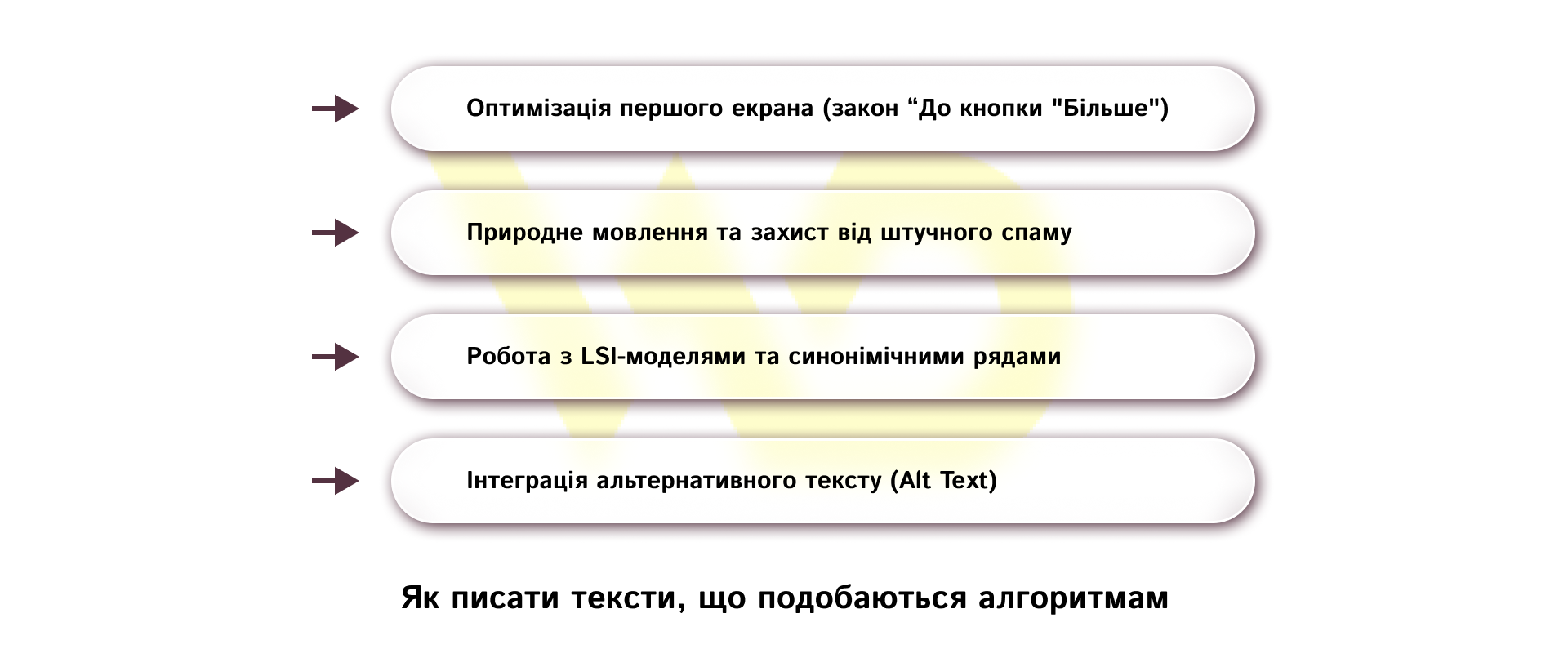
For a post to achieve maximum reach in 2026, the text must be structured, information-rich, and substantive. Let’s break down the key points:
- Optimizing the first screen (the «More» button rule).
The first 100–150 characters of the text are critically important. They serve a dual purpose. For the user, this is the hook that determines whether they will expand the post fully. And it’s well known that attention retention time is a key metric for algorithms. For a neural network, this is the highest-priority indexing zone. The main point of the post and the primary keyword should be right here, not hidden in the middle of a long-form post.
- Natural language and protection against artificial spam.
Modern neural networks used for content moderation have learned to instantly identify low-quality, AI-generated text that hasn’t been edited by humans, as well as copywriting that’s overloaded with direct commercial keywords. If a text is overloaded with clichés or bureaucratic jargon, the algorithm downgrades its reach, flagging it as spam. The text must be written for real people — with logical transitions, vivid examples, paragraphs of no more than 3–4 sentences, and a clear structure.
- Working with LSI models and synonym sets.
The method of endlessly repeating the same word in every line no longer works. Modern platform algorithms operate on the concept of LSI. They evaluate linguistic richness and context through thematically related words. Instead of tautology, use synonyms and related concepts. For example, for «marketing» — «promotion strategy», «customer acquisition», «digital tools», «conversion.» A smart algorithm will interpret this cloud of meanings and determine the target niche for impressions much more accurately.
- Alternative Text (Alt Text) Integration.
An important technical detail that businesses often overlook. Social media search algorithms actively analyze hidden text descriptions of images. Including relevant keywords in the «Alt Text» settings before publishing a photo or product card helps artificial intelligence understand the content’s subject matter even before the user begins reading the main text.
The transformation of text requirements clearly demonstrates that social media platforms have evolved into full-fledged expert media platforms. Algorithms have learned to think like discerning readers they reward in-depth, structured texts and penalize attempts at manipulation or empty, «watered-down» content.
For businesses, this means that high-quality copywriting in 2026 has become the primary technical tool for achieving organic reach. Writing optimized, engaging text takes more time than mechanically copying a list of hashtags, but this approach ensures that your posts will reach an enthusiastic and interested audience through the platforms’ internal search for many months after release.
Strategic direction for business: a look into the future
Moving away from outdated SMM dogmas is not a loss of tools, but a freeing up of resources for truly effective actions. Counting on the right combination of «#» symbols to save a weak marketing strategy is, at the very least, unprofitable in 2026.
Instead of wasting time on the daily selection and monitoring of hundreds of hashtags, companies’ marketing departments should focus on two fundamental areas:
- creating in-depth, valuable content that addresses the specific pain points of the target audience. Platforms retain users through engagement, so video watch time, the number of saves on posts, and in-depth discussions in the comments matter far more than any technical tags. If the content is useful, the algorithms will find an audience for it on their own;
- it is essential to invest in technical and semantic SEO within each social network. Filling in Alt text, clearly specifying geolocations, working on file names before uploading, and optimizing your profile for your business’s main search queries these are the elements that lay the long-term foundation for the brand’s organic growth for months to come.
Hashtags aren’t dead yet; they’ve simply taken their rightful, very limited place as a tool for internal navigation and brand tagging.
The business that is the first to stop viewing them as a magic button for getting likes and refocuses on working with high-quality semantics and the needs of real people will gain a strategic advantage and a loyal, convertible audience.

commercial offer
Other articles by the author

02/02/2026
The main business advantage is not just a “good impression,” but the ability to convert interactions into quality data: segmentation, personalization of communications, and automatic lead qualification.

08/07/2026
Donor analysis isn't about examining a single metric; it's about comparing several metrics against one another.

18/08/2026
For businesses, the main challenge right now is not simply to “produce something,” but to speed up the time it takes for materials to reach the market, reduce the cost of content creation, and, at the same time, maintain the quality and human touch of communication.
Latest articles by #Useful tips
18/08/2026
For businesses, the main challenge right now is not simply to “produce something,” but to speed up the time it takes for materials to reach the market, reduce the cost of content creation, and, at the same time, maintain the quality and human touch of communication.

16/07/2026
The official launch of OpenAI ad testing on February 9, 2026, was a historic moment that marked the emergence of an entirely new media channel for promoting businesses.

08/07/2026
ChatGPT can already search the web, provide quick answers, and display relevant sources, which means it’s important for businesses to be clear, cited, and verified in the digital space.