

 23/07/2026
  1181
1181

Інтернет-маркетинг
простою мовою
Content of the article
- /01 What is an RSS feed and how does it work?
- /02 How RSS impacts audience engagement
- /03 RSS and SEO: is there a connection?
- /04 For which websites is RSS most useful
- /05 How to create and configure an RSS feed
- /06 Advantages and disadvantages of having RSS on a website
- /07 How to turn RSS into a stable brand asset
Why does a website need an RSS feed and how does it affect audience engagement

While companies are actively developing social media, email marketing, messaging apps, and mobile apps, RSS feeds are often overlooked. Many view them as a technology that has become obsolete. In reality, RSS is still used today by news portals, corporate blogs, online stores, niche media outlets, and services for automatically receiving and distributing content.
In this article, we’ll explore what an RSS feed is, how it works, why a modern website needs it, how it affects audience engagement, whether it’s related to SEO, and in which cases implementing it will truly benefit a business.
What is an RSS feed and how does it work?
RSS (Really Simple Syndication or Rich Site Summary) is a special data exchange format that allows users and other services to be automatically notified when new content appears on a website.
In other words, an RSS feed is a separate file containing a list of the resource’s latest posts. When a new article, news item, or other content appears on the website, information about it is automatically added to this feed. Special programs or online services, known as RSS readers, regularly check for updates and immediately display new content to users.
Unlike email newsletters, subscribing to an RSS feed does not require an email address. Users choose which sites to follow and receive all updates in one place. This is especially convenient for people who work with a large number of information resources on a daily basis.
For website owners, an RSS feed serves as a kind of automated channel for distributing new content. Once content is published, there’s no need to manually notify each service or platform simply updating the website is enough, and the RSS feed will automatically distribute the information to all subscribed systems.
For businesses, this means that every new article or news item gains an additional distribution channel without requiring constant involvement from a marketer or editor.
The process works like this:
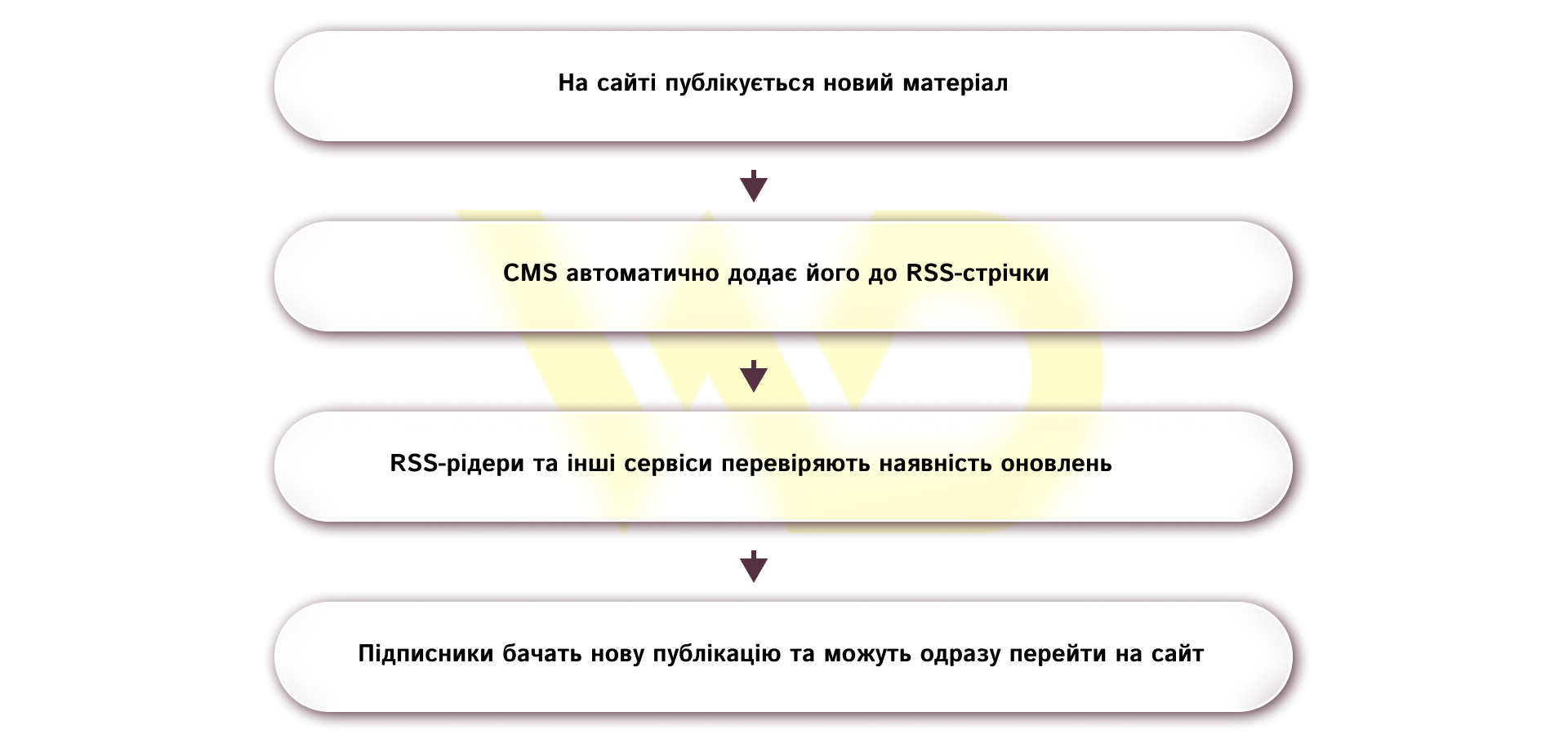
Although this mechanism seems simple, it is precisely what makes RSS an effective tool for automating content distribution.
What business challenges does RSS help solve?
For a modern website, RSS serves many more functions than simply notifying users about new articles. First and foremost, it helps make the process of interacting with content more automated and convenient for both the company and its audience.
Let’s look at the main benefits for businesses.
- Automation of content distribution. Instead of manually posting links to new articles across all channels, a business can set up automated workflows. Using integration services (such as Zapier or IFTTT), an RSS feed can automatically send announcements of new posts to the company’s Telegram channels, social media pages, or even serve as the basis for regular email newsletters. This significantly saves the marketing team time.
- Content syndication. Partner sites, niche media outlets, or news aggregators can legally and automatically republish your content on their platforms using your RSS feed. For businesses, this is a free way to expand reach, attract a new audience, and increase brand awareness in the market.
- Optimizing audience retention costs. Retaining customers through paid advertising (retargeting) requires ongoing budgets. An RSS feed is a completely free tool that brings interested users back to the site again and again, reducing the total cost of acquiring a lead (CAC).
At the same time, it’s important to understand that RSS does not replace other marketing channels. It does not perform the functions of email marketing, does not replace social media, and does not help build personalized communication with customers.
For example, an IT company regularly publishes market research and technical reviews. Some of the audience reads them on LinkedIn, others receive email newsletters, and professionals who use RSS readers automatically see every new article as soon as it’s published. This way, a single piece of content is distributed simultaneously through several independent channels, increasing its potential reach.
That’s why RSS works best as part of an overall content strategy. It complements other communication channels and helps make content distribution more systematic.
How RSS impacts audience engagement
For businesses, it’s not enough to simply publish high-quality content it’s important to ensure that readers return to the site regularly. This is where RSS can serve as a useful complement to other promotional channels.
Unlike social media, where post visibility depends on platform algorithms, RSS operates on a different principle. If a user subscribes to a feed, they receive notifications about every new post, regardless of the post’s popularity or the company’s advertising budget. This creates a more stable channel of communication with the audience. People who consciously subscribe to RSS feeds are usually already interested in the site’s subject matter and are therefore more likely to return regularly to read new content.
Let’s look at the benefits for businesses.
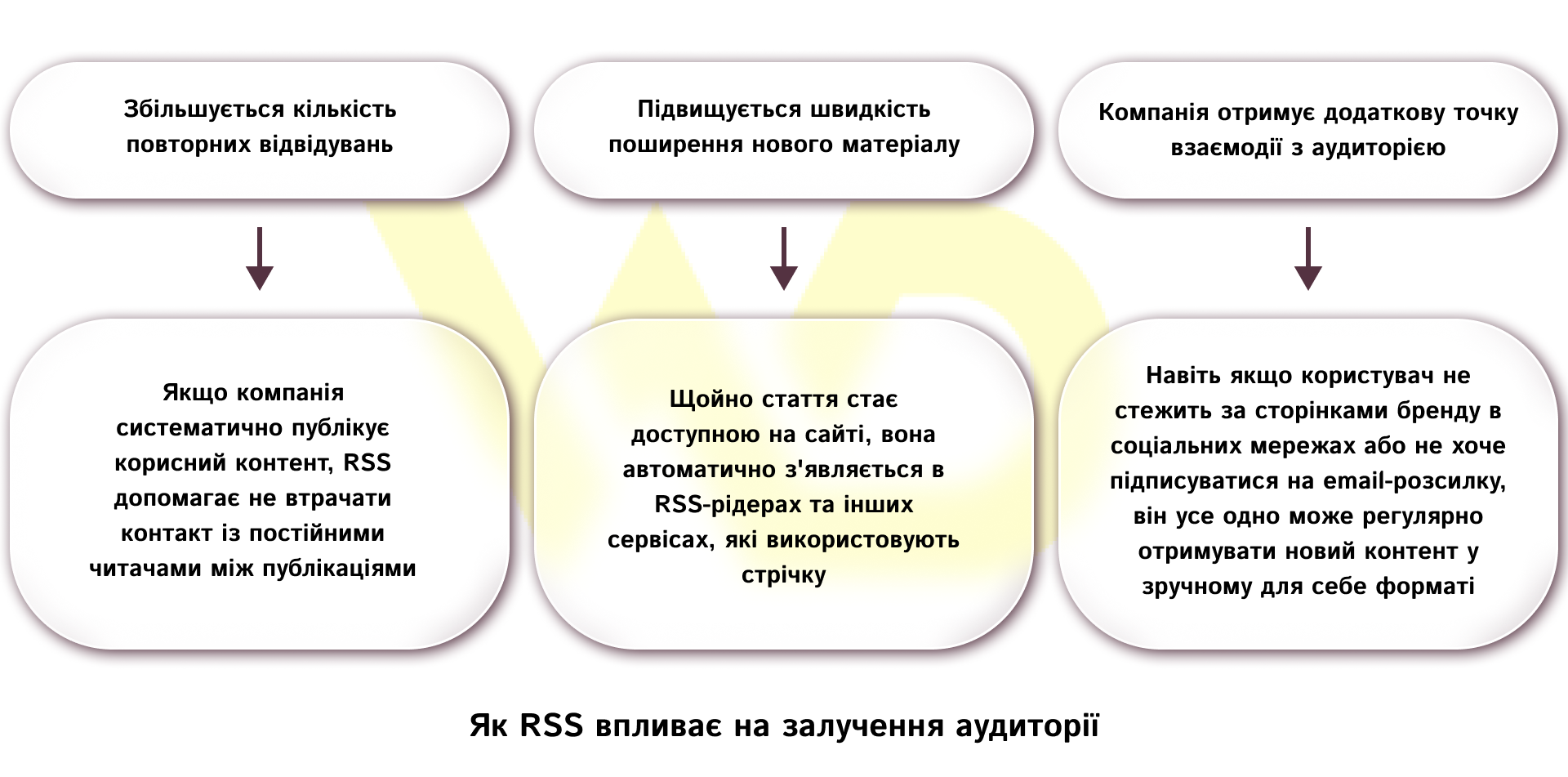
The benefits of RSS are particularly noticeable for websites that regularly publish expert content. In such cases, the feed helps maintain interest in the blog and gradually build a base of regular readers who have consciously chosen the company as a source of professional information. For example, a consulting firm publishes weekly analytical articles on changes in legislation. For lawyers, accountants, or CFOs, it’s important to receive such updates quickly. By subscribing to RSS, they learn about new posts almost immediately after they appear on the website, which increases the likelihood of timely engagement with the content and further interaction with the brand.
RSS and SEO: is there a connection?
RSS has no direct impact on a website’s search engine rankings. However, there is a powerful indirect effect that helps optimize and accelerate the promotion of a web resource.
The main benefit of RSS for SEO lies in the speed of content indexing. Search engine crawlers, particularly Googlebot, regularly scan RSS feed files if they are properly optimized and added to webmaster tools or services such as Google Publisher Center. When new content appears on a website, the search engine learns about it almost instantly through updates to the feed’s XML file. This allows the page to be indexed faster and begin ranking in search results, which is especially important for breaking news, trending analytical articles, and seasonal offers.
However, using RSS carries a serious risk that can harm your SEO strategy — namely, automatic content theft, or «parsing». Special scraper bots use the public RSS feeds of popular websites to instantly copy new articles and publish them on third-party, often low-quality sites.
If the scraping site has a high indexing rate or a higher domain authority in Google eyes, the search bot may mistakenly identify it as the original source of the content. In this case, your original site risks being flagged for duplicate content or simply losing its rankings.
To protect your site and use RSS to your SEO advantage, you should follow three technical rules.
- Publish only previews. Never configure your RSS feed to include the full text of an article. The feed should contain only the headline and a short description of up to 300–400 characters, with a mandatory link to the full version of the article on your website. This will prevent the entire text from being automatically copied.
- Use absolute URL. All internal links in the text included in the RSS feed, as well as links to images, must be in their full form and include your domain: «https://…». If a bot does copy a snippet of content, you’ll automatically receive a backlink to your site.
- Set up custom signatures. Modern SEO plugins allow you to automatically add a phrase to each entry in the RSS feed, such as: «The article Title first appeared on the [your company name] website» with a live link. This helps search algorithms more clearly identify the author.
Thus, the relationship between an RSS feed and search engine optimization is strategic in nature. Proper technical configuration transforms this tool from a potential vulnerability into a reliable safeguard for your intellectual property.
A business that invests even a minimal amount of time in securing its feed gains a significant advantage: rapid indexing of new content and the guarantee that Google will always recognize your website as the sole and indisputable original source of the content.
For which websites is RSS most useful
RSS technology is versatile, but its effectiveness and cost-effectiveness vary significantly depending on the nature of the business, the volume of content, and the frequency of site updates. It is most valuable for four main categories of websites.
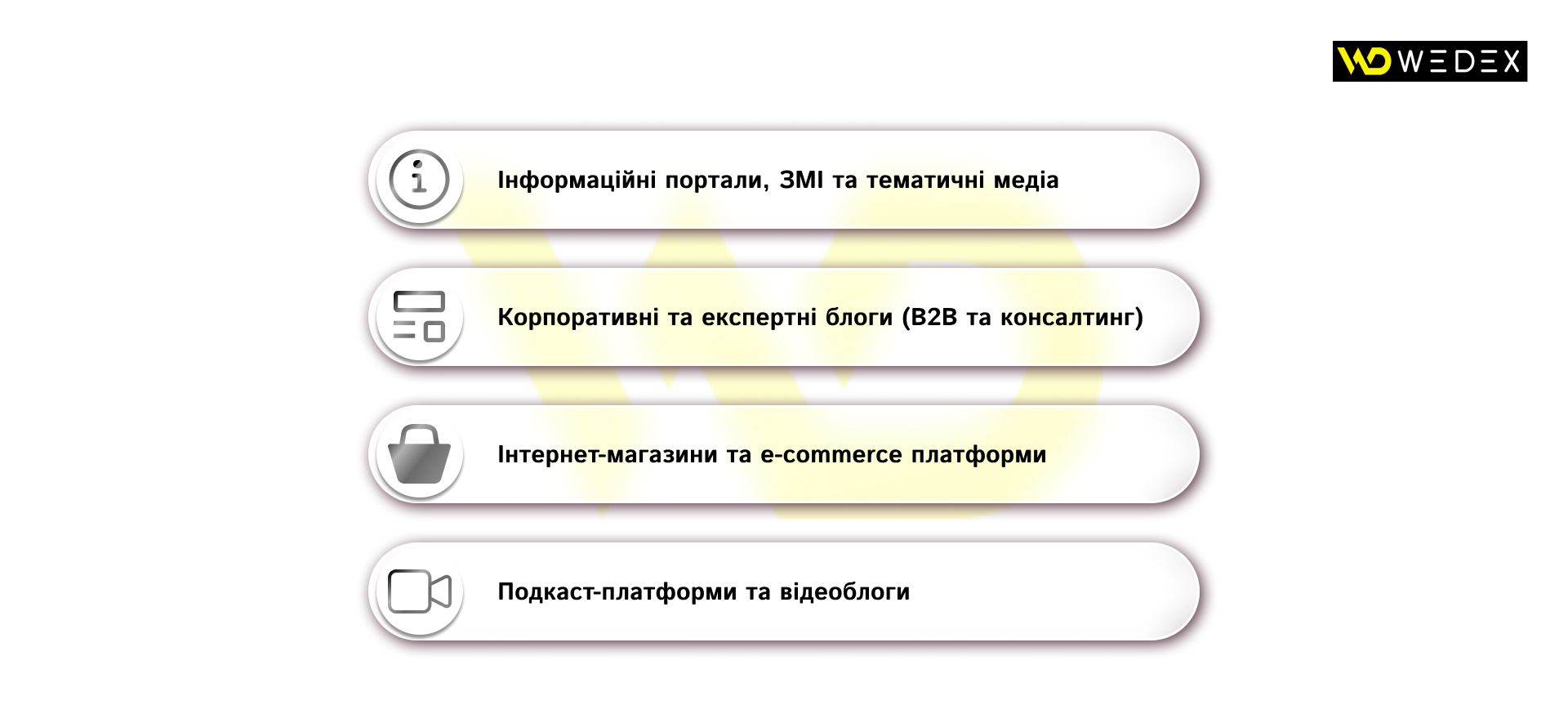
- News portals, media outlets, and niche media.
For websites whose business model is based on selling ads and attracting massive traffic, RSS is critically important. News sites publish dozens of articles every day. Readers simply cannot constantly refresh the site’s homepage while waiting for news. RSS allows them to aggregate information streams from various media sources on a single screen, highlighting the most important content.
- Corporate and expert blogs (B2B and consulting).
If your company sells complex services, IT products, or consulting, a blog is a tool for building trust. A professional audience — marketers, executives, analysts, and lawyers — values their time. They rarely subscribe to emotional newsletters, but they’re happy to add expert blogs to their professional RSS readers to keep up with market trends and insights from thought leaders.
- Online stores and e-commerce platforms.
It’s a big mistake to assume that RSS is only for text articles. Major e-commerce platforms use product RSS feeds to automatically upload their current product lineup to price aggregators, partner marketplaces, or price comparison services, such as Hotline. You can also use a separate RSS feed to notify regular customers about new product categories, promotions, major sales, or the launch of discount programs.
- Podcast platforms and vlogs.
The modern podcasting industry is technically built entirely on RSS. When you upload a new audio episode to your hosting service, platforms such as Apple Podcasts, Spotify, or Google Podcasts discover it and add it to their catalogs precisely by reading the podcast RSS feed. Without this technology, distributing audio content to a wide audience would be virtually impossible today.
However, if a website is a classic five-page company profile («About Us», «Services», «Contact Us», etc.) that’s updated once a year, implementing RSS won’t provide any marketing benefit, since the feed will simply remain empty.
How to create and configure an RSS feed
The process of creating an RSS feed does not require in-depth programming knowledge from a business owner or marketer, since most technical tasks are handled by automated tools in modern content management systems. Let’s look at the main ways to accomplish this task.
Using CMS capabilities
Most popular website-building platforms have built-in RSS feed generation functionality by default. For example, if your site runs on WordPress, you don’t need to create anything manually at all. The system automatically generates a feed for the entire site, individual categories, or authors. Simply add the word /feed/ to the website or blog address, and you’ll get a ready-to-use feed. For example, [yoursite.com/blog/feed/](https://yoursite.com/blog/feed/). Systems such as OpenCart, Joomla, and Drupal have similar built-in modules.
Specialized plugins and modules
If the standard CMS settings don’t suit the site owner, or if they want more control over the feed’s content, it’s worth using marketing and SEO plugins. In the WordPress environment, these can be the RSS management sections in popular plugins like Yoast SEO or Rank Math. They allow you to precisely define the amount of text that appears in the feed (just an excerpt), add unique preview images to each post, and exclude certain confidential categories or technical pages from the general feed.
Custom development
For custom-built websites, creating an RSS feed will require the involvement of a programmer. The developer’s task is to write a script that, following specific rules, will query the website’s database, retrieve the latest posts, and convert them into a standardized XML document that complies with the official specifications of the RSS 2.0 or Atom formats. Once created, this file must be checked for validity using free online validators, such as the W3C Feed Validation Service, to ensure that third-party applications can read it correctly.
Advantages and disadvantages of having RSS on a website
The decision to integrate RSS into a company’s overall digital strategy should be based on a sober analysis of the advantages and potential challenges. Like any other marketing tool, RSS has two sides to the coin.
Let’s look at the key «pros».
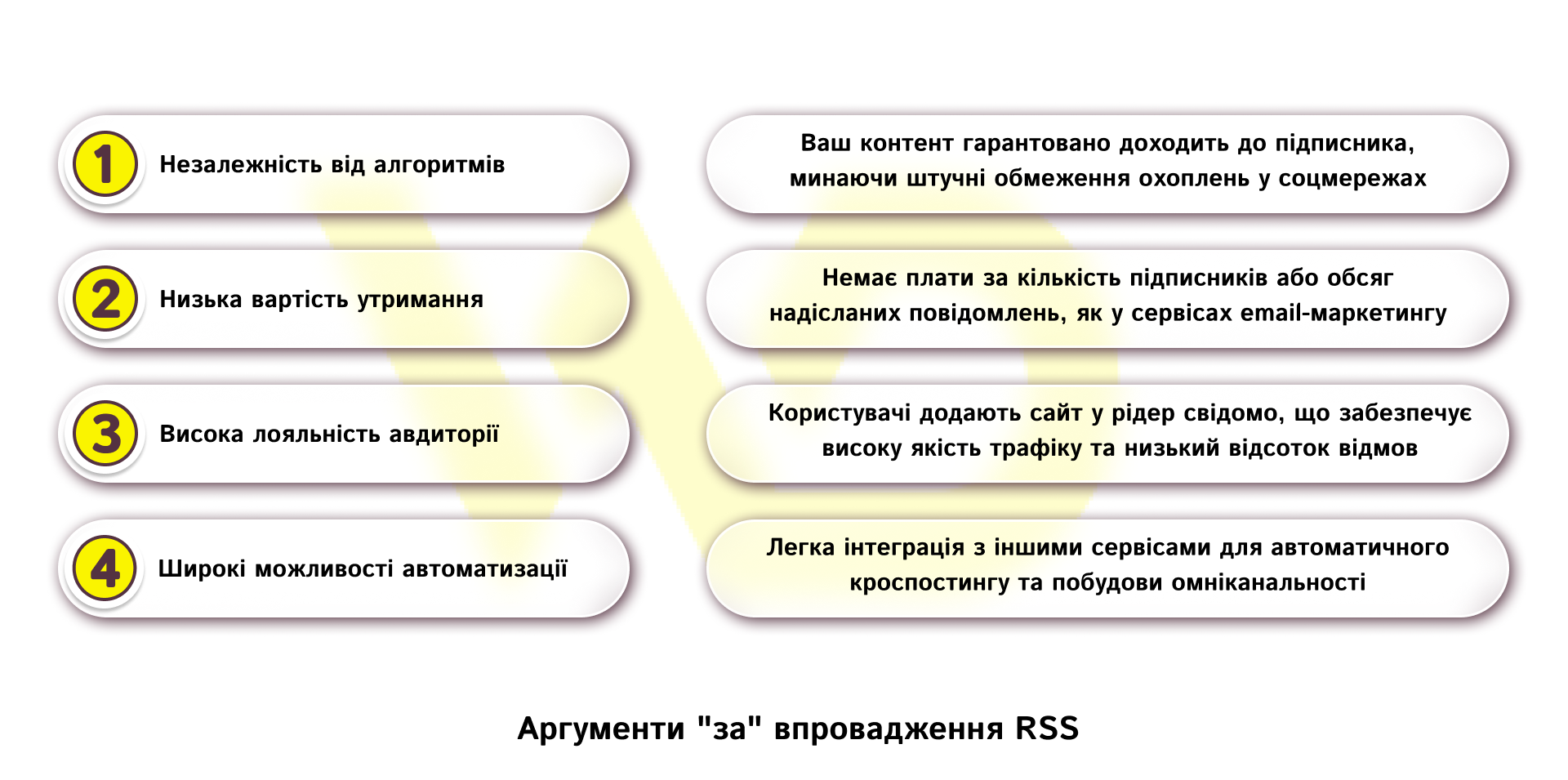
But there are also «cons».
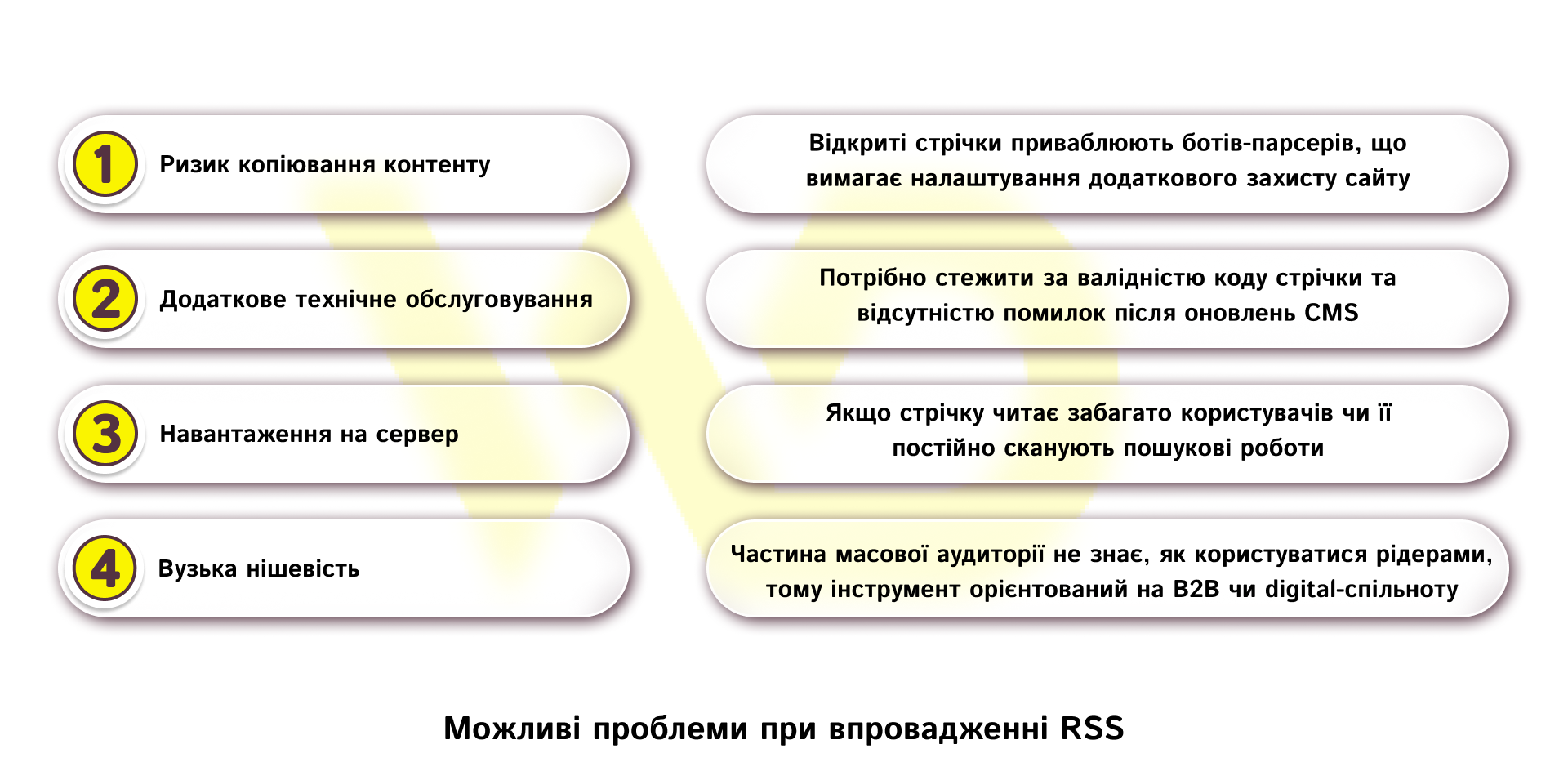
Thus, the benefits of RSS lie in the realm of strategic marketing and building long-term relationships with the core target audience, while the drawbacks are purely technical in nature and can be easily mitigated provided the web resource’s security is properly configured.
How to turn RSS into a stable brand asset
Developing your own media outlet, expert blog, or company news portal is always an investment in brand equity. At a time when PPC costs are rising annually and social networks are turning into closed ecosystems that charge for every view of your post — even to your own followers — businesses must focus on creating and developing independent communication channels.
An RSS feed is a time-tested, reliable, and algorithm-resistant tool for distributing information. It serves as an additional bridge between your expert content and the most informed, loyal, and professional segment of your target audience.
To get the most out of your company’s content marketing, take the following steps:
- Make the feed accessible. Don’t hide the RSS link deep within your website’s code. Add the recognizable orange icon to the website footer or directly to the blog sidebar next to the social media buttons and the email subscription form. Give users the choice of where it’s most convenient for them to read your content;
- Integrate RSS into your omnichannel system. Set up automatic delivery of updates to your corporate messaging platforms. This will allow your team to instantly learn about new case studies or company analytics and quickly share them with potential clients;
- Monitor content security. Be sure to check the technical settings of your CMS. Ensure that only short article previews with clearly defined absolute links and custom copyright markers are included in the XML file. This will protect your website from negative SEO consequences resulting from content parsing.
Implementing and properly configuring RSS won’t require your company to incur significant financial costs or hundreds of hours of development, but it will lay a solid foundation for automating marketing processes, speed up the indexing of new content on Google, and help build a loyal community around your brand.

commercial offer
Other articles by the author

17/08/2026
Mass copying of text, photos, or videos not only reduces a website’s uniqueness but also creates legal and SEO-related risks.

08/05/2026
For businesses, Instagram has long been not just a platform for posting content, but also the place where customers form their first impression of a brand.

04/09/2026
When two different users search for the exact same word in a search engine, they may get completely different lists of web pages, and the websites themselves are constantly changing their positions in the search results.
Latest articles by #SEO

06/10/2026
From a business perspective, updating content is a sensible way to protect existing investments.

30/09/2026
Google's main focus in 2026 was the large-scale rollout and deep algorithmic integration of the AI Overviews (AIO) tool.
16/09/2026
Choosing between search engine optimization and pay-per-click advertising is one of the most critical decisions when developing a marketing strategy.