

 26/10/2026
 973

Інтернет-маркетинг
простою мовою
Content of the article
- /01 Why potential customers don’t always respond to ads
- /02 What is inbound marketing and how does it work
- /03 How inbound marketing works: from first contact to customer
- /04 The three stages of inbound marketing: attract, engage, delight
- /05 What tools help generate leads through inbound marketing
- /06 How to create an inbound strategy for your business
- /07 Inbound marketing and paid advertising: competitors or complements
- /08 How to measure the effectiveness of inbound marketing
- /09 Common mistakes when implementing inbound marketing

How to generate hot leads without pushy advertising: the inbound marketing concept
Marketing has become significantly more expensive over the past few years. Budgets for targeted and contextual advertising are rising, the cost per click is getting higher and higher, and the return on traditional advertising is steadily declining. The most frustrating part is that even leads generated through direct advertising are increasingly «cold» they’re hesitant, compare your offer to a dozen competitors, and drain the sales team’s energy for weeks on end.
The reason isn’t that advertising targeting specialists or contextual marketing experts have started doing a worse job. It’s that buyer behavior itself has changed. People no longer want to be sold to in a pushy way.
In this article, we’ll take a detailed look at how to build an inbound marketing system an approach where potential customers find your company on their own, see you as experts, and come to make a purchase fully prepared, without aggressive advertising pressure.
Why potential customers don’t always respond to ads
Imagine this scenario: you’re scrolling through your news feed or looking for an answer to a specific work-related question, and suddenly a banner pops up: «Buy our software / order our services with a 20% discount today only!». What’s your first reaction? In 90% of cases, you’ll ignore it or close it.
Direct advertising aggressively tries to cut corners. It demands that a person make a purchasing decision the very moment they first see the brand. But in the real world of business especially in B2B, complex services, construction, healthcare, or IT it doesn’t work that way.
A potential buyer goes through a long internal journey before pulling out a credit card or signing a contract. Their journey looks something like this:
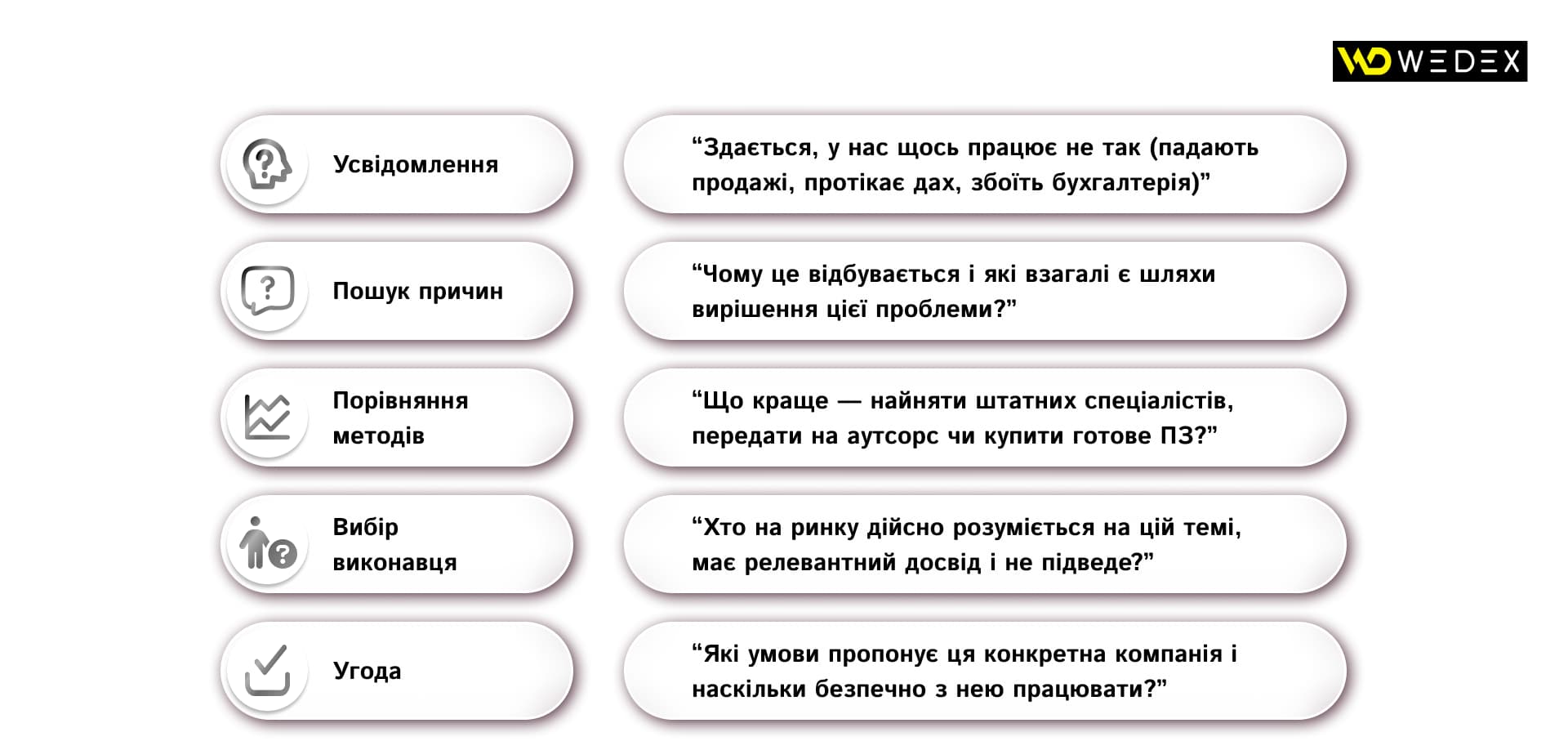
When you show an aggressive ad to someone who is only in the first or second stage, you’ll just annoy them. Right now, they don’t need a discount they need to understand their own problem. They’re looking for information, not a salesperson.
What is inbound marketing and how does it work
Inbound Marketing is a strategic approach to business development that involves attracting potential customers by creating useful, relevant content and personalized interactions that meet their current needs and requests.
Unlike outbound marketing, where a company interrupts the user’s attention with promotional messages such as cold calls, banners, or direct TV or radio ads, inbound marketing is based on the opposite principle. The business creates informational resources and touchpoints that potential customers seek out on their own while looking for answers to their questions.
The fundamental principles of Inbound Marketing include:
- providing value first and foremost: practical benefits for the audience are offered without requiring an immediate purchase;
- alignment with information needs: content is created to precisely match users’ search queries or practical problems;
- building expert credibility: positioning the company as a trusted advisor and thought leader in its industry;
- step-by-step qualification and nurturing: a smooth transition of the user from a stranger to a loyal customer;
- Personalized interaction: tailoring materials and offers to the specific context and the user’s level of awareness;
- Focusing on the long-term customer experience: interaction with the customer does not end after signing a contract or paying an invoice.
A common misconception is to reduce inbound marketing solely to maintaining a corporate blog or SEO optimization. SEO and content marketing are merely tools. Inbound Marketing is a comprehensive, systematic solution.
How inbound marketing works: from first contact to customer
The effectiveness of inbound marketing is based on understanding exactly how a consumer makes a decision. This process is rarely strictly linear. A potential customer might read a blog post, subscribe to a newsletter, return via a search query a month later, watch a webinar, and only then schedule a consultation. Nevertheless, their information needs evolve in a predictable pattern.
The relationship between the stages of the decision-making process and the corresponding content can be presented as follows:
|
Decision-making stage |
User’s situation and query |
Optimal content type |
Practical goal of interaction |
|
Awareness of the problem |
The user senses that there is a problem and seeks general information and explanations of the causes |
Educational articles, checklists, infographics, overview videos, analytical guides |
Attract attention, provide initial value, and establish brand awareness |
|
Searching for and analyzing solutions |
The user clearly understands the task and compares different methods and approaches to solving it |
Comparative reviews, how-to guides, webinars, online calculators |
Engage in dialogue, capture contact information (generate a lead). |
|
Evaluation of alternatives |
Once the methodology is determined, the buyer chooses between specific providers or products |
Case studies with data, detailed specifications, testimonials, comparisons with competitors |
Demonstrate advantages and expertise; show a proven ROI |
|
Decision-Making |
The buyer is ready to make a purchase and is looking for the best terms, guarantees, and a simple way to complete the transaction |
Free trial period, cost estimate, personalized audit, demo version |
Simplify the purchasing process, close the deal, and hand the customer over to customer service |
So, the main practical takeaway is that attempting to provide «Decision-Making» stage content to a user who is still in the «Problem Recognition» stage results in the loss of a potential buyer. Inbound marketing ensures that each user group receives exactly the material that corresponds to their current level of readiness.
The three stages of inbound marketing: attract, engage, delight
The modern Inbound Marketing methodology, developed by HubSpot, has moved away from the classic «sales funnel» concept, where the customer is merely the end result of the process. Instead, it uses the «Flywheel» model, where a satisfied customer serves as the primary driver of further business growth through referrals and repeat purchases.
Three stages of audience engagement play a central role in this system: Attract, Engage, and Delight.

Attract (capturing attention, engaging)
The goal of this stage is to turn unfamiliar internet users into regular visitors to the company’s information resources. The task is to attract not general mass traffic, but specifically the target audience.
Key tools and channels:
- search engine optimization (SEO): creating content for low-, medium-, and high-frequency user search queries;
- expert content marketing: in-depth articles, industry research, analysis of common mistakes, and professional recommendations;
- social media and video platforms: distributing content in formats that are easy to consume on specific platforms.
The main principle of this stage: content should address the audience’s actual information needs rather than directly advertise the product.
Engage (Interaction)
Once a visitor has landed on the company’s website or page, the goal is to establish a long-term connection and convert them into a hot lead.
Under this approach, a hot lead is defined not simply as someone who submitted a form, but as a user whose level of engagement and alignment with the ideal customer profile indicates a high readiness to close a deal.
Key tools and methods:
- lead magnets: providing valuable resources (templates, e-books, checklists, access to exclusive tools) in exchange for contact information;
- Conversational marketing: chatbots, online consultants, and messaging platforms for instant communication;
- Email automation and drip campaigns: a series of automated emails that gradually explain the nature of the problem and demonstrate solutions;
- Lead scoring: automatic evaluation of user actions such as viewing the pricing page, downloading materials, or opening emails to determine their readiness to speak with the sales team.
The main goal of the solution: to eliminate the human factor and minimize the time from when a user becomes a «hot lead» to their first contact with a sales manager.
Delight (support and retention)
Inbound marketing doesn’t stop after a transaction is completed. The process of attracting new customers becomes cheaper and more effective when existing customers recommend the business to their network.
Key tools and methods:
- onboarding and training materials: instructions, a knowledge base, and video tutorials that help users quickly get the most out of the product or service they’ve purchased;
- high-quality customer service and support: prompt assistance and post-purchase support;
- feedback collection (NPS, CSAT): Regular satisfaction analysis to continuously improve the product or service;
- personalized loyalty programs and cross-selling: offering related services or upgrades the moment a customer achieves their first successful results.
Satisfied customers leave reviews, become the stars of new case studies, and recommend you to their colleagues. The flywheel gains momentum, and the cost of acquiring new leads decreases.
What tools help generate leads through inbound marketing
Each tool within an inbound marketing strategy plays a clearly defined role and operates at a specific stage of the user journey.
The system is based on the following elements.
- Search Engine Optimization (SEO). It ensures a steady flow of organic traffic with a high level of intent. It attracts an audience that is already actively searching for solutions to their problems on search engines.
- Corporate expert blog. It serves as the core of the content ecosystem. It builds SEO visibility, demonstrates depth of expertise, and highlights the company’s approaches to solving problems.
- Case Studies. A critically important tool for B2B and service-based businesses. They demonstrate real results in the format of «Problem — Solution — Achieved Results in Numbers», dispelling doubts about the company’s expertise.
- Guides, white papers, and checklists. These serve as key lead magnets. They help convert anonymous traffic into a contact database.
- Webinars and online events. A tool for deep engagement. They provide direct contact with company experts, allow for real-time Q&A, and build a high level of trust.
- Email marketing and automated sequences. A tool for «nurturing» leads. It ensures regular and valuable contact with leads who aren’t yet ready to buy.
- Social media (SMM). A distribution channel that helps build a community around the brand, increase the reach of content, and maintain open communication.
- Chatbots and conversational tools. They reduce response time to user inquiries, help initially qualify visitors, and direct them to the right content or representative.
- CRM system and marketing automation. The infrastructure foundation. It tracks all customer touchpoints with the brand, allows you to segment the customer base based on behavioral factors, and automates the delivery of relevant messages.
Convert organic traffic into leads
For SEO to deliver results, it’s important not only to attract visitors but also to help them take the next step. The WEDEX team will develop a marketing strategy tailored to your audience’s search queries and your business goals.
Using these tools makes it possible to build a predictable lead flow without intrusive direct sales. However, the key to success lies not simply in implementing them, but in the seamless synchronization of marketing and sales during the handoff of a potential customer.
How to create an inbound strategy for your business
Developing an inbound strategy is a way to turn your blog and content into a steady source of new readers and customers. To ensure your content actually works and helps your business rather than just sitting on your website follow these eight sequential steps.
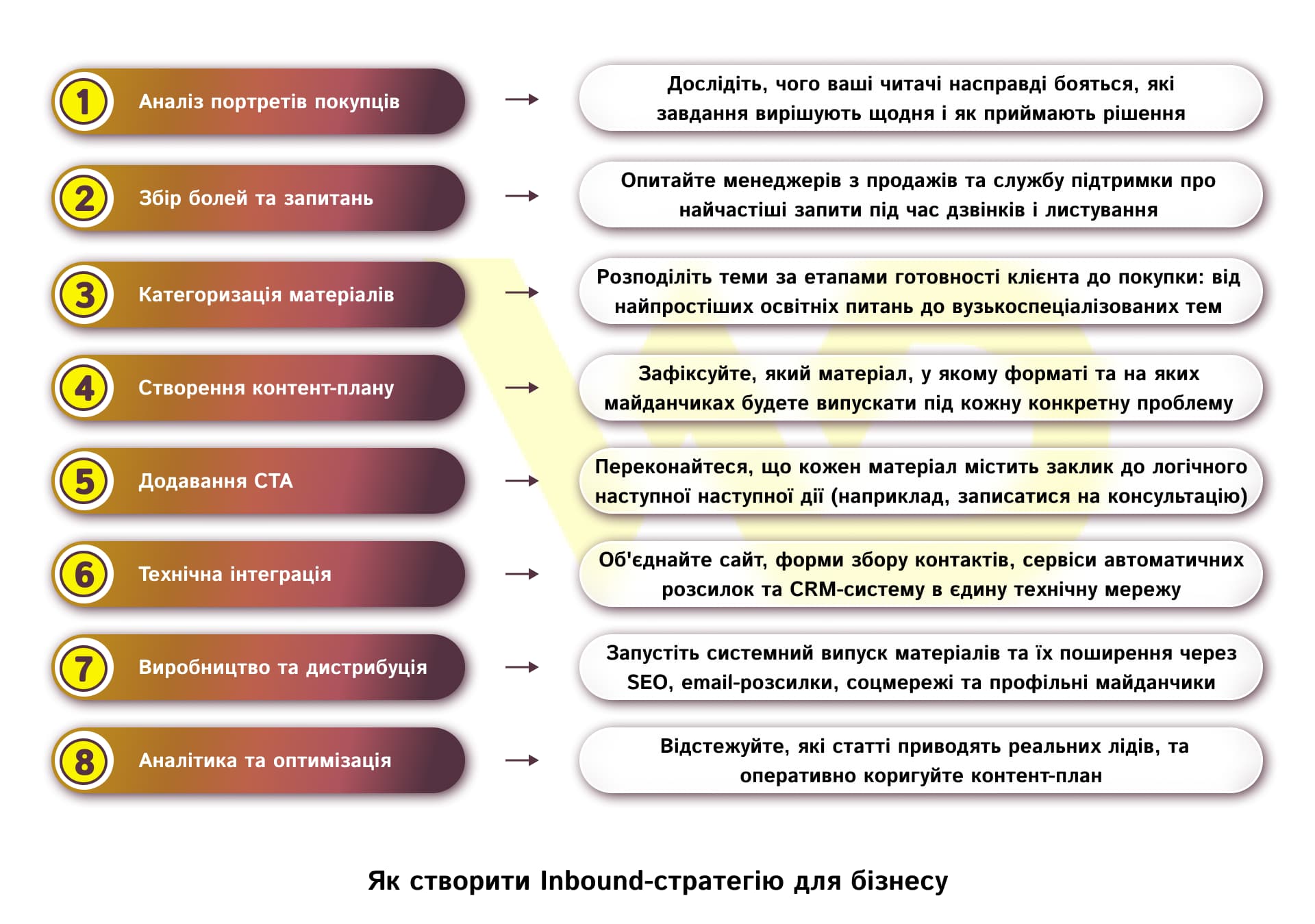
Consistency and genuine value for the reader are key to successful inbound marketing. When your articles truly help solve your audience’s problems, your blog naturally turns casual visitors into loyal customers.
Inbound marketing and paid advertising: competitors or complements
A common misconception: «If we implement Inbound Marketing, we completely turn off targeted and contextual advertising». This is a mistake.
Inbound and paid advertising aren’t enemies they’re partners.
|
Paid Advertising |
Inbound Marketing |
|
Delivers speed. It allows you to get your first clicks and test results in just a few hours. |
Delivers long-term savings and builds trust. An article published a year ago continues to generate leads completely free of charge. |
To achieve maximum results, paid advertising and content marketing should be used in close synergy. Instead of aggressive direct sales tactics like «Buy this software», it’s much more effective to run ads promoting a valuable lead magnet for example, offering a downloadable ROI calculator tailored to a specific industry. This allows you to generate leads at a fraction of the cost. Next, targeted retargeting comes into play: show real-life case studies and video testimonials specifically to those readers who have already read your expert blog posts but haven’t yet provided their contact information. This approach builds trust and gently guides the potential customer toward a purchase.
How to measure the effectiveness of inbound marketing
Beautiful graphs showing growth in website traffic or thousands of views on blog posts are nice, but they don’t pay the bills. You need to evaluate inbound marketing based on business metrics.
What you should really be looking at:
- trends in targeted organic traffic: Is the number of people finding you through informational search queries increasing?
- conversion of visitors into leads: how many people who visited the site left their contact information;
- the number of qualified leads (MQL and SQL): how many of the contacts you received actually match your target profile and are ready to engage;
- customer Acquisition Cost (CAC): the total cost of acquiring one actual buyer, taking into account expenses for content creators, SEO, software, and advertising. Over time, this metric should decrease in Inbound marketing;
- Lifetime value (LTV): how much revenue a single customer generates over the entire duration of their relationship with you.
In a stable business, the LTV-to-CAC ratio should be at least 3 to 1. In other words, a customer should generate three times more profit than what you spent on acquiring and serving them.
Common mistakes when implementing inbound marketing
In practice, implementing Inbound Marketing often faces challenges due to strategic and operational mistakes. Let’s look at the most common ones.
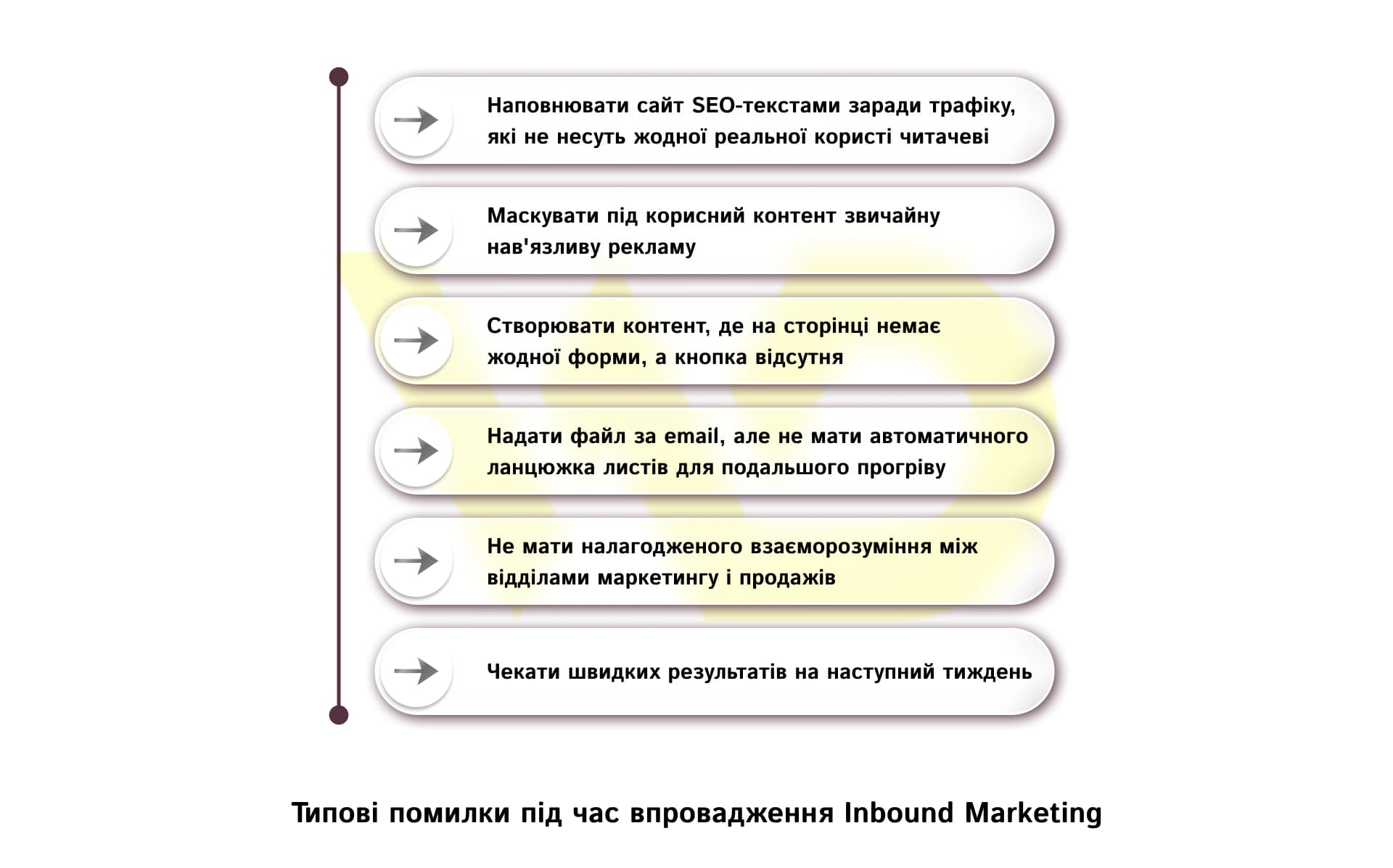
Most of these mistakes stem from attempts to rush processes in situations that require consistency and strategic patience. At the same time, timely identification of these risks helps prevent a loss of audience loyalty and enables the creation of a manageable and predictable engagement system.
Ultimately, inbound marketing is based not only on algorithms, analytical metrics, or CRM system settings, but also on prioritizing the real needs of the target audience. A business’s transition from short-term, transactional sales to the systematic delivery of value transforms marketing from an expense into a strategic asset. It is this approach that builds long-term market trust and ensures a steady flow of customers regardless of current advertising activity.

commercial offer
Other articles by the author

16/04/2026
This is particularly important in business content, as the text must not only be grammatically correct but also serve a specific purpose.

24/04/2026
That is why, in marketing, it is important not just to describe a product’s features, but to translate them into the language of needs.

08/07/2026
ChatGPT can already search the web, provide quick answers, and display relevant sources, which means it’s important for businesses to be clear, cited, and verified in the digital space.
Latest articles by #Useful tips
06/10/2026
From a business perspective, updating content is a sensible way to protect existing investments.
30/09/2026
Google's main focus in 2026 was the large-scale rollout and deep algorithmic integration of the AI Overviews (AIO) tool.

29/09/2026
A content pipeline transforms the creation of content from a spontaneous creative process into a managed production system. In such a system, AI serves as a powerful assistant.